Sculptures

Key works

Fourteen works marking sixty years of creation, from Conquest of Space, first prize in the Saint-Gobain international competition in 1962, to the “furniture-sculptures” of the 1950s.

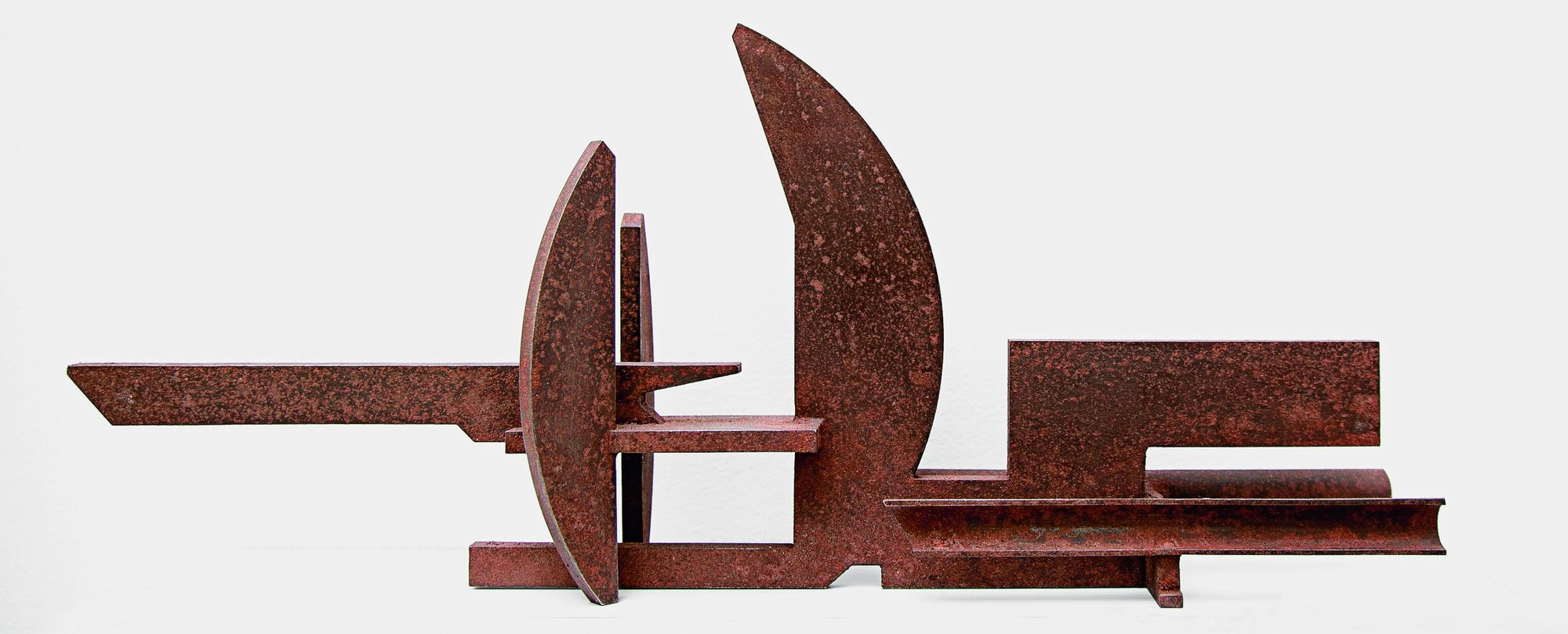
Conquest of Space

1961

Patinated steel

H. 21 × W. 50 × D. 8.5 cm

Edition of 8 + 4 artist’s proofs

First prize, Saint-Gobain international competition (1962)

This sculpture was not commissioned from a famous artist, but put out to competition to give a young sculptor the chance to make his name. The winning project, by Marino di Teana, was chosen by a jury from more than 70 models.

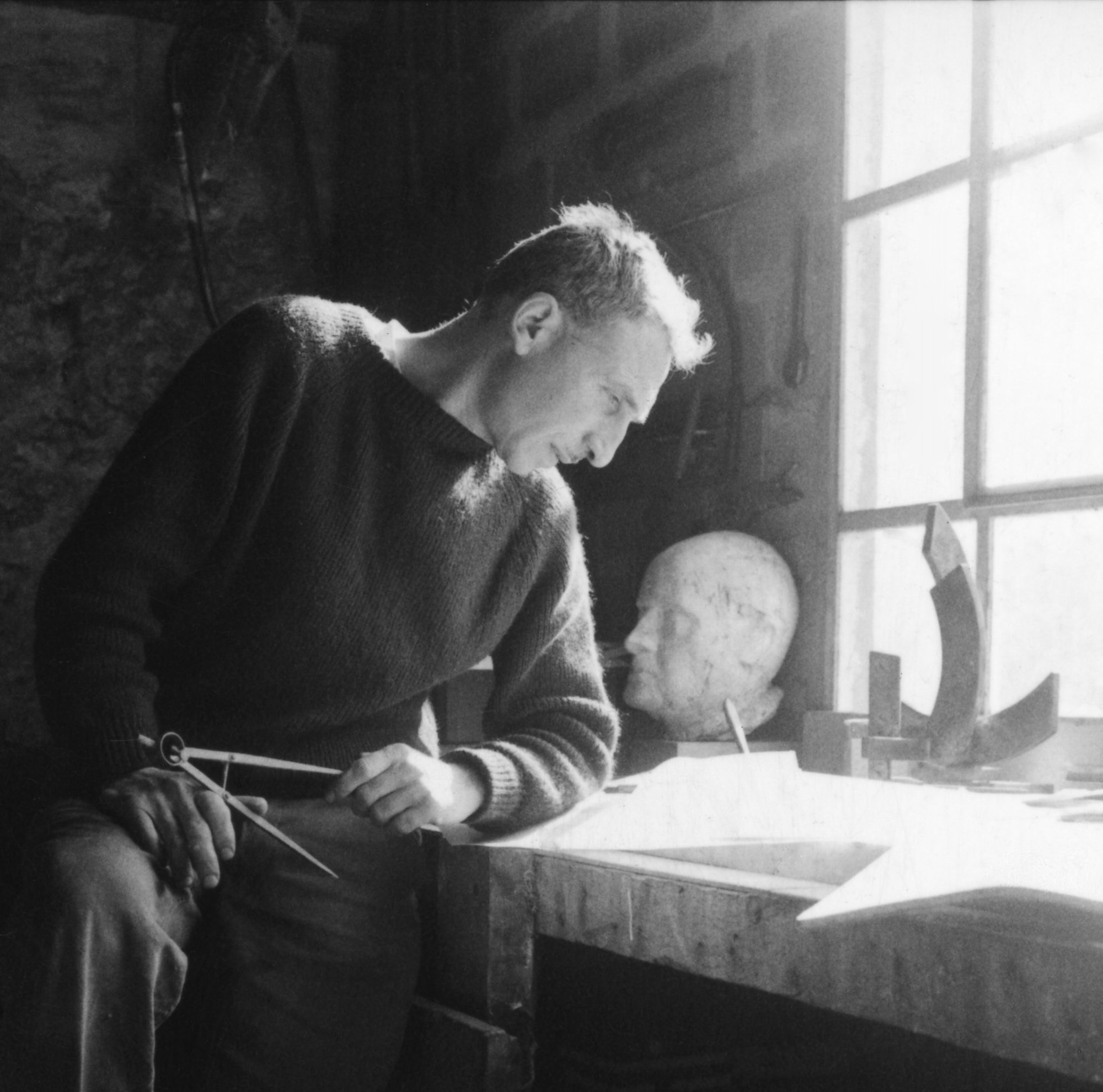
Marino di Teana literally made it “by the strength of his own arm”. Living in Paris in hard conditions, to make his metal sculptures he had to collect scrap iron from demolition sites, carry it on his back, saw it by hand and, having no forge, heat it in a stove. When he was finally allowed to weld in a factory, the workers, who at first called him “the madman”, ended up telling him: “With steel, you make music”…

— “La sculpture à l’usine”, Paris Match no. 675, 17 March 1962

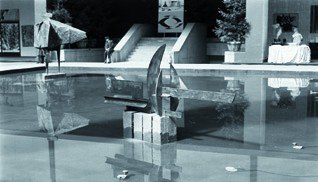
Conquête de l’espace exposée sur l’esplanade du Grand Palais en 1963
Esplanade of the Grand Palais, Paris Fair, May–June 1963

Homage to Niccolò Fontana Tartaglia

Architectural Structure “Equation”

1956-1974

Patinated steel

H. 70.5 × W. 41.5 × D. 22.5 cm

Edition of 8 + 4 artist’s proofs

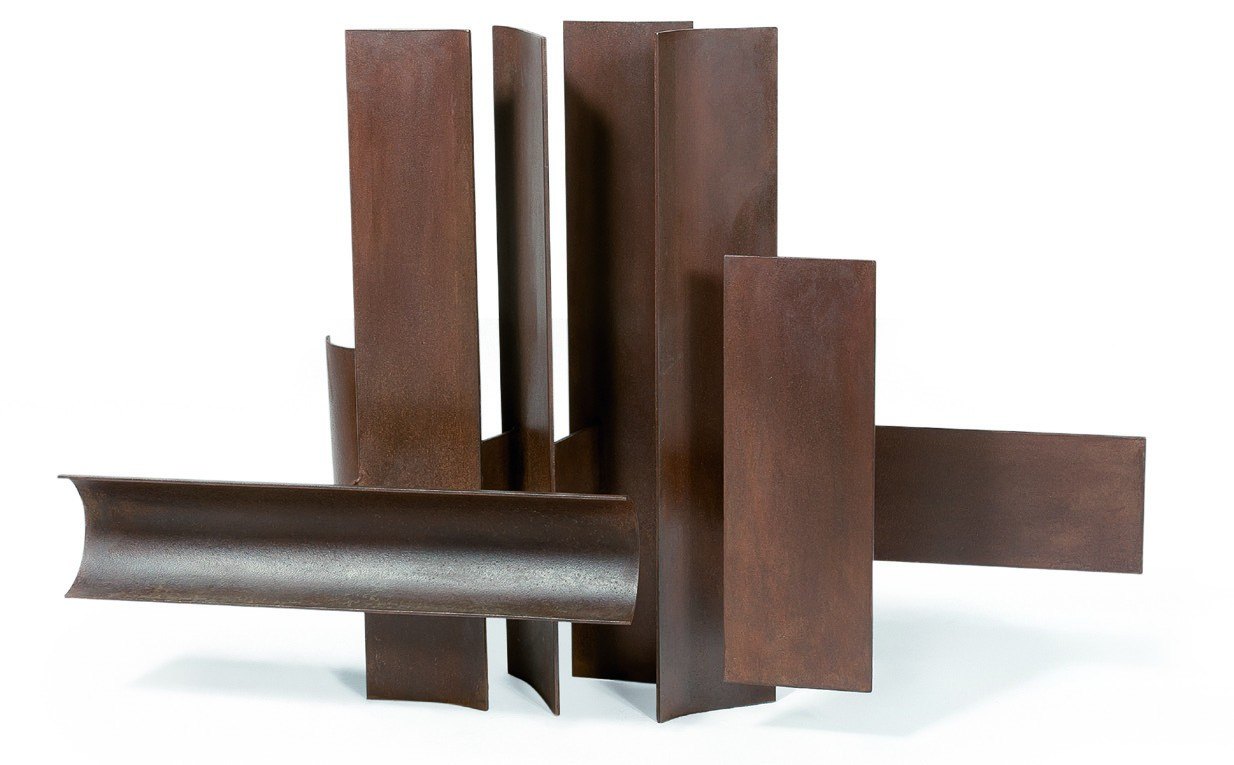
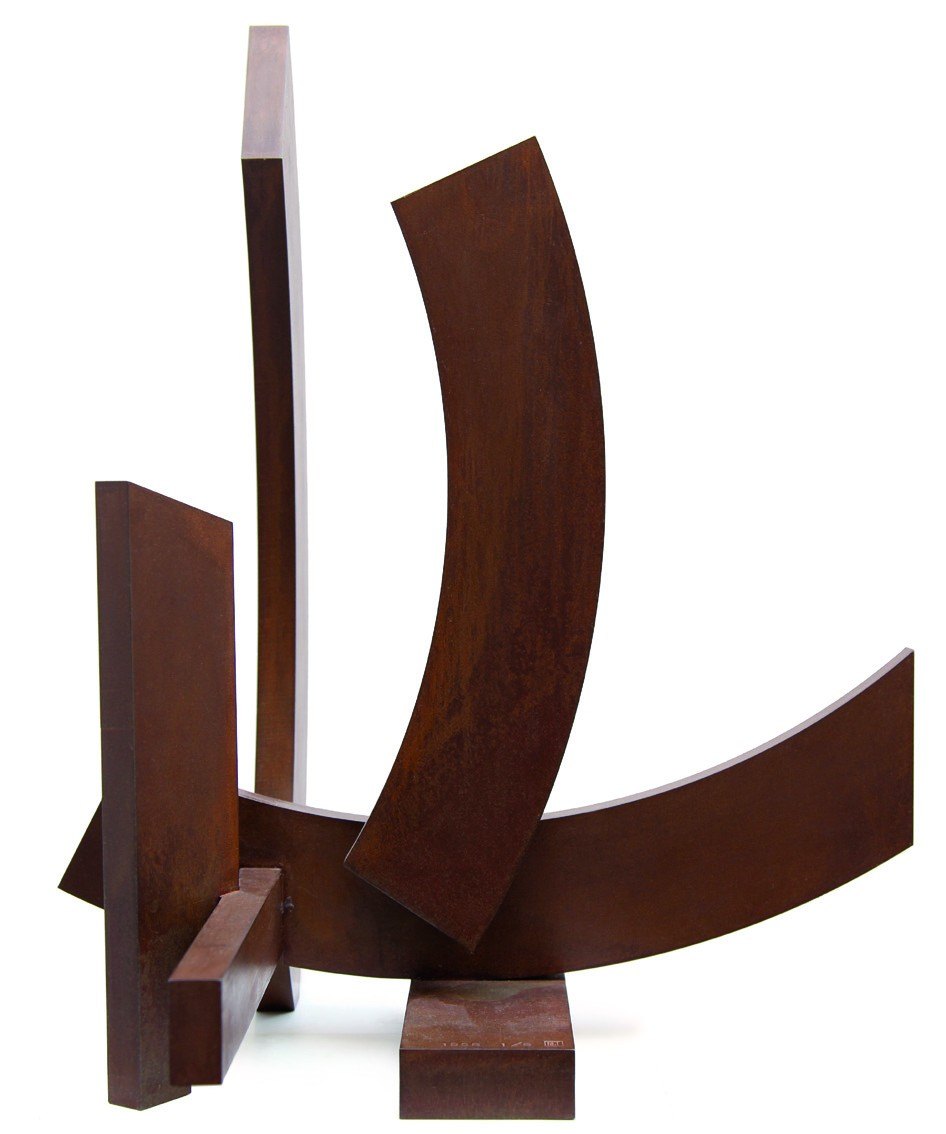
Homage to Homer

Developing Structure

1961-1964

Patinated steel

H. 73.5 × W. 115 × D. 27 cm

Edition of 8 + 4 artist’s proofs

My sculpture is conceived according to the dynamic relationships it has with the outside world. It is not a more or less empty object; it is a development that captures the air, directs it and makes it circular. My constant concern is to unite the three branches of the art to come, to create a moment worthy of our time, as our ancestors the Greeks, the Romans and the people of the Middle Ages did so masterfully.

— Francesco Marino di Teana, conversations with Giovanni Percoco
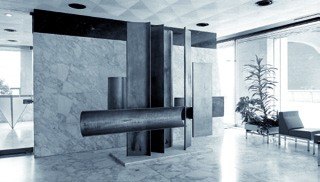
Structure développement dans le hall de la tour CB15 à La Défense
Developing Structure, lobby of the CB15 tower, La Défense, Paris

Fountain

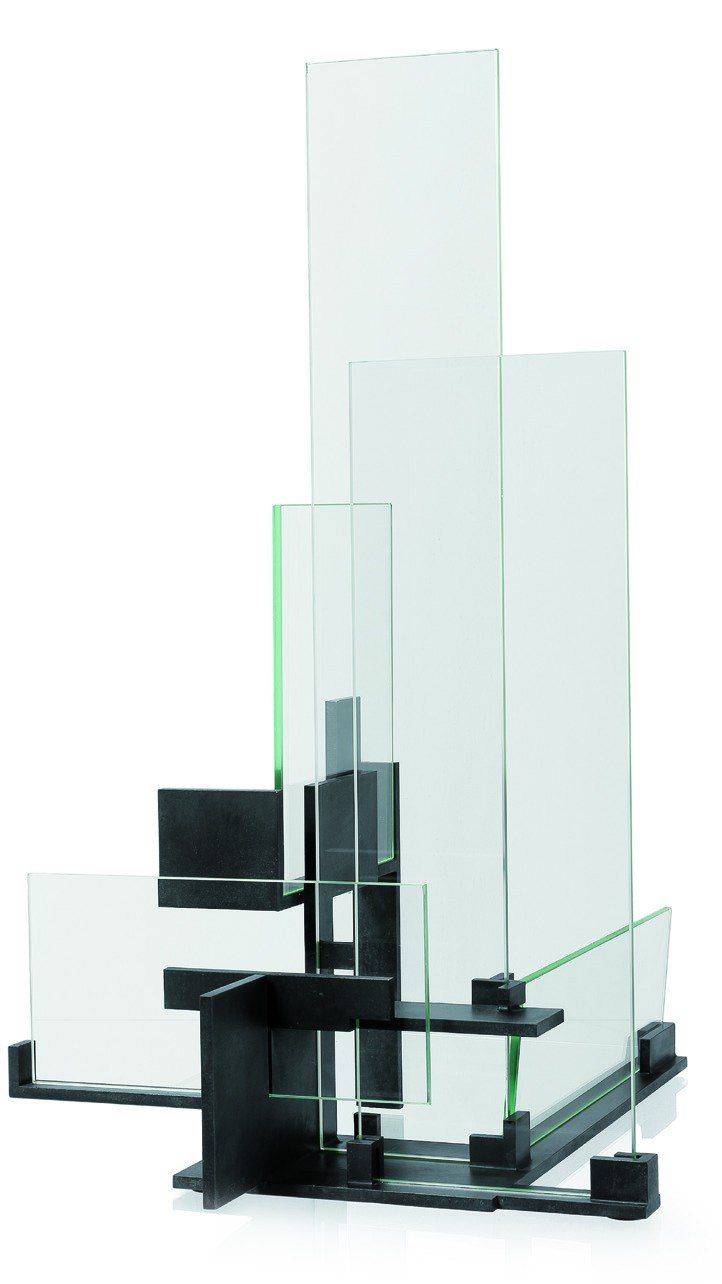
Project for a Rotating Fountain

1958-1961

Varnished black-patinated steel and glass plates

H. 53 × W. 41 × D. 30.5 cm

Edition of 8 + 4 artist’s proofs

In 1958, Francesco Marino di Teana explored the aesthetic encounter of steel and glass through projects for rotating hydraulic fountains. Yet he had to wait several years, and his win in the Saint-Gobain factory competition in 1962, before the prestigious company offered him a concrete project equal to his ambitions.

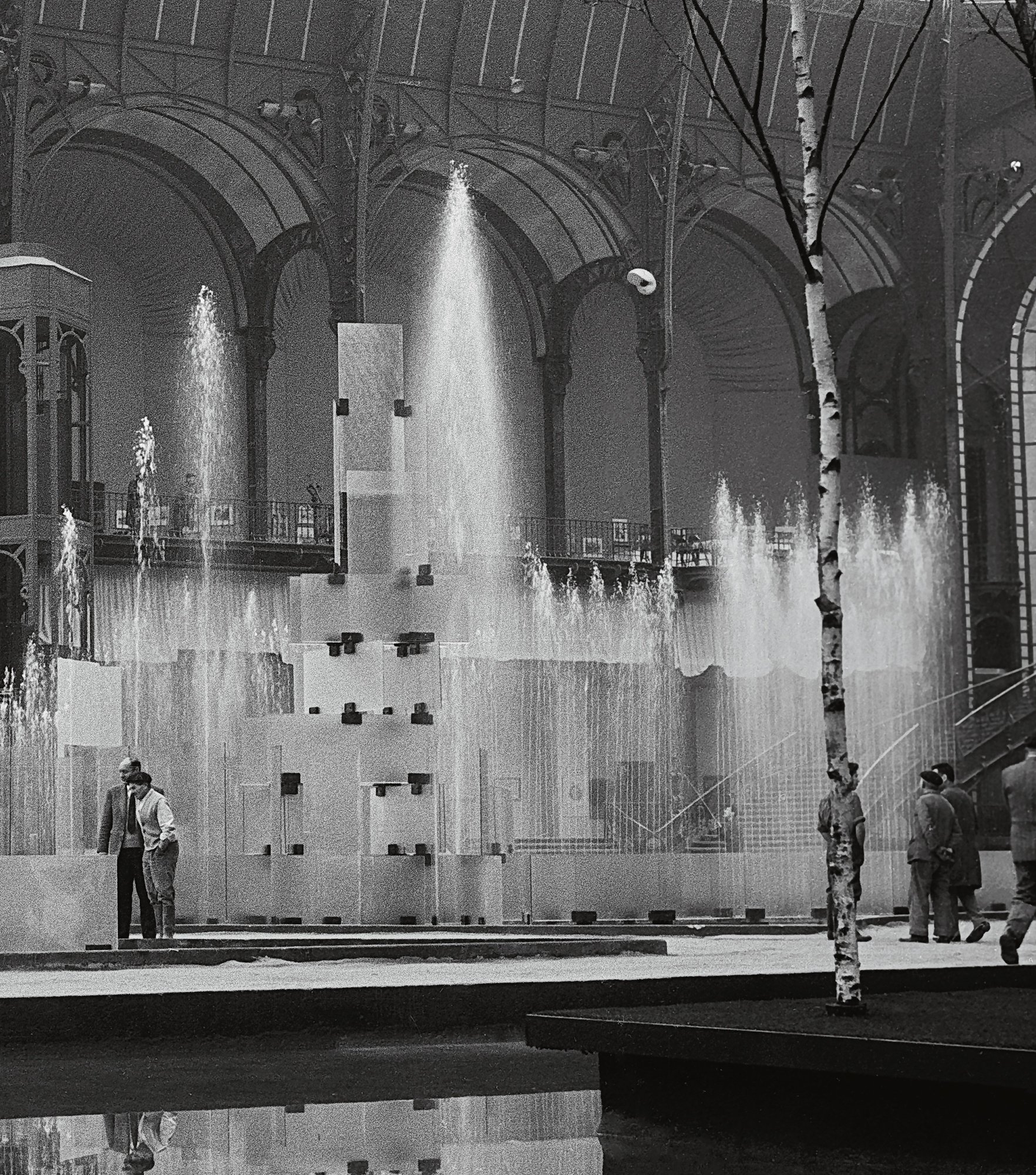
A group of eight monumental fountains, 9 metres high, set within a rectangle of thirty by eighteen metres and fitted with 164 “Clarit” glass plates, was installed in the centre of the Grand Palais in Paris in 1963.

With this work, Marino di Teana, a true forerunner of the Grand Palais “Monumenta”, offered visitors to the Paris Fair a unique spectacle. Clad in sprays, curtains and jets of water, vibrating and changing under the spotlights, these monumental fountains became transparent “buildings”, at once architectural and mobile.

Fontaine monumentale de 9 mètres au Grand Palais en 1963
Monumental fountain (9 metres high), Grand Palais, Paris Fair, May–June 1963

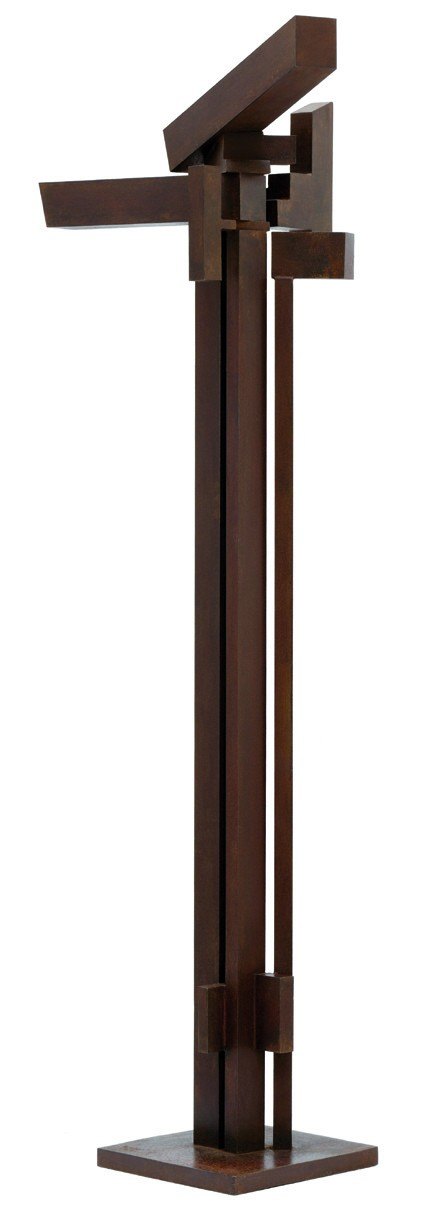
Homage to Lao Tzu

1972-1984

Stainless steel

H. 150 × W. 78.5 × D. 31 cm

Edition of 8 + 4 artist’s proofs

I discovered the writings of Lao Tzu when I was young. His thought has always fascinated me, and I felt the need to pay homage to him, in sculpture or in painting. My work Homage to Lao Tzu is the fruit of repeated readings of the Tao Te Ching, the Book of the Way and of Virtue. It is the strength of this thought that I wanted to express.

— Francesco Marino di Teana, conversations with Giovanni Percoco

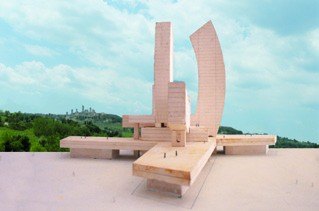
University

University Structure

1958-1963

Patinated steel

H. 50 × W. 40 × D. 40 cm

Edition of 8 + 4 artist’s proofs

Maquette en plâtre et bois d’un projet architectural d’université
Architectural project for a university with three research centres, plaster and wood model

Disintegrated Circle-Cube in Action

1964

Patinated steel

H. 25 × W. 27 × D. 25 cm

Edition of 8 + 4 artist’s proofs

His works develop in an entirely individual way from a dislocation or, more precisely, a disintegration of a few simple volumes such as the parallelepiped, the cube and the cylinder. In this way, Di Teana seeks to create a “disintegrated” sculpture, which is quite different from a “perforated” one. The viewer must then give up his old mental habits and let his gaze travel from the inside to the outside of the sculpture. Only then will he understand how space is one of the essential elements of Di Teana’s art.

— Denys Chevalier, “Les expositions”, Aujourd’hui, 1963, n° 35, p. 36

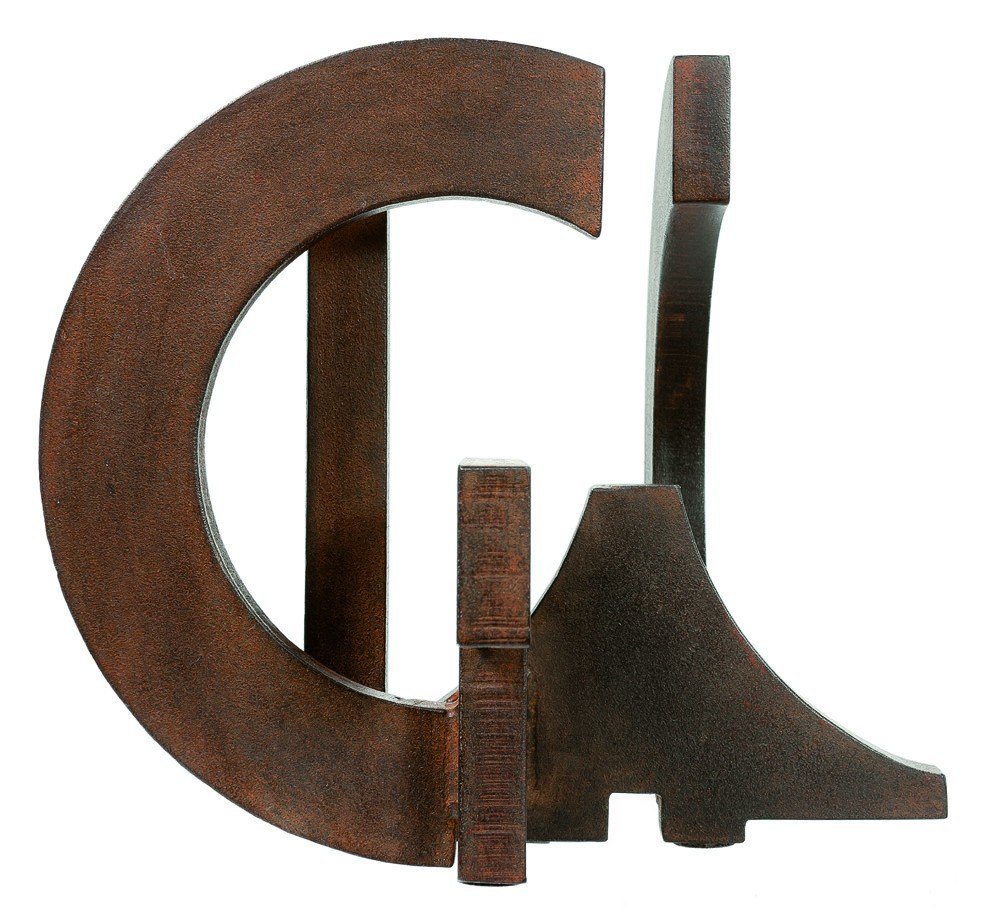
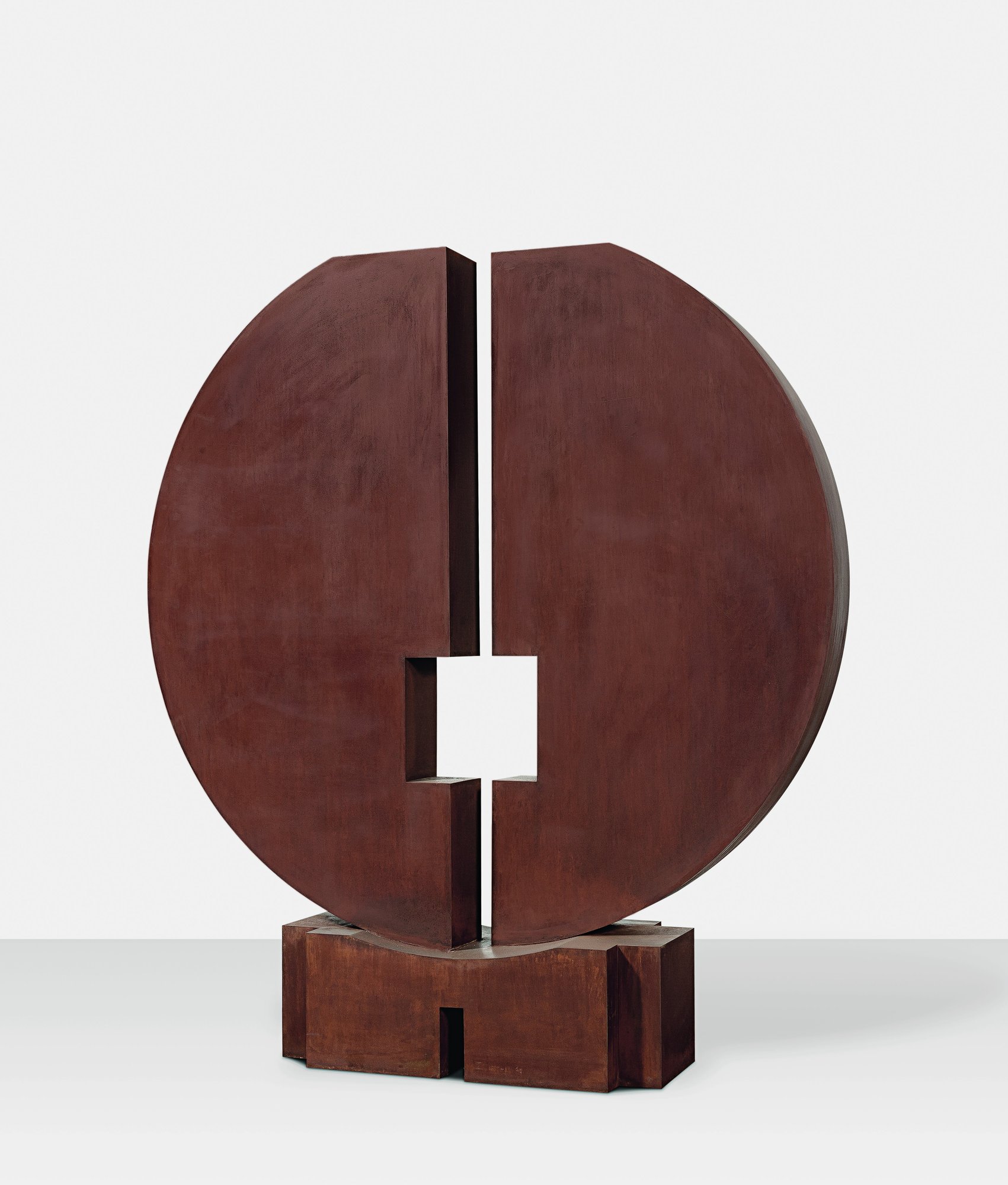
Aube (Dawn)

1977

Patinated steel

H. 150 × W. 132 × D. 35 cm

Edition of 8 + 4 artist’s proofs

In itself, the “finished” circle is something that becomes, in a sense, decorative; it becomes a little, you see, “soft”. But if you cut it, on the contrary, you give it strength, because you create geometry: there is the circle and the straight line, and together they produce a force that would not exist with just a circle.

— Francesco Marino di Teana, conversations with Giovanni Percoco

Liberté

1979-1988

Patinated steel

H. 75 × W. 34.5 × D. 25.5 cm

Edition of 8 + 4 artist’s proofs

As many viewpoints, as many perceptions. Monolithic at first sight, the monument, as soon as one walks around it, reveals regular notches and then, further round, open windows that give reality to the spaces set between the forms. The whole is made of multiple vertical parallelepipeds, portions of discs and rings placed in orthogonal planes. Nothing else. No angles, no bevels. Everything lies in the composition, which gives the verticals strength and stability and the curves grace and lightness, to the point of suggesting, at a given moment, petals opening. The magic of geometry has once again been revealed through a pure, constructed volume that nevertheless seems inhabited, deep within, by something alive.

— Jean-Pierre Maillard, “Marino di Teana, en acier, j’écris ton nom, Liberté”, Revue XYZ n° 87, 2001

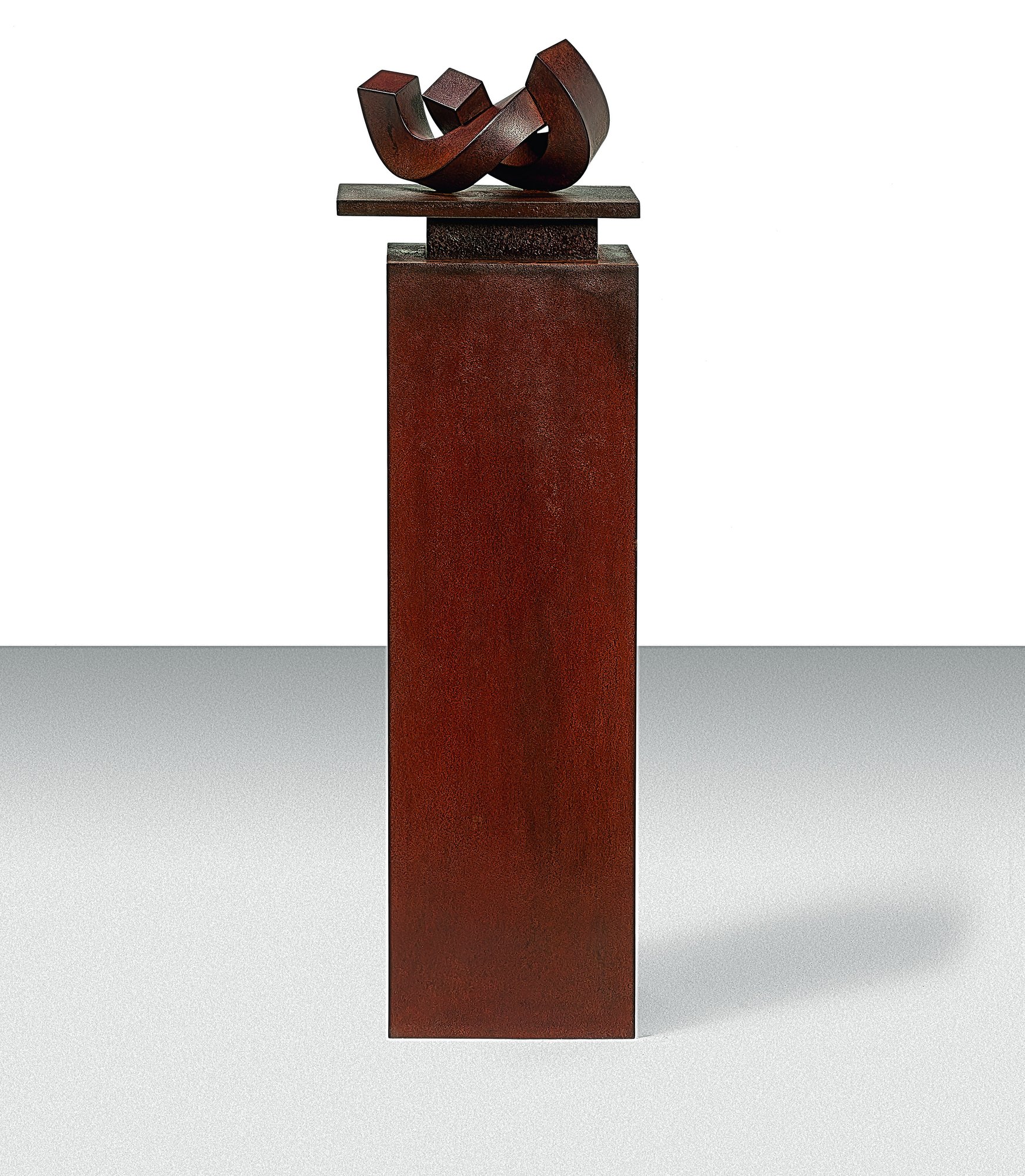
Interlacing “Love”

1984

Patinated steel

H. 90 × W. 25.8 × D. 13 cm

Edition of 8 + 4 artist’s proofs

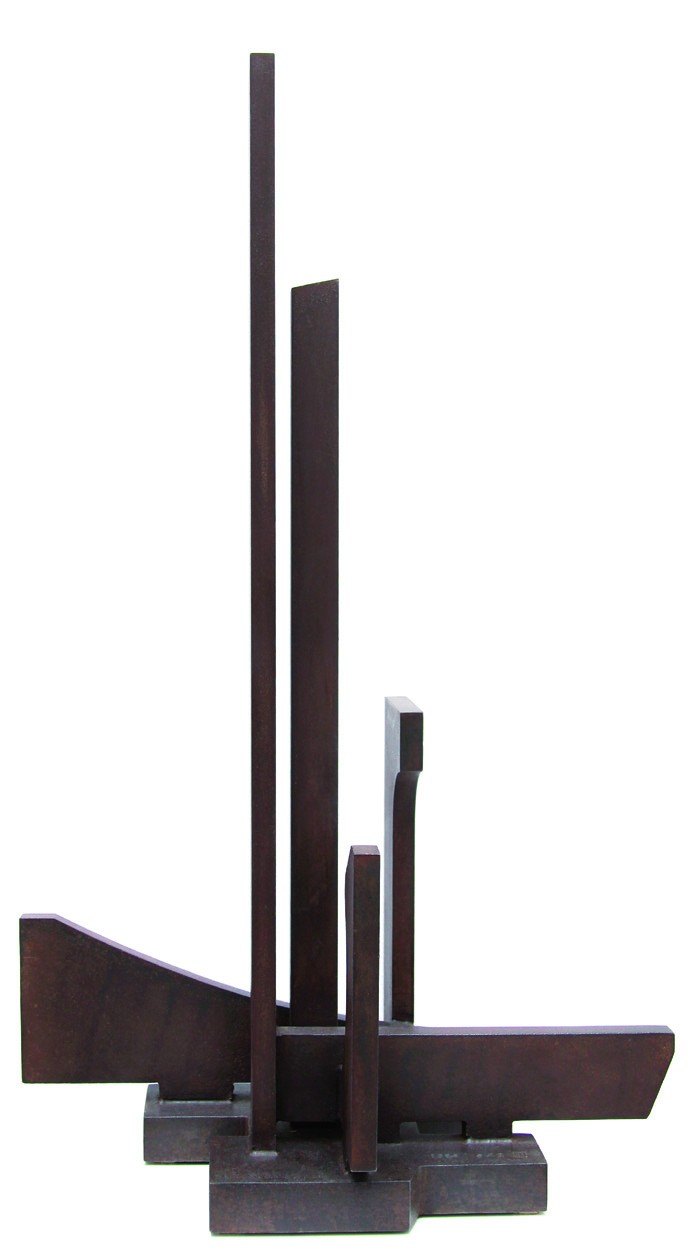
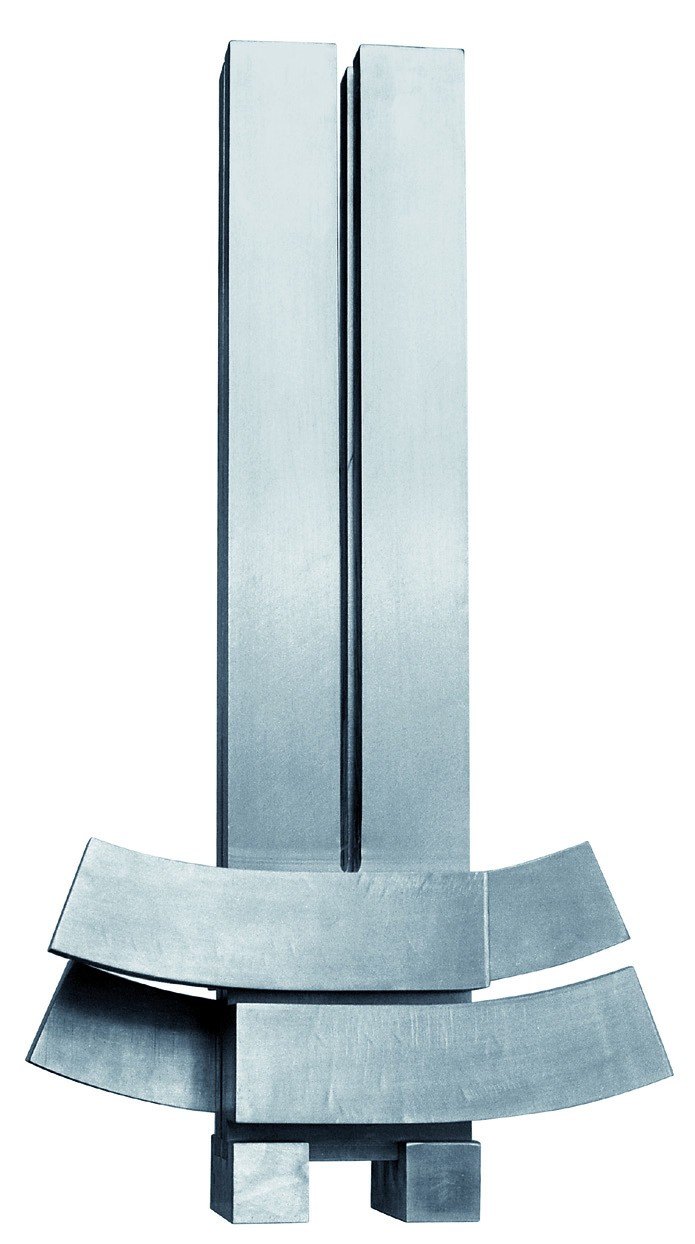
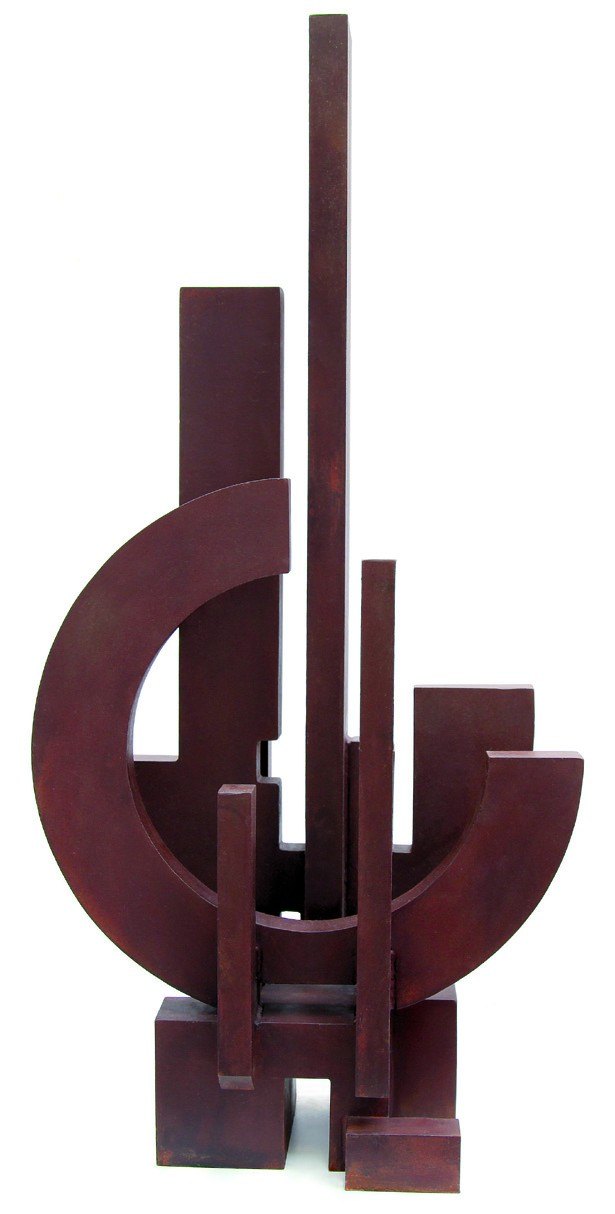
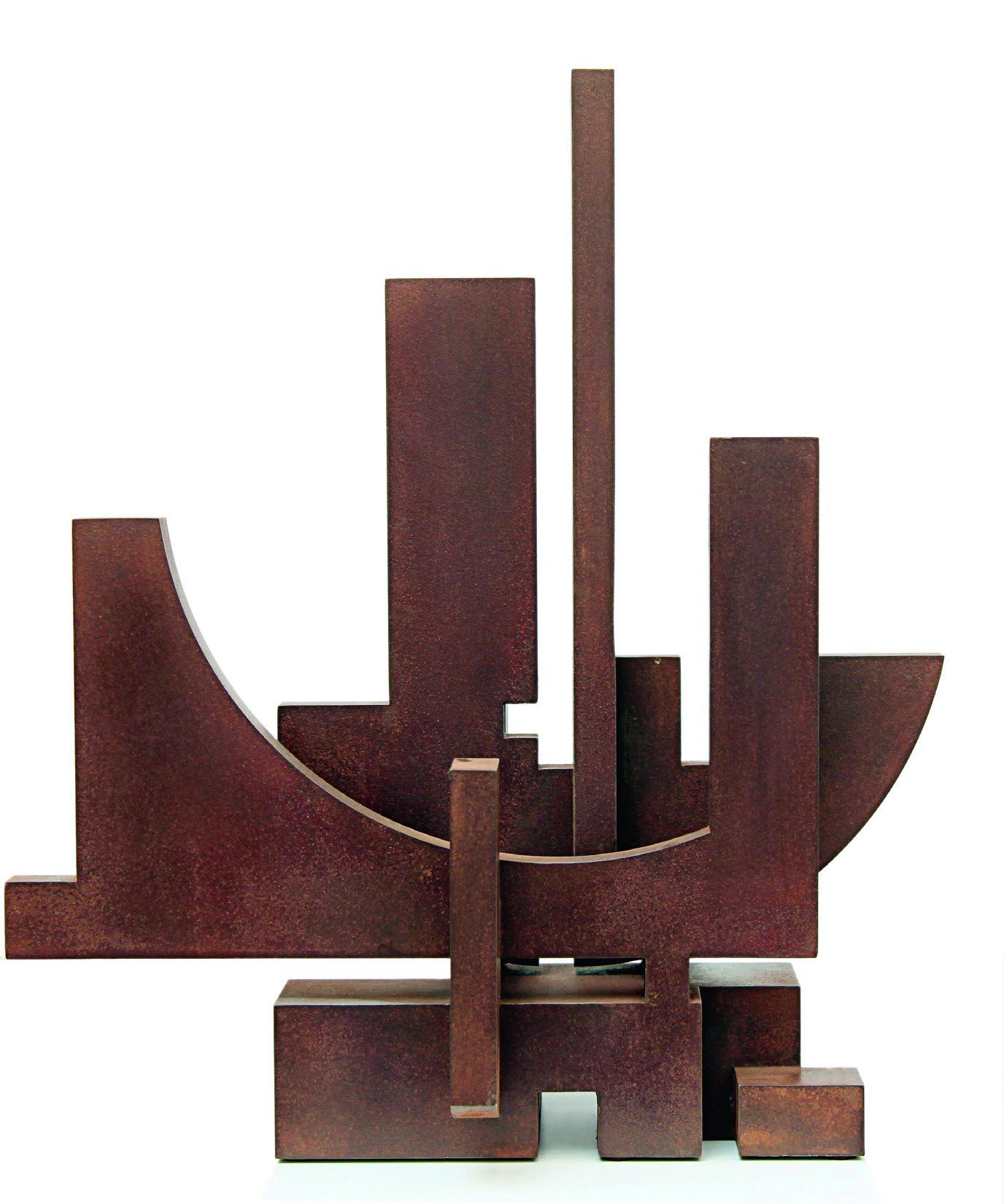
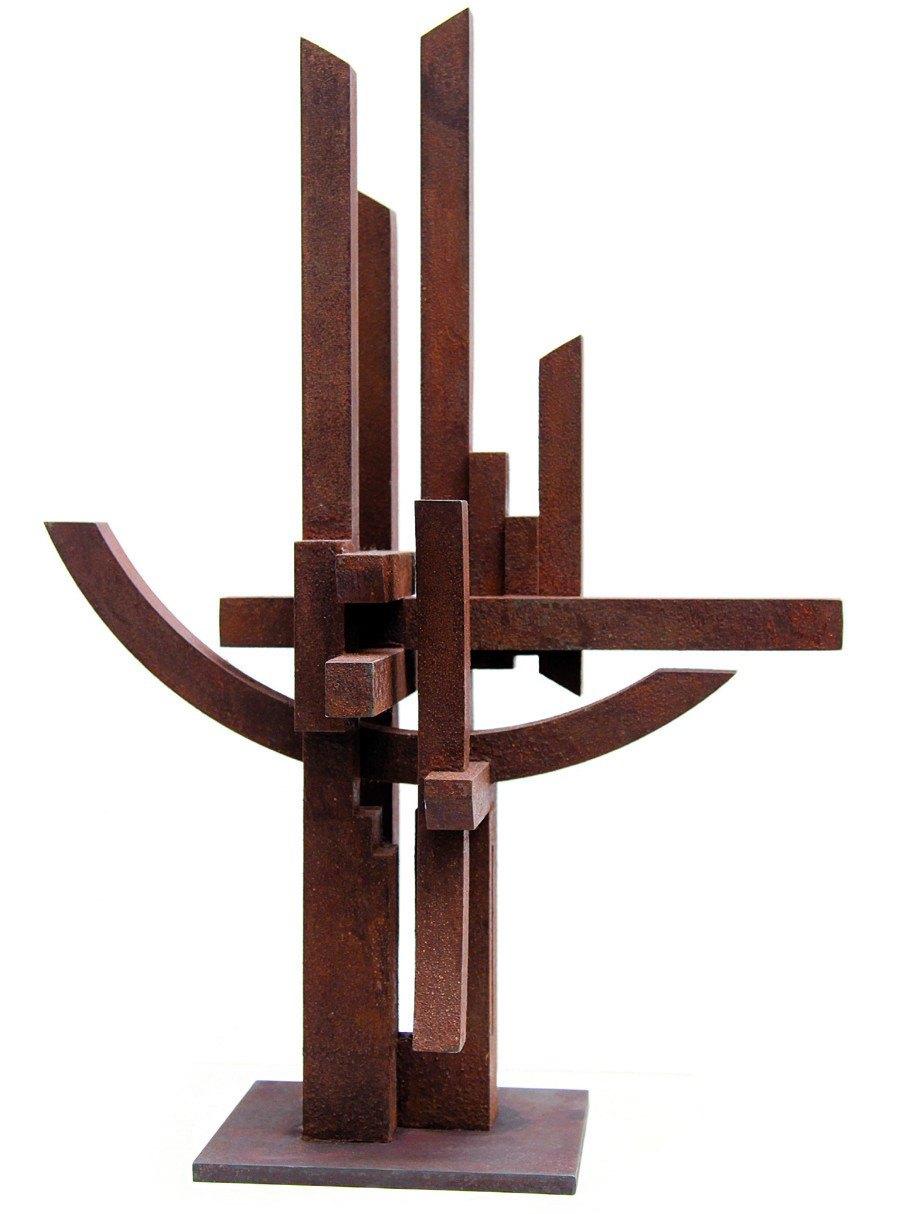
Tapered Canon

Dynamic Structure

1982

Patinated steel

H. 124 × W. 40 × D. 23 cm

Edition of 8 + 4 artist’s proofs

Marino di Teana’s sculpture starts from the principle that, as our world becomes ever more open, sculpture can no longer present itself as a block. Many other sculptors started from the same premise and opened up their sculptures by piercing them. Marino di Teana, for his part, disintegrates them from the mass, creating a living space inside the sculpture, setting voids and solids in dialogue. In other words, from geometric volumes (cubes, cylinders, parallelepipeds) that he dismembers, he creates forms open to the flow of light and air. One inevitably thinks of architecture, of an architecture and urbanism of tomorrow, conceived in volume.

— Michel Ragon, 25 ans d’art vivant, Éditions Galilée, 1986

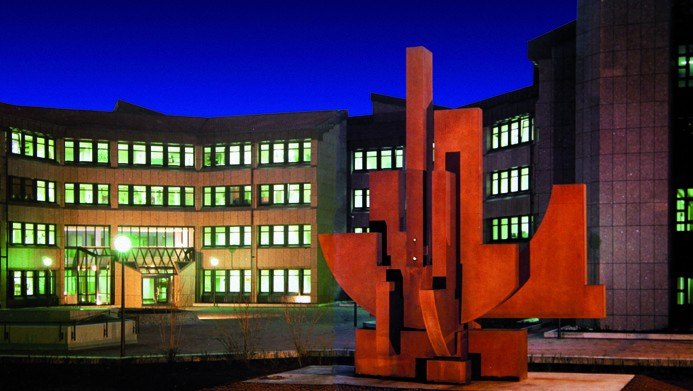
Homage to Space

(Saarbrücken)

1985-1988

Patinated steel

H. 50 × W. 41 × D. 25 cm

Edition of 8 + 4 artist’s proofs

The city of Saarbrücken took advantage of the tribute paid to the great French sculptor to acquire a monumental work, now installed in front of the Ministry of Labour. This sculpture, made in France during the spring and summer of 1986, is a large steel signal six metres high with a six-metre span. Di Teana shows once again the mastery with which he grasps and magnifies space, and the science and economy of means that have always accompanied his work. “In any creation,” he says, “[…] nothing must hinder the mystical impulse. I want such complete bareness that God is present, as He is in Cistercian architecture, which is designed solely for contemplation and prayer.”…

— Marc Gaillard, “Di Teana, forgeron de son temps”, L’Œil no. 387, October 1987
Sculpture monumentale Hommage à l’espace devant le ministère des Finances de Sarrebruck
Homage to Space (6 metres high), Ministry of Finance, Saarbrücken, Germany

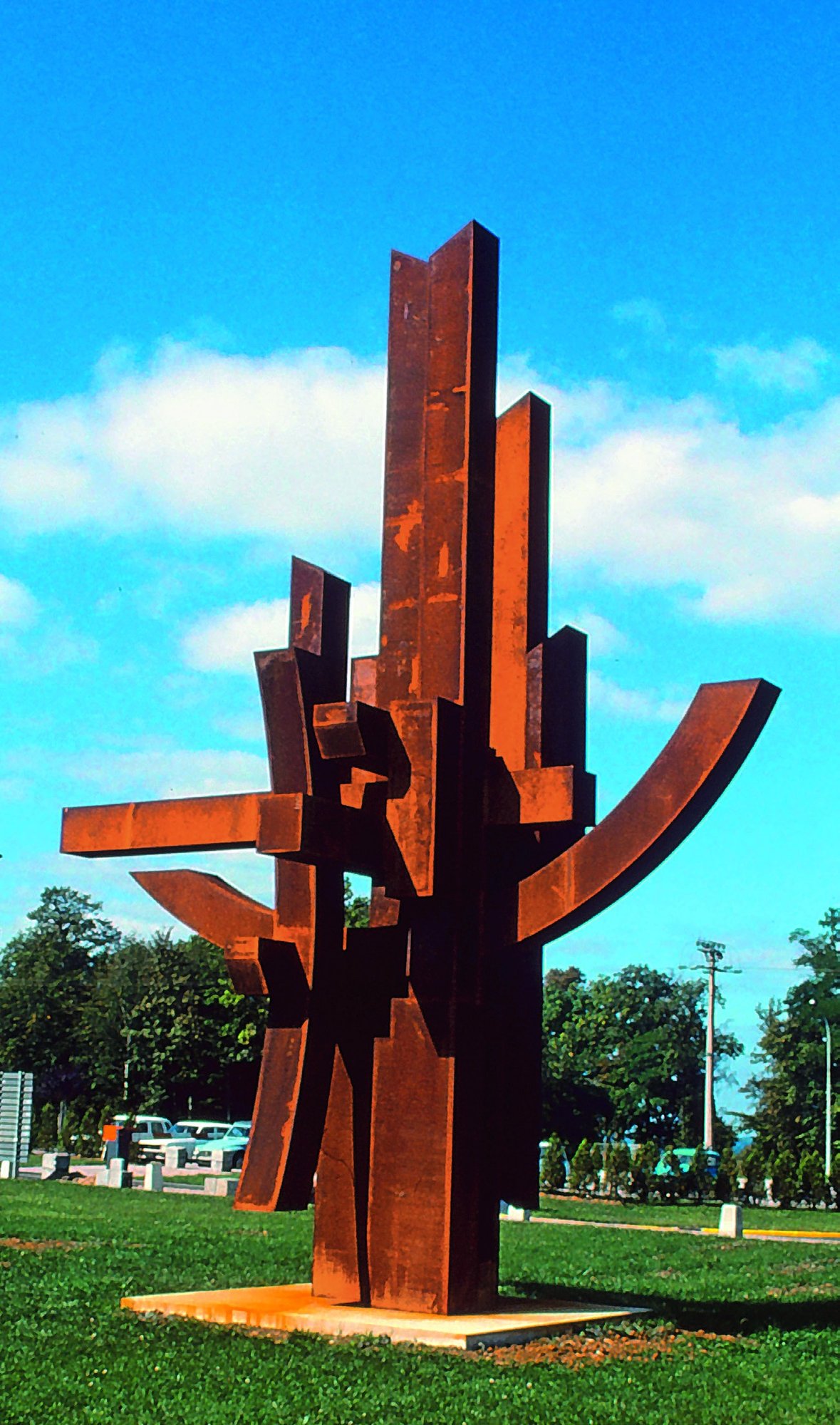
Homage to Science

Architectural Structure (Nancy)

1978

Patinated steel

H. 51 × W. 35.5 × D. 21 cm

Edition of 8 + 4 artist’s proofs

Sculpture monumentale Hommage aux sciences à Vandœuvre-lès-Nancy
Homage to Science (9.5 metres high), Faculty of Medicine, Vandœuvre-lès-Nancy

Furniture

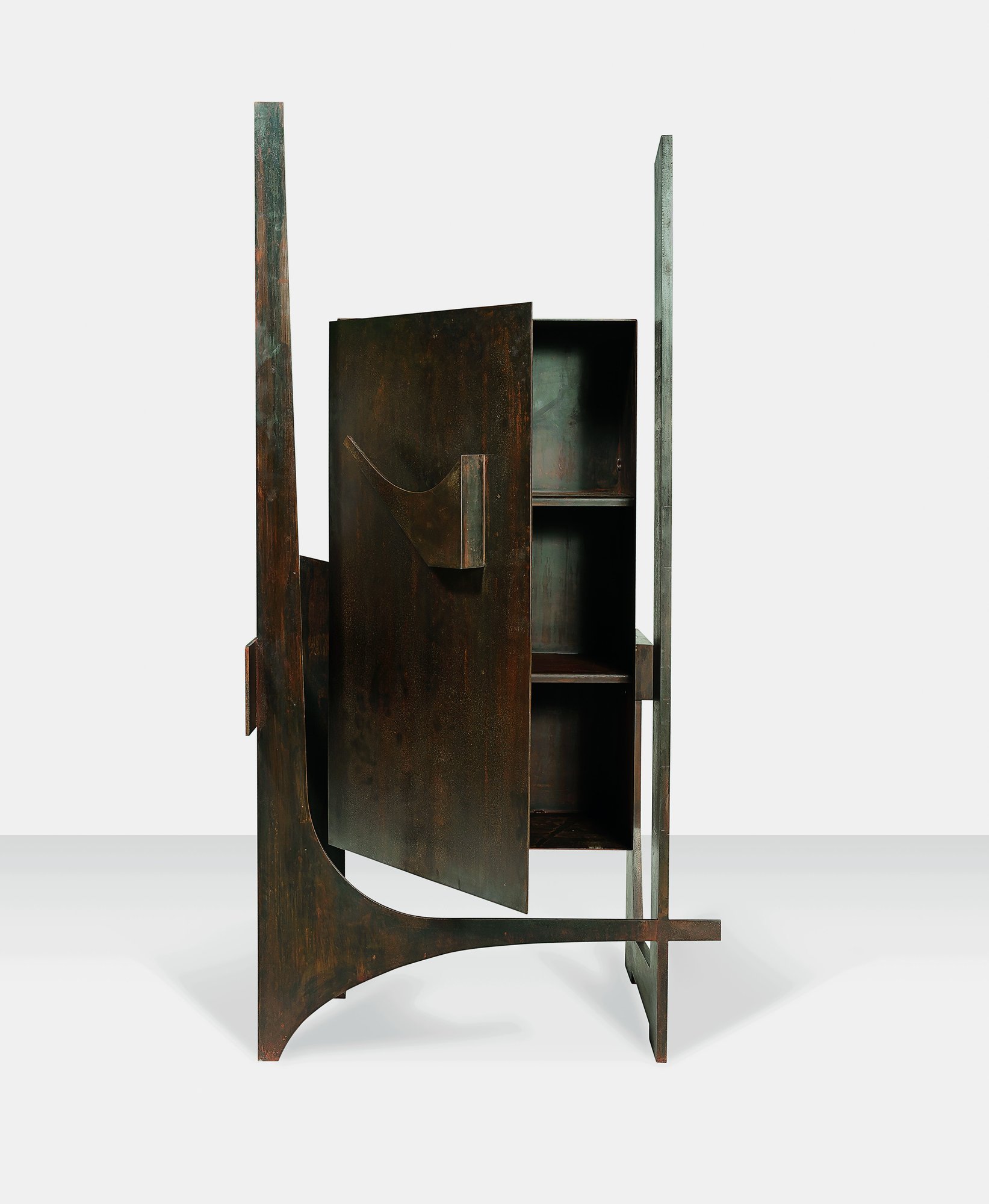
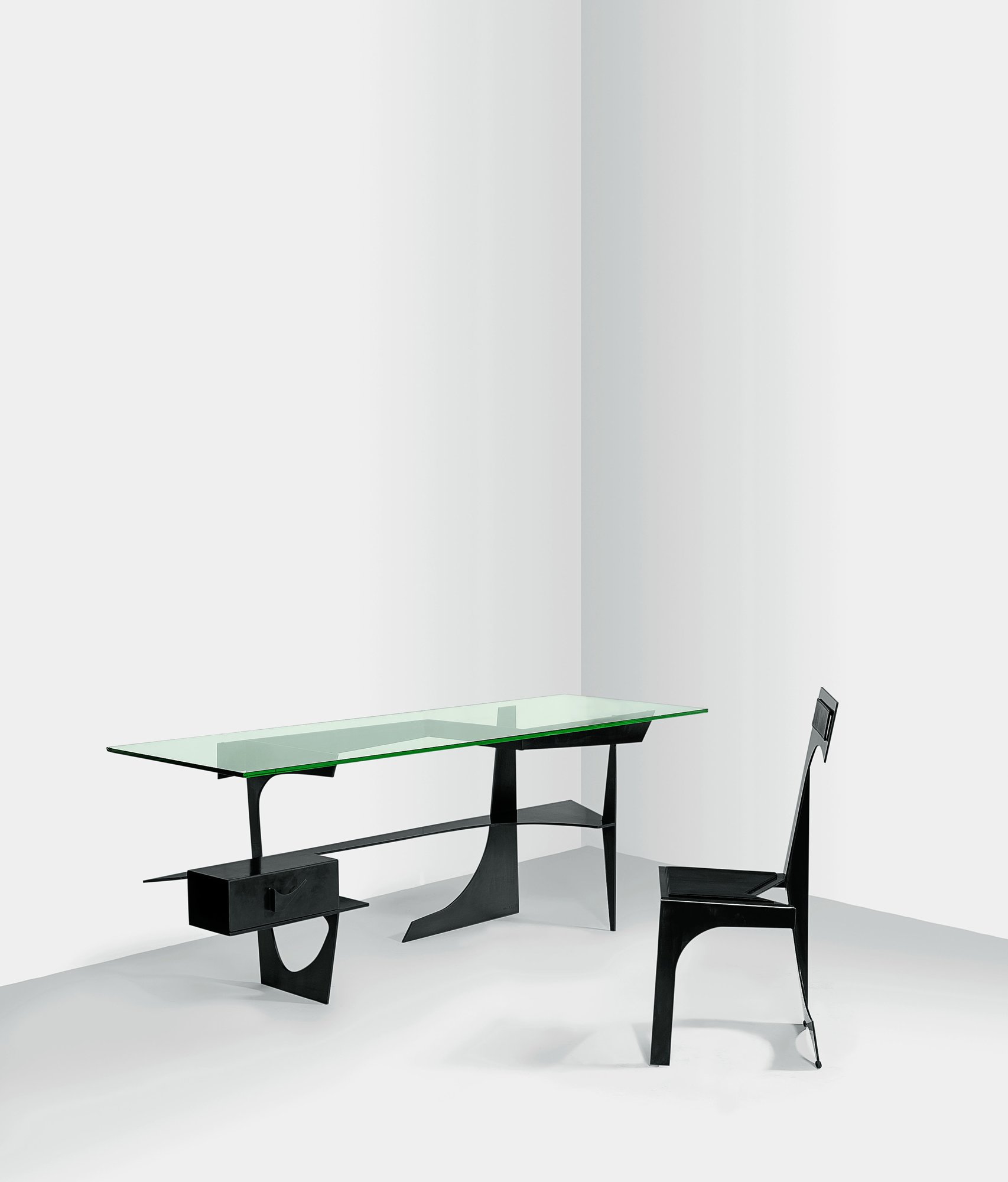
An insatiable builder, Francesco Marino di Teana designed various pieces of furniture from the mid-1950s. While earning a living from odd jobs as a decorator, he developed, alongside his sculpture, astonishing creations, true hybrids between 1950s design aesthetics and the artist’s own “architectural” construction. Originally intended for close friends and early collectors, these “confidential” works are now coming to light thanks to the research carried out for the catalogue raisonné. The completion of their edition also finally gives us direct access to these elegant, avant-garde “furniture-sculptures”.

Buffet architectural en tôles d’acier à patine noire
Sideboard, 1956, varnished steel sheets with burnished black patina, H. 180 × W. 88 × D. 64.5 cm (cabinet height: 140 cm), edition of 8 + 4 artist's proofs
Bureau architectural en acier et verre avec sa chaise architecturale
Architectural Desk, 1956-1958, varnished steel with burnished black patina and glass slab, H. 75 × W. 190 × D. 46 cm (glass top: 70 × 200 cm); Architectural Chair, 1956-1958, varnished steel with burnished black patina, leather seat and back, H. 99 × W. 42 × D. 44 cm, edition of 48 + 9 artist's proofs
Ensemble de maquettes de mobilier en zinc
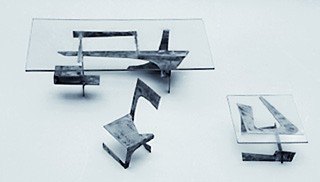
“Furniture Project”, 1956, set of zinc models
Scroll to Top