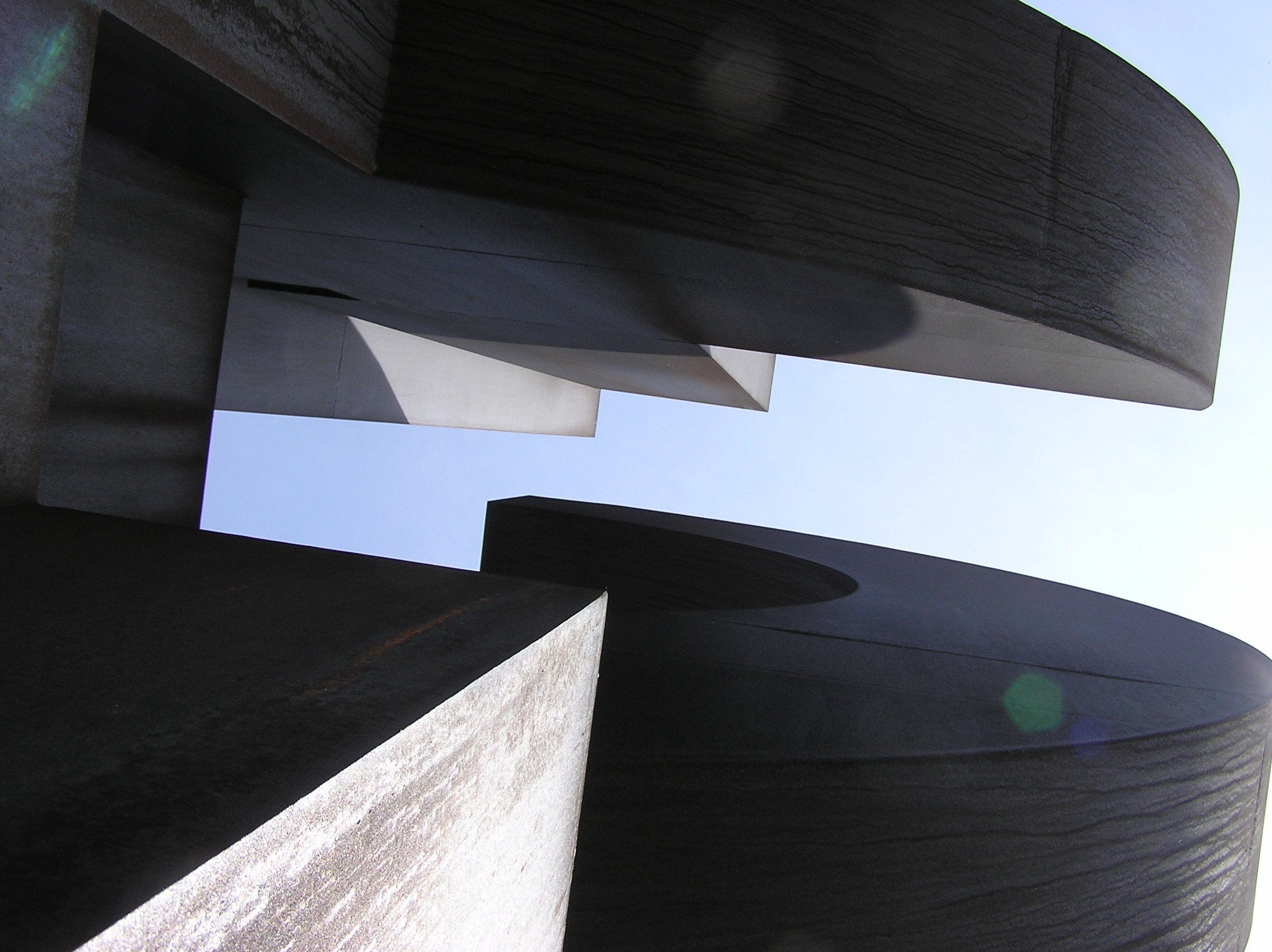
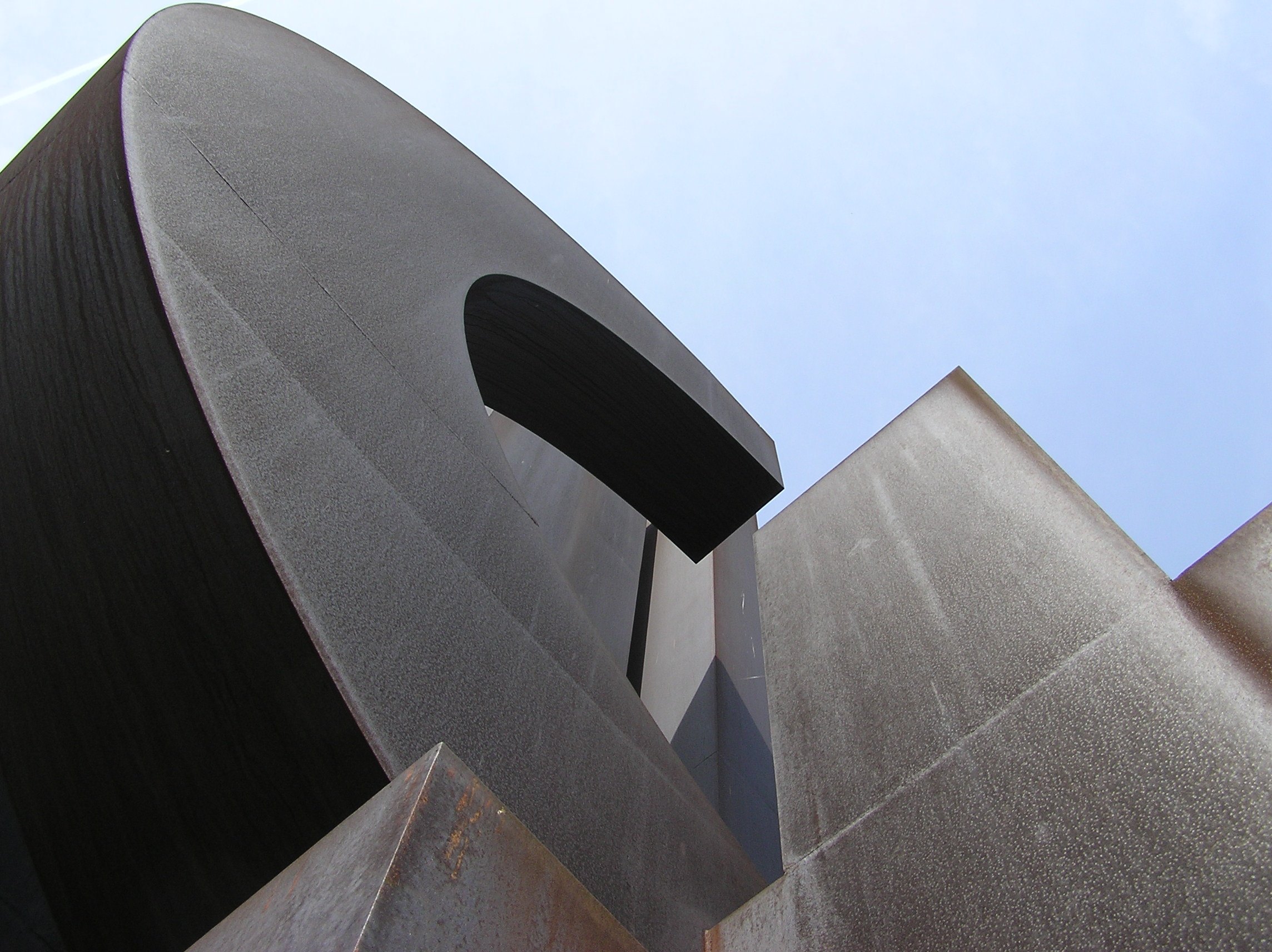
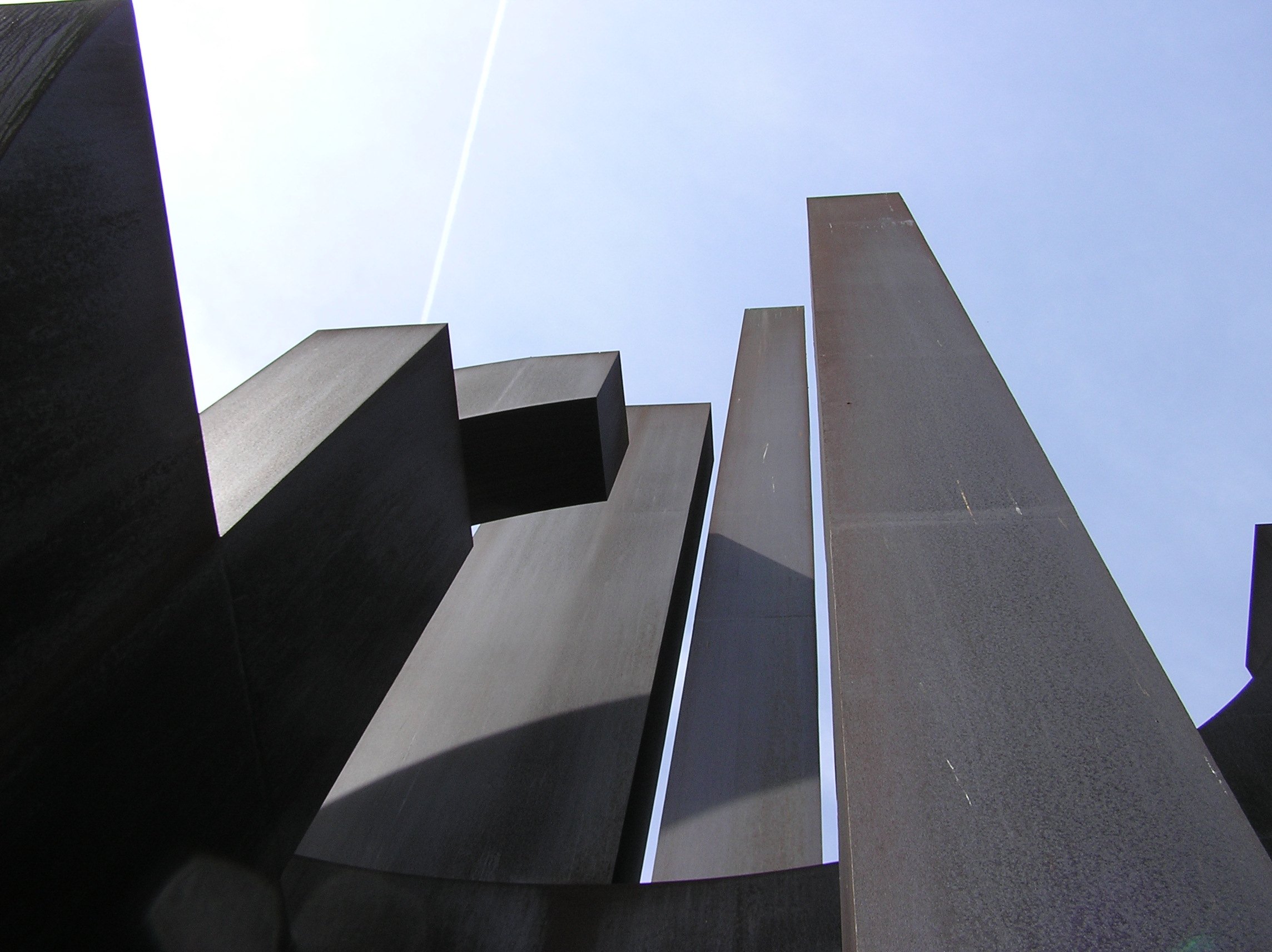
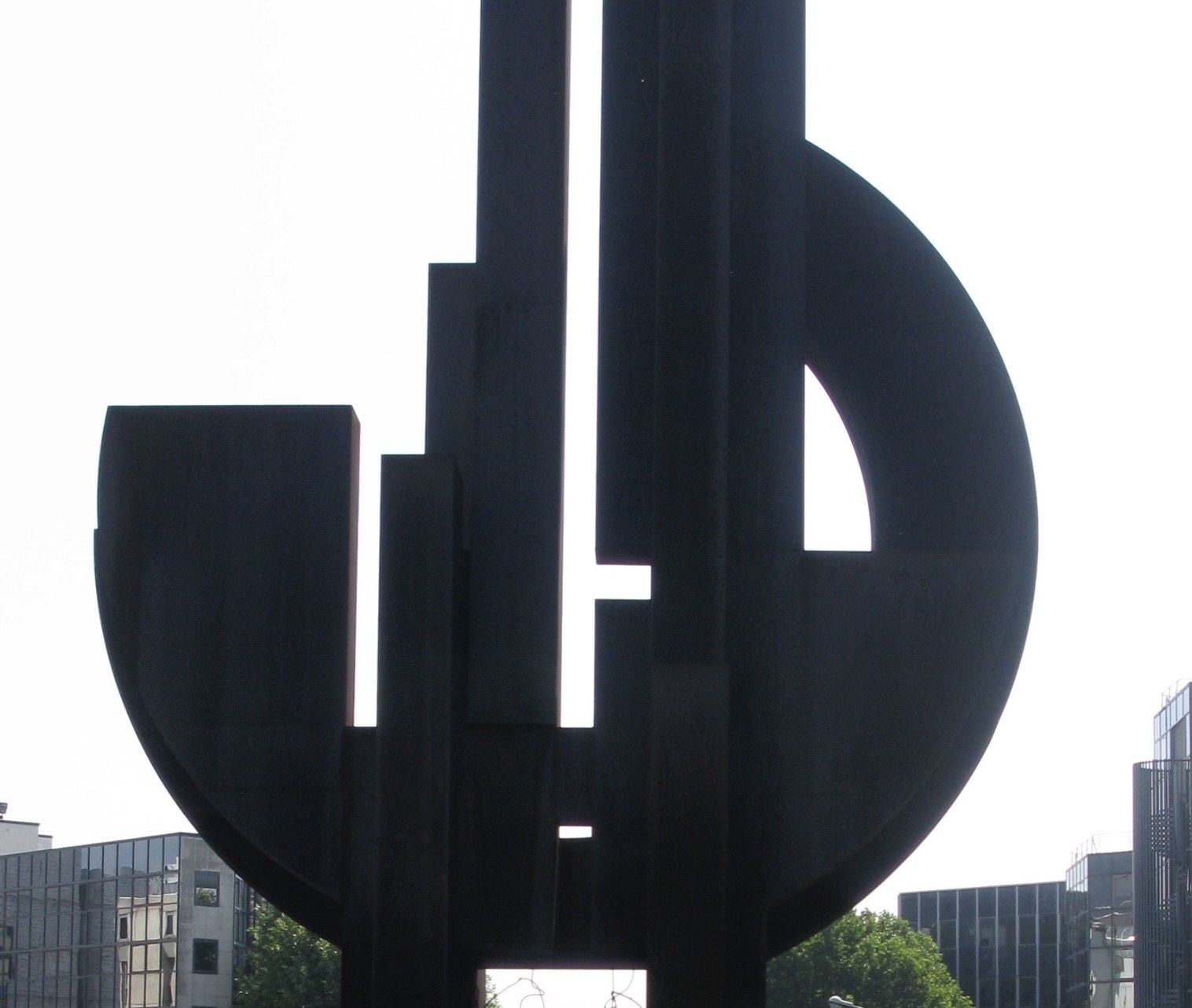
Fontenay-sous-Bois · 1988 – 1990
One man's achievement
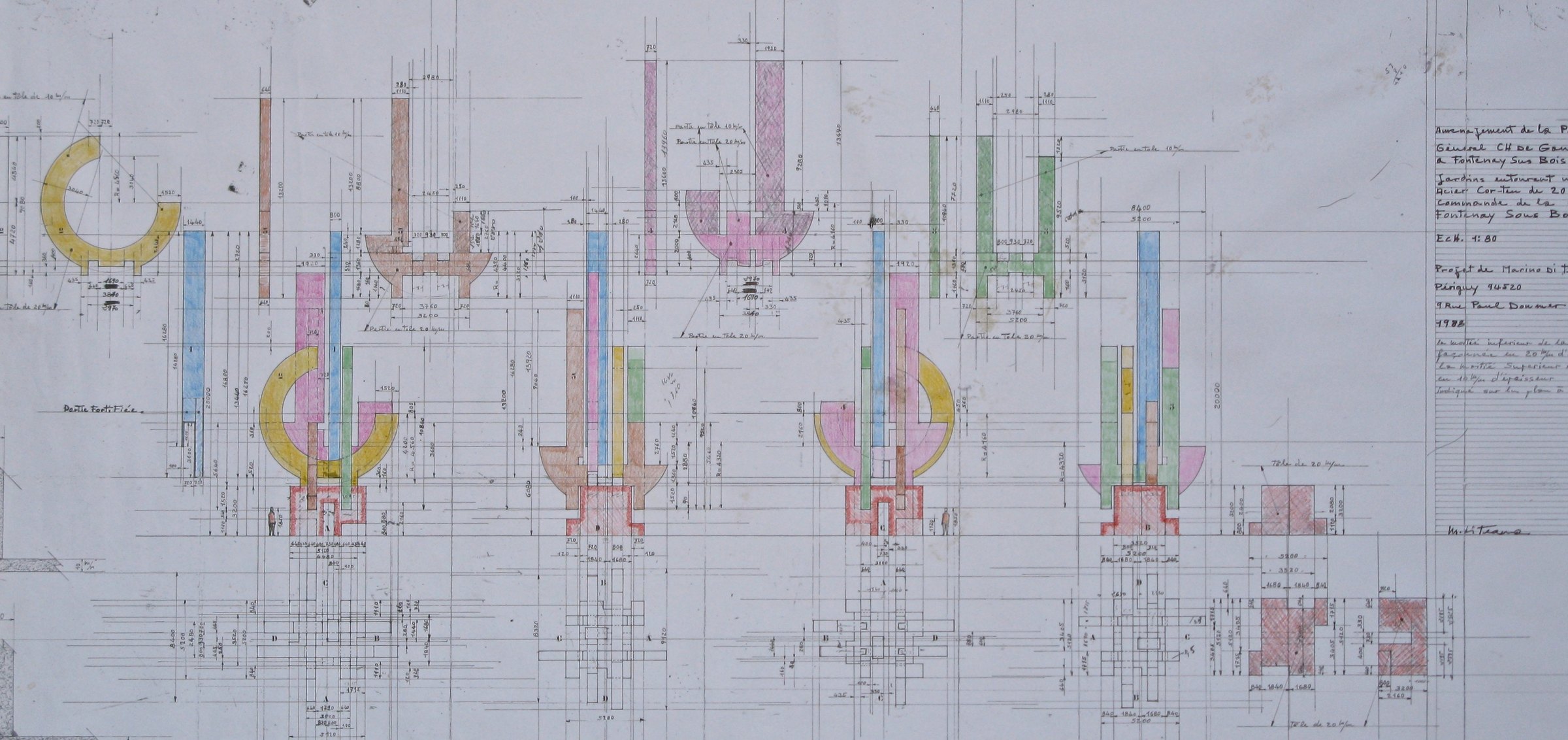
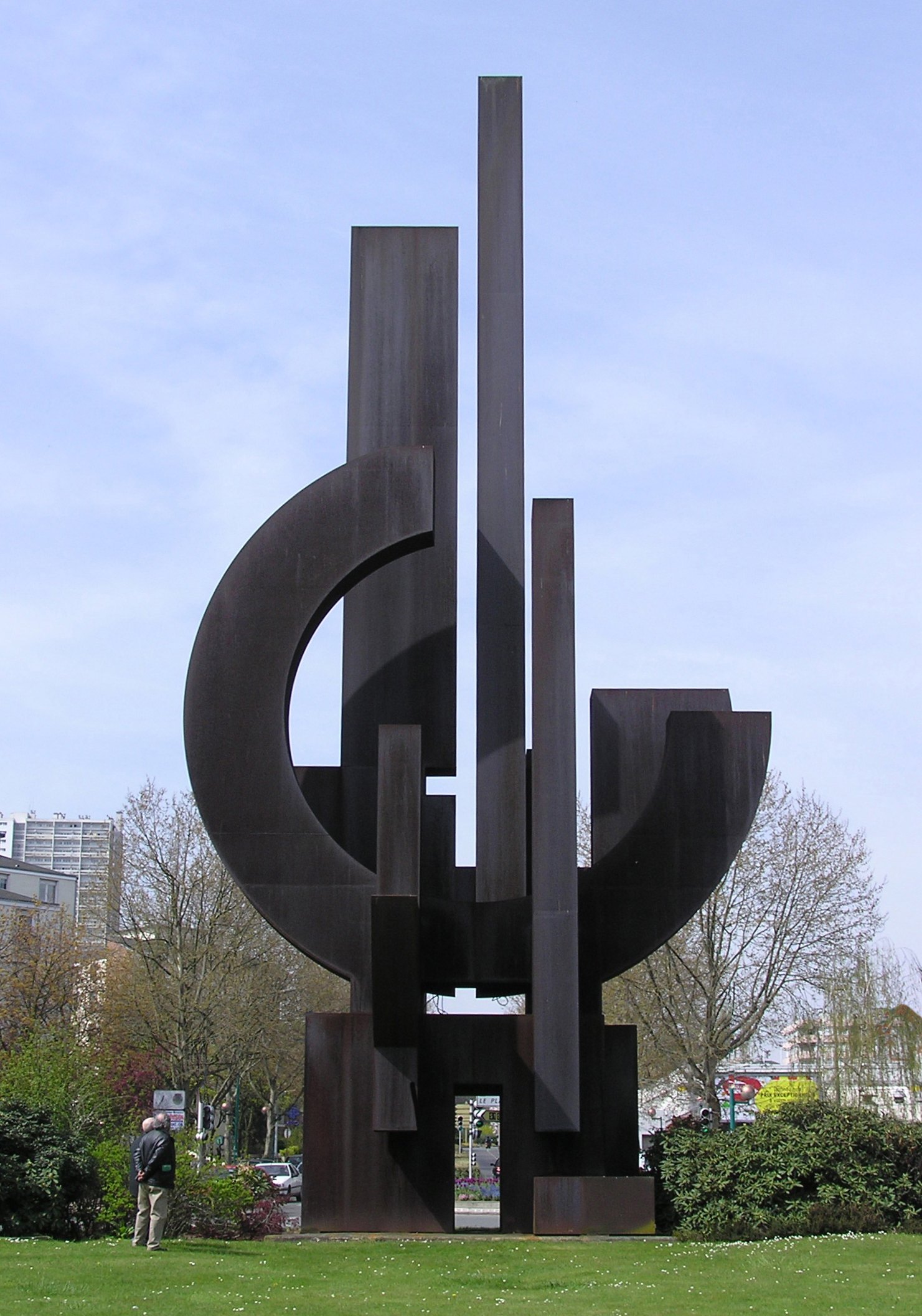
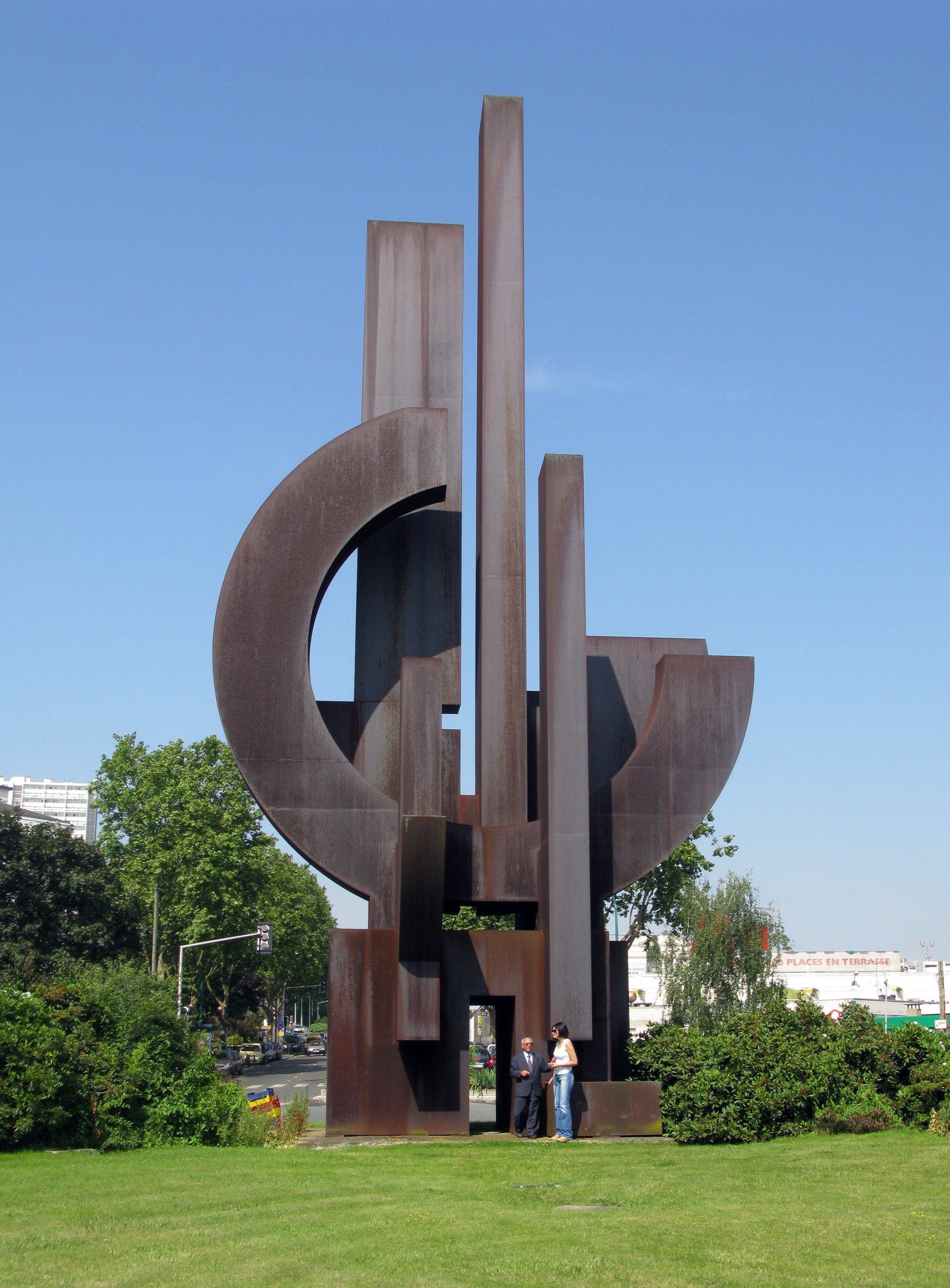
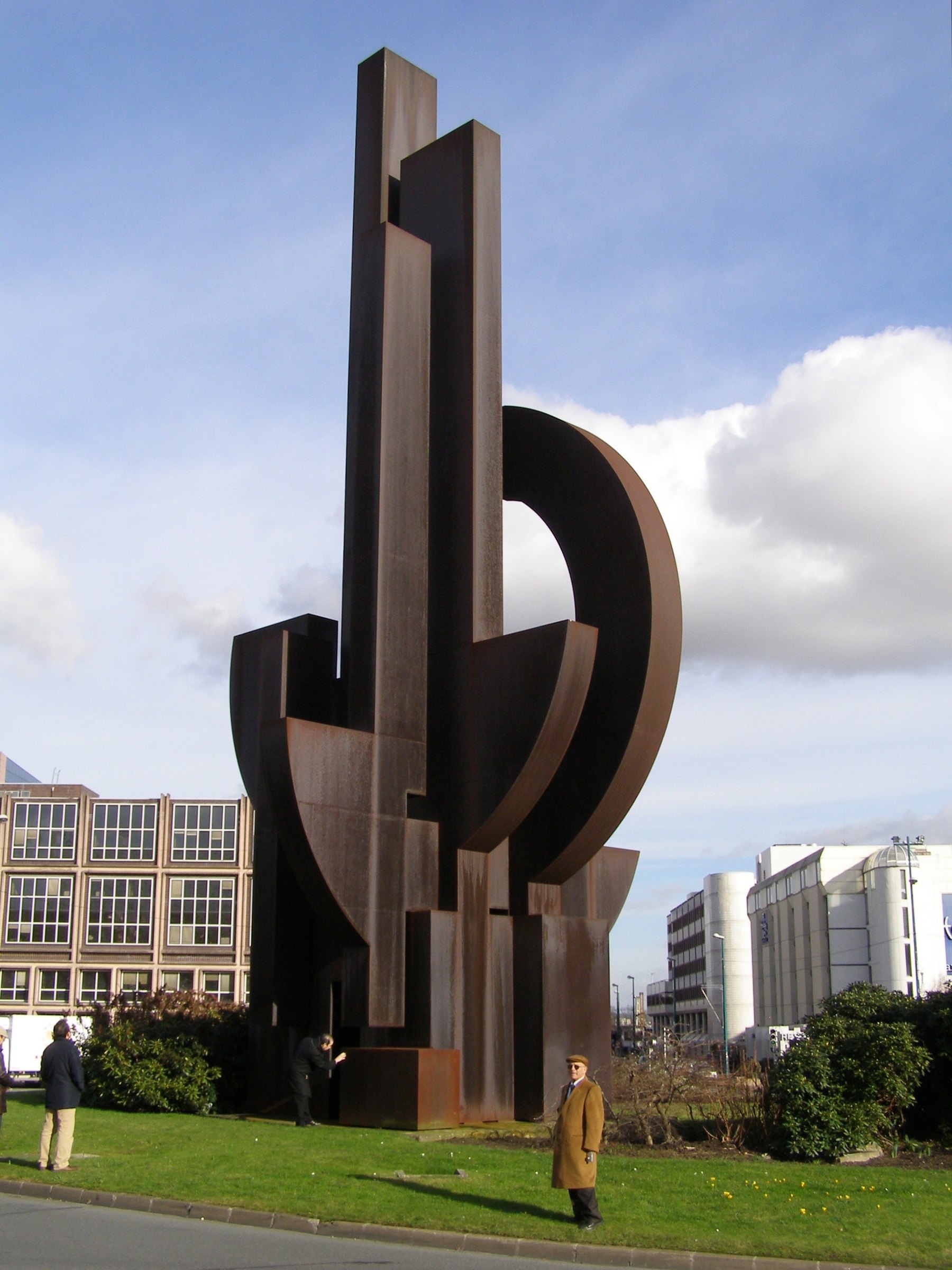
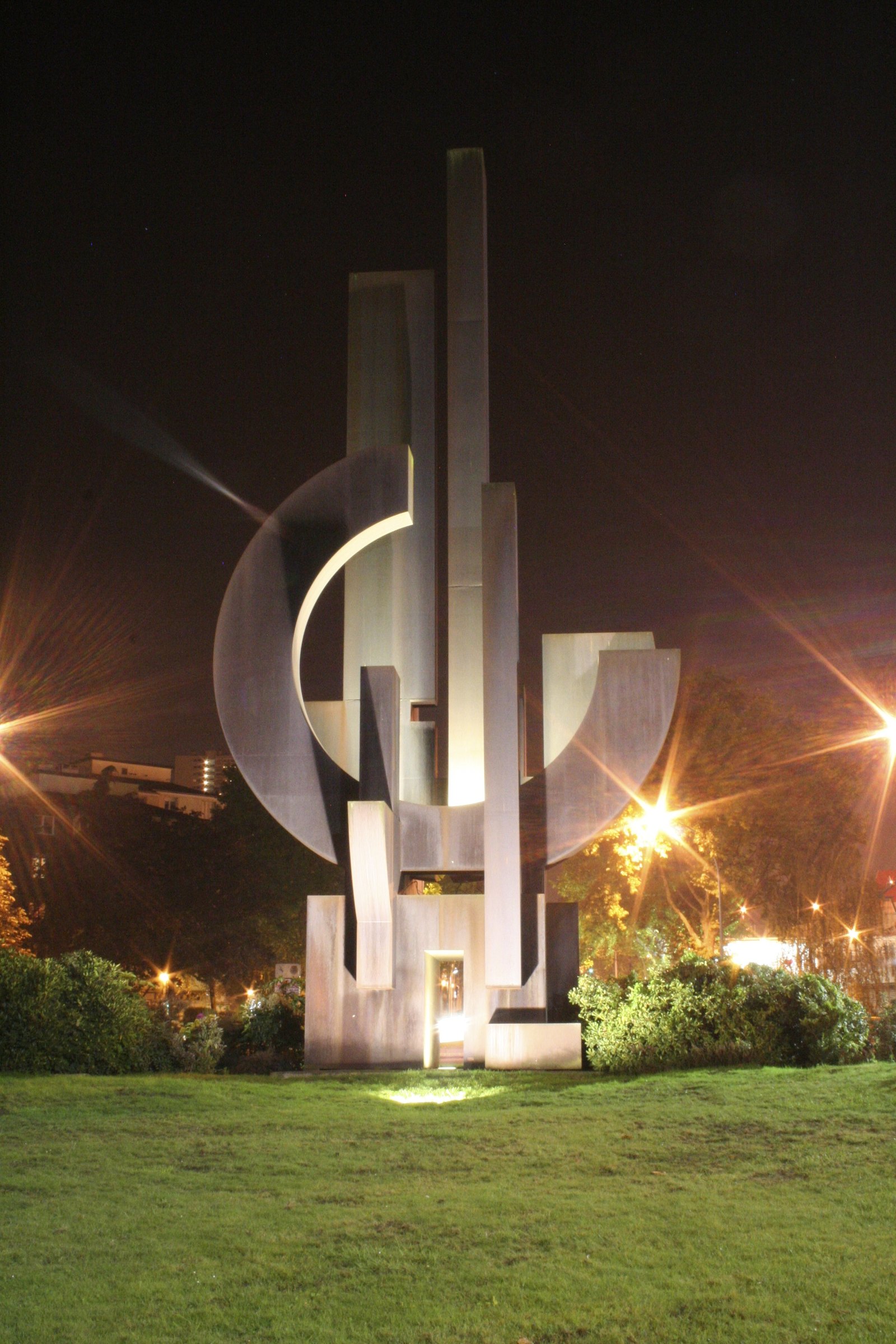
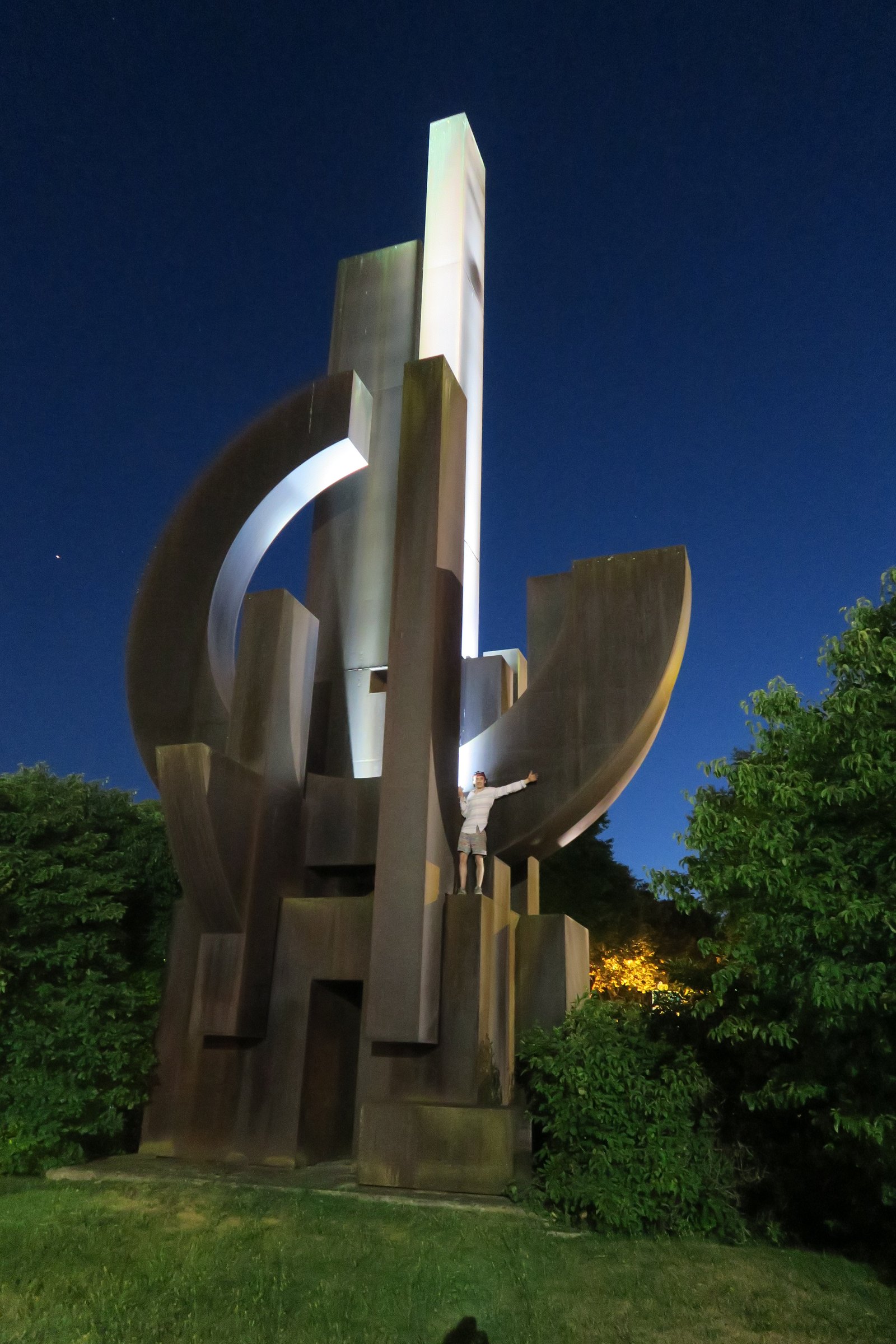
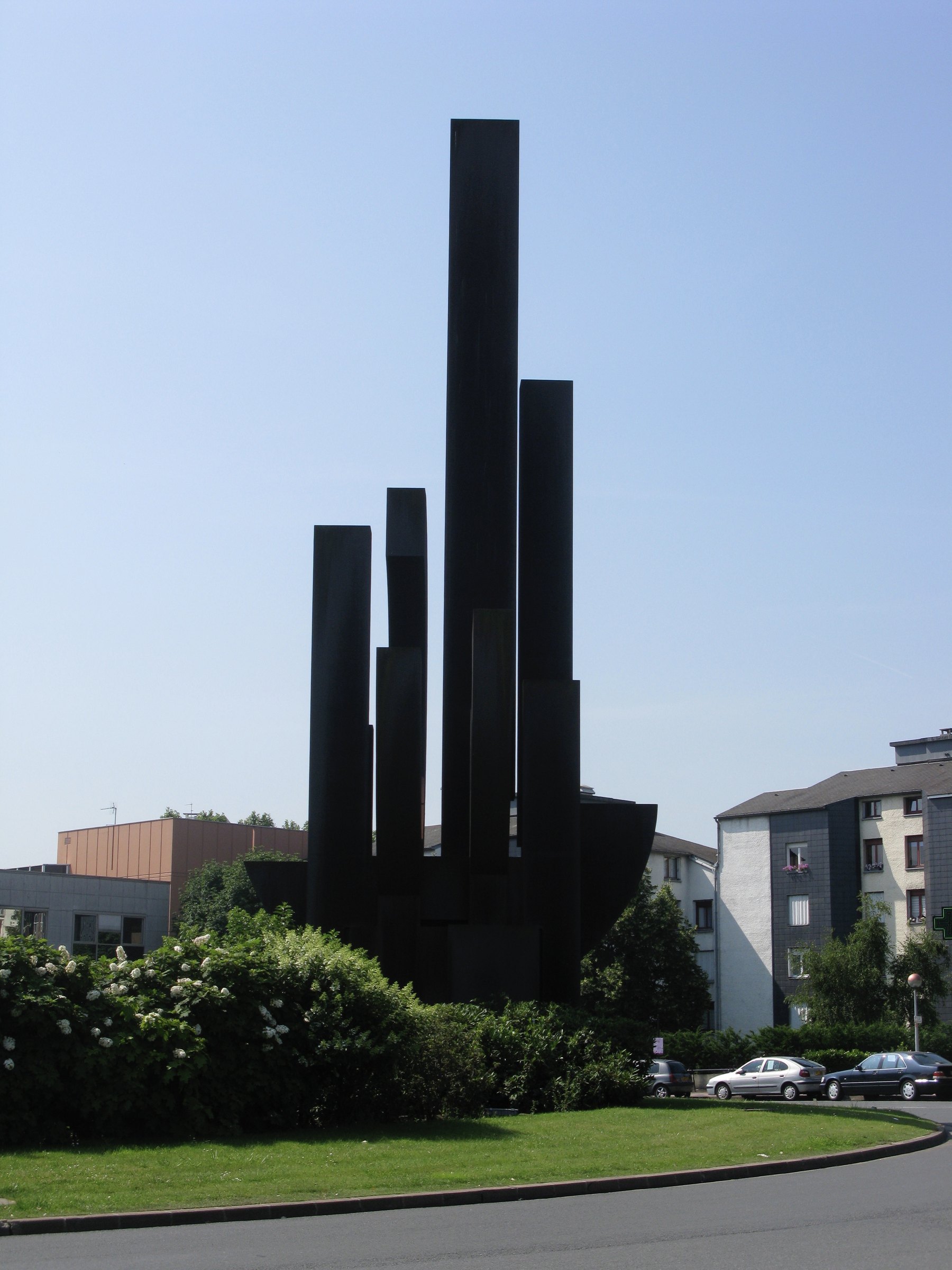
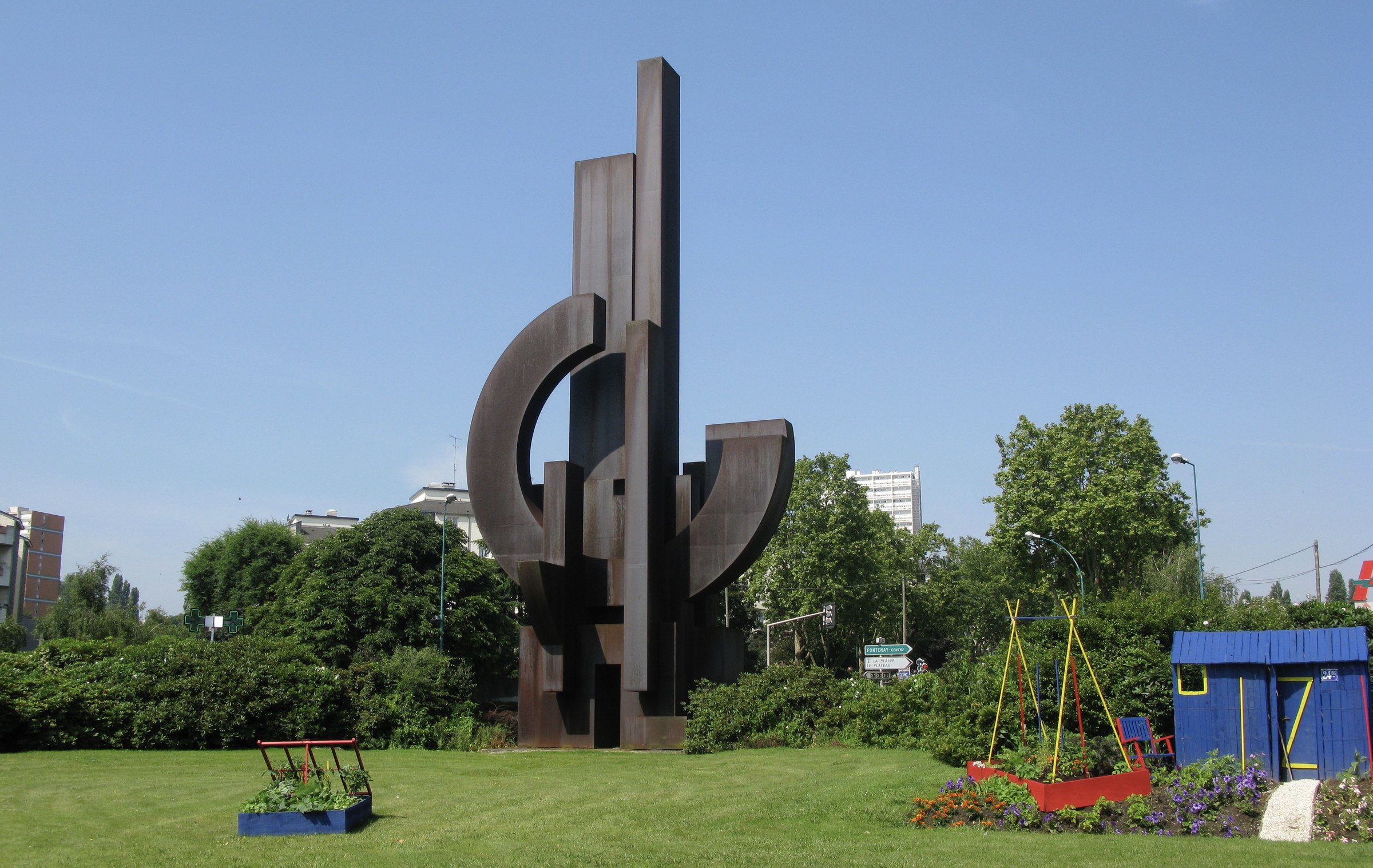
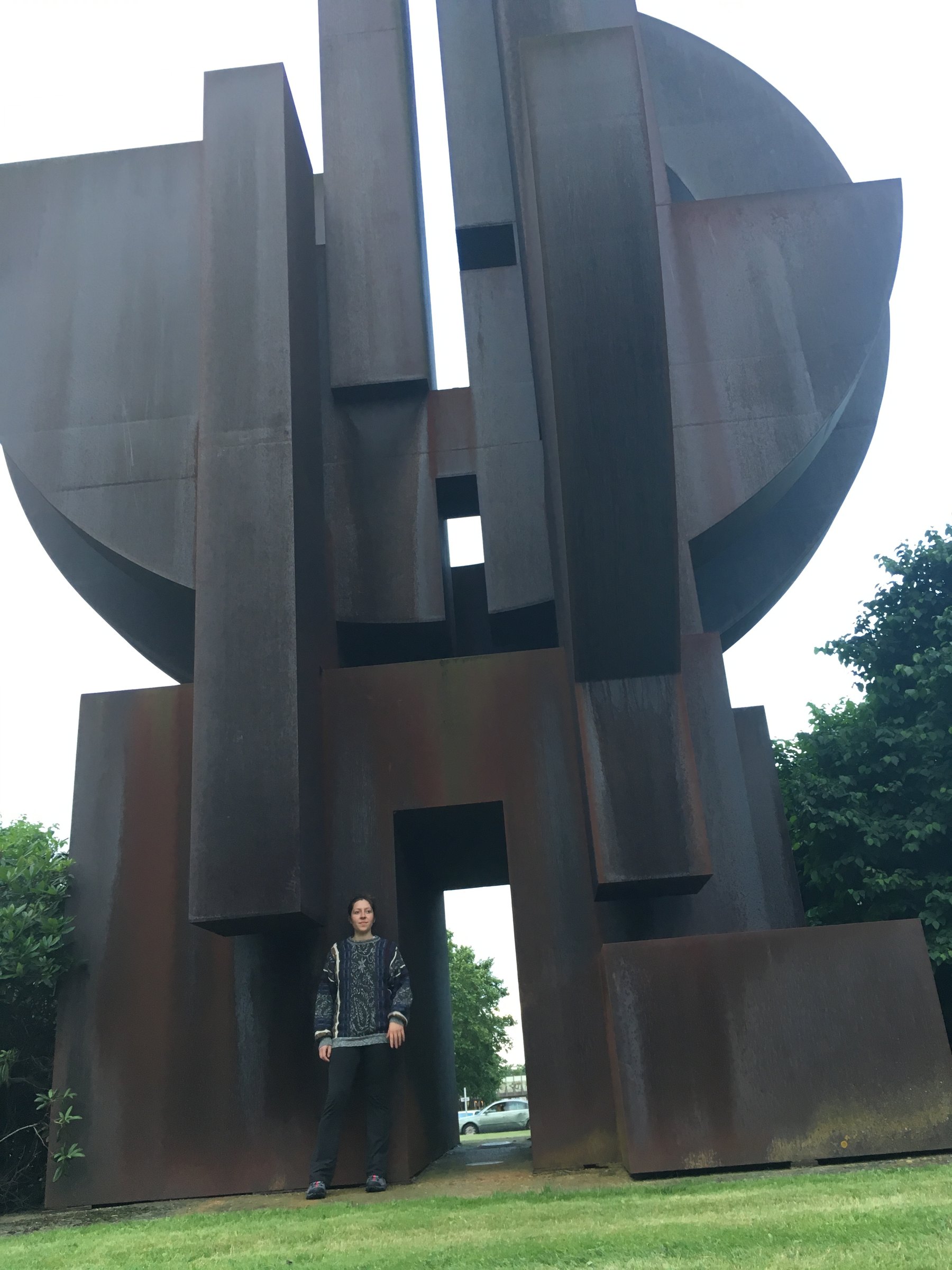
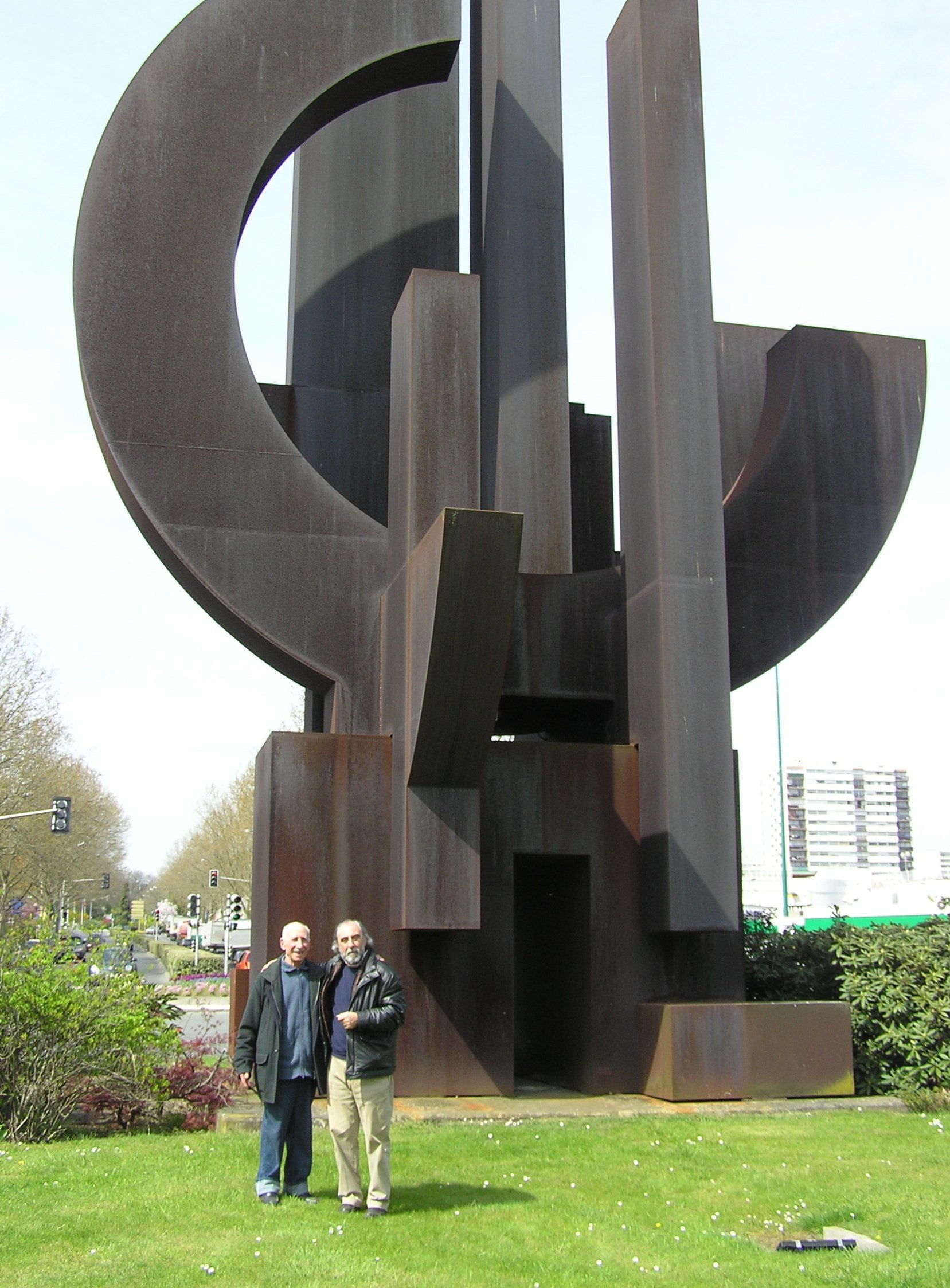
In 1990, Liberté was among the largest monumental sculptures in Europe. But the achievement lies not only in its size. Marino di Teana designed everything himself: the whole as well as the technical details, the base, the thickness of the Corten steel plates, the welds. He drew all the plans himself, by hand, to the millimetre, without a computer. No one helped him, apart from the assembly crew he directed on site, at the age of seventy.
About the work
- Title
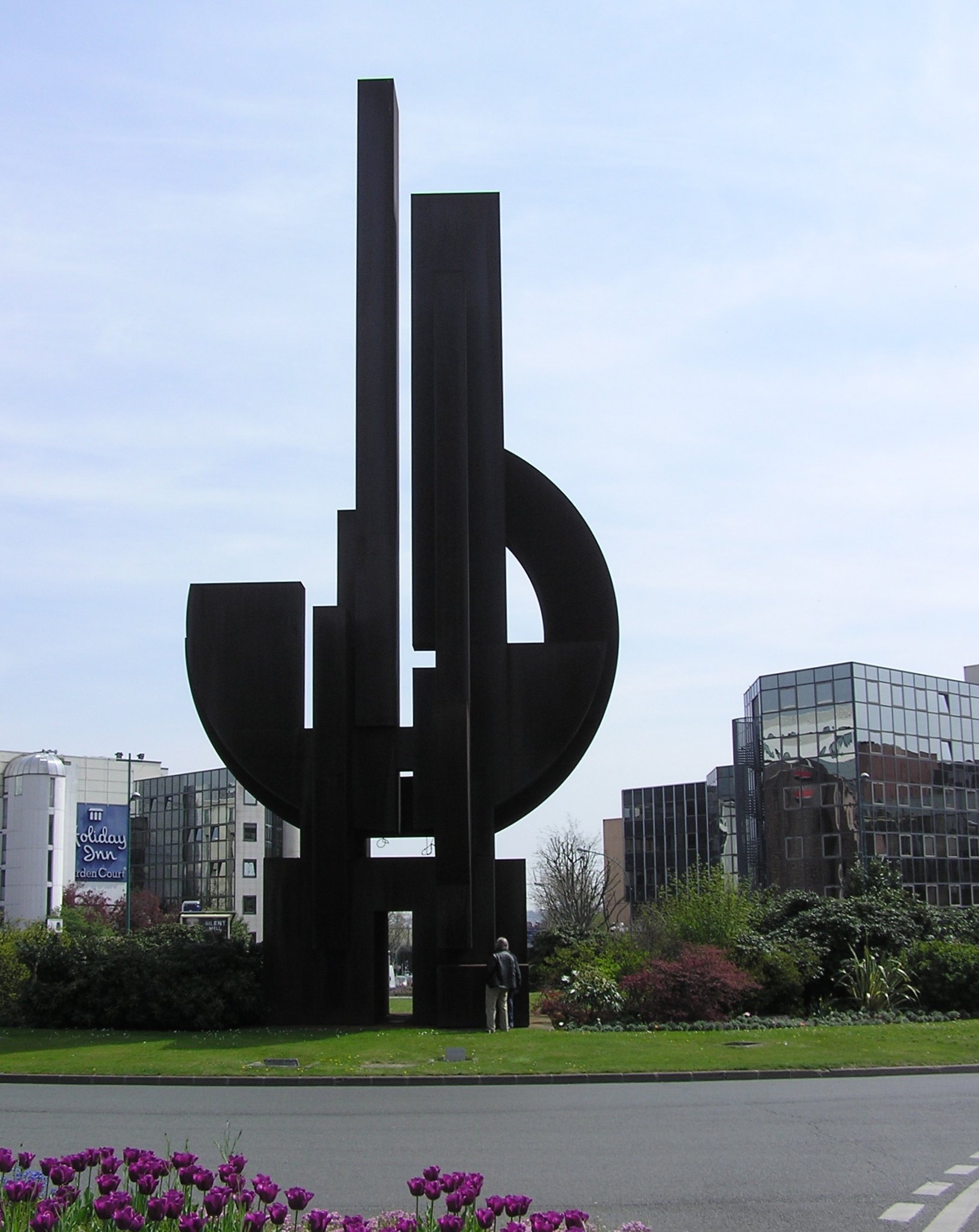
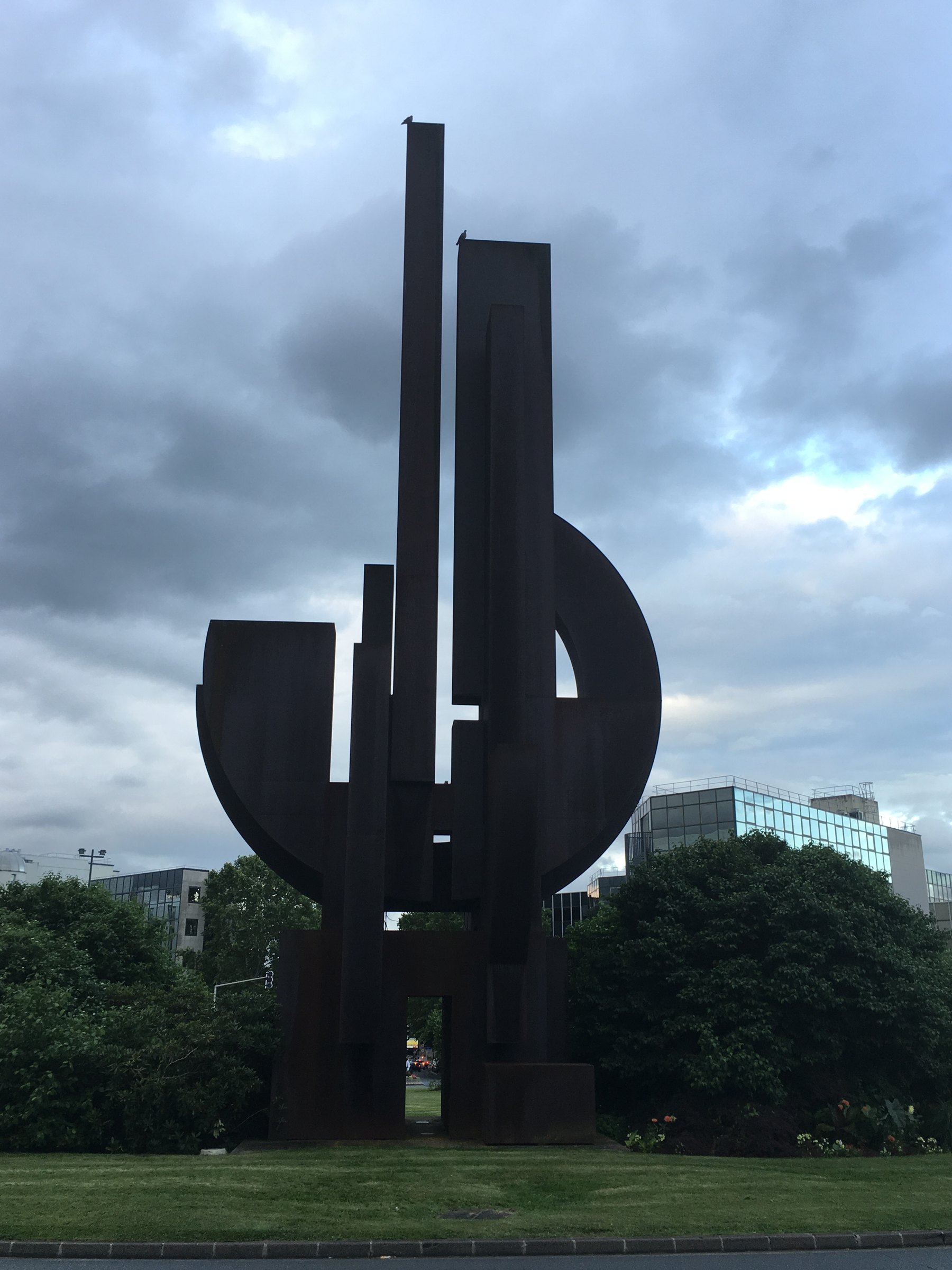
- Liberté (first title: Homage to General Charles de Gaulle)
- Date
- 1988 – 1990; inaugurated on 28 November 1990
- Material
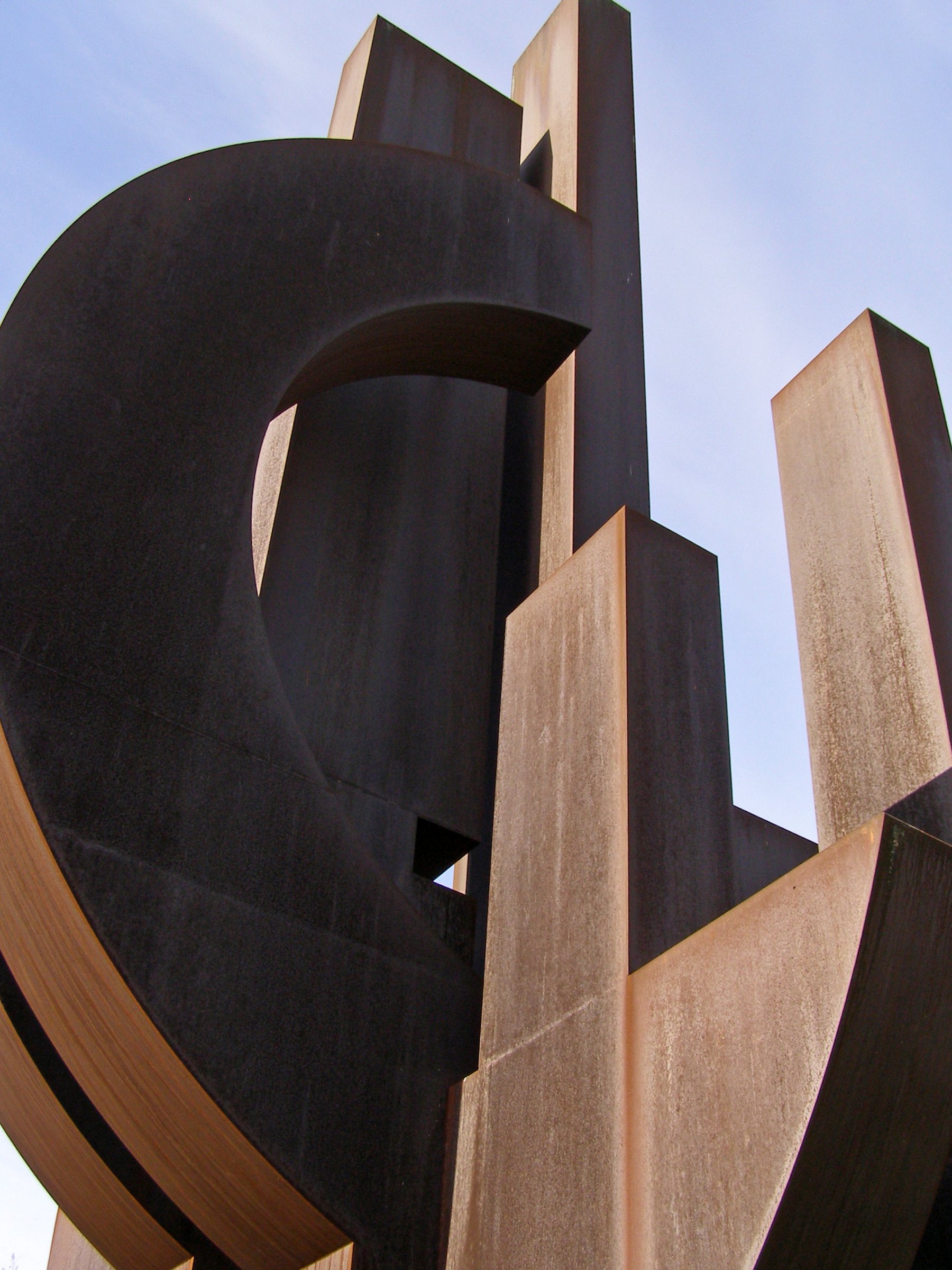
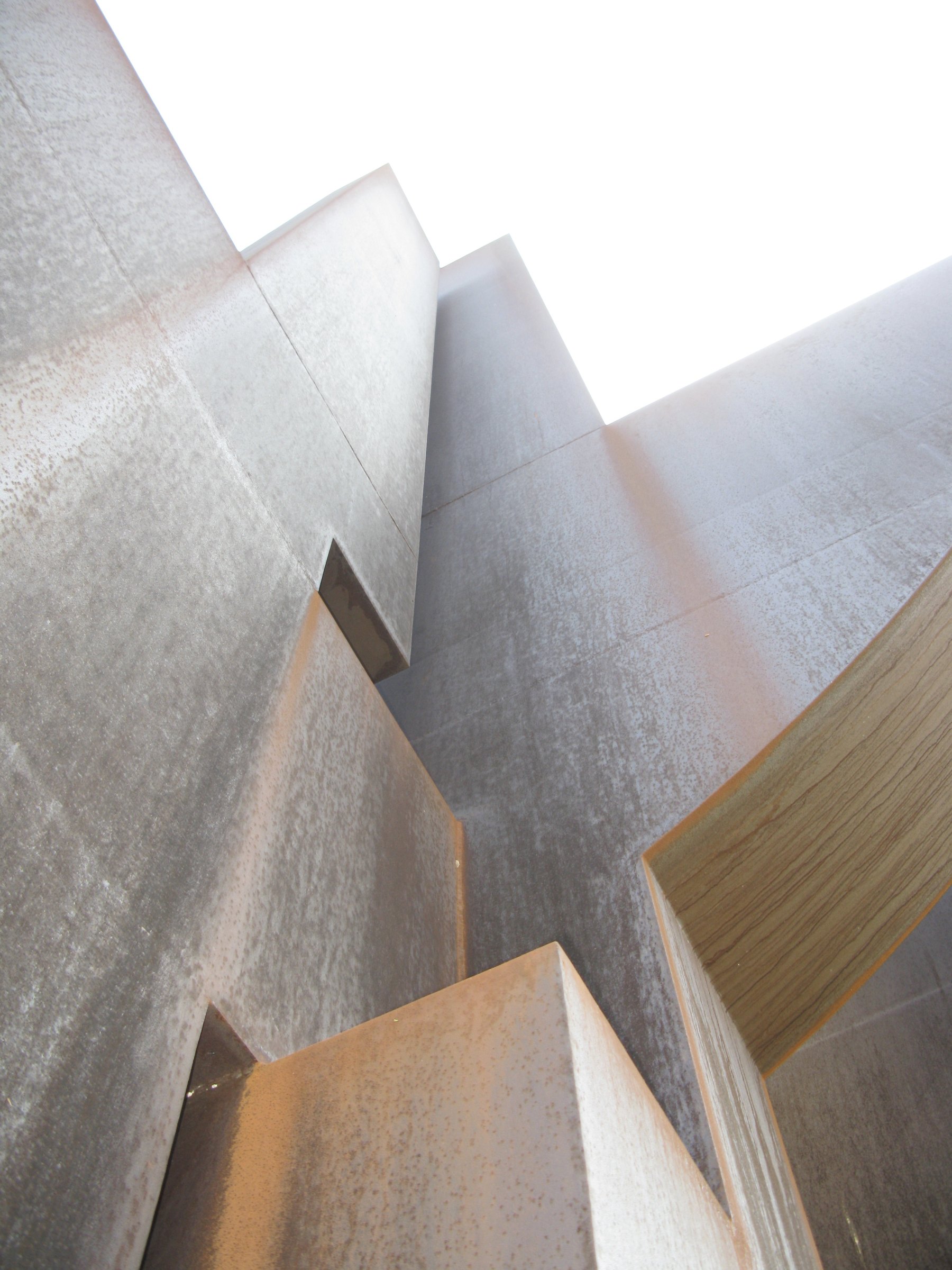
- Welded Corten steel
- Dimensions
- 20 × 9.30 × 8.40 m; 4.36 m base, 0.50 m of it above ground
- Weight
- About 110 tonnes
- Location
- Place du Général-de-Gaulle, Fontenay-sous-Bois (Val-de-Marne, near Paris)
- Collection
- Val-de-Marne Departmental Contemporary Art Fund (FDAC), acquired in 1990, with the City of Fontenay-sous-Bois
The artist’s thinking
“Art is the city”
Marino di Teana used to say: “Art is the city! Art is significant!” – significant in the sense that one sees signs in it.
“Look at the Place de la Concorde: buildings were built there, sculptures, fountains, horses were placed there…, all in proportion to the square, bringing harmony to the place. A double perspective is created and the obelisk is placed at the centre, linking the Carrousel du Louvre to the Arc de Triomphe, which completes this universe. It is this whole that is the true work of art. Every monument in it signals an idea, a story, a myth…”
“To paint the Sistine Chapel, Michelangelo called on all his knowledge of history, theology, mythology, anatomy and architecture. His painting is not mere decoration; it becomes significant.”
Marino could multiply the examples with the Sumerians, the Egyptians, the Romans… History was his passion.
“I start with the pivot”
“All my sculptures have a meaning; they can be translated into architecture. Sculpture becomes architecture, architecture is sculpture.”
“When I make a sculpture, I start with the pivot, the inside, the centre, which I let grow and develop like a tree. As the work evolves, I cut away what is superfluous to reach a kind of quintessence, when all the inner forces have reached their point of balance. Then the sculpture is born. It is no longer an object; it can settle in space and in time. The energy of the mass of steel gives life to space, and to the intervals, which for me are essential.”
This is how, among some sixty monumental sculptures, he created Liberté , whose 20-metre height is in proportion to the space of the Place du Général-de-Gaulle. Any larger, the piece would have become overpowering and the whole unbalanced. Any smaller, it would have been lost in its surroundings.
First step
From the palm of the hand to twenty metres
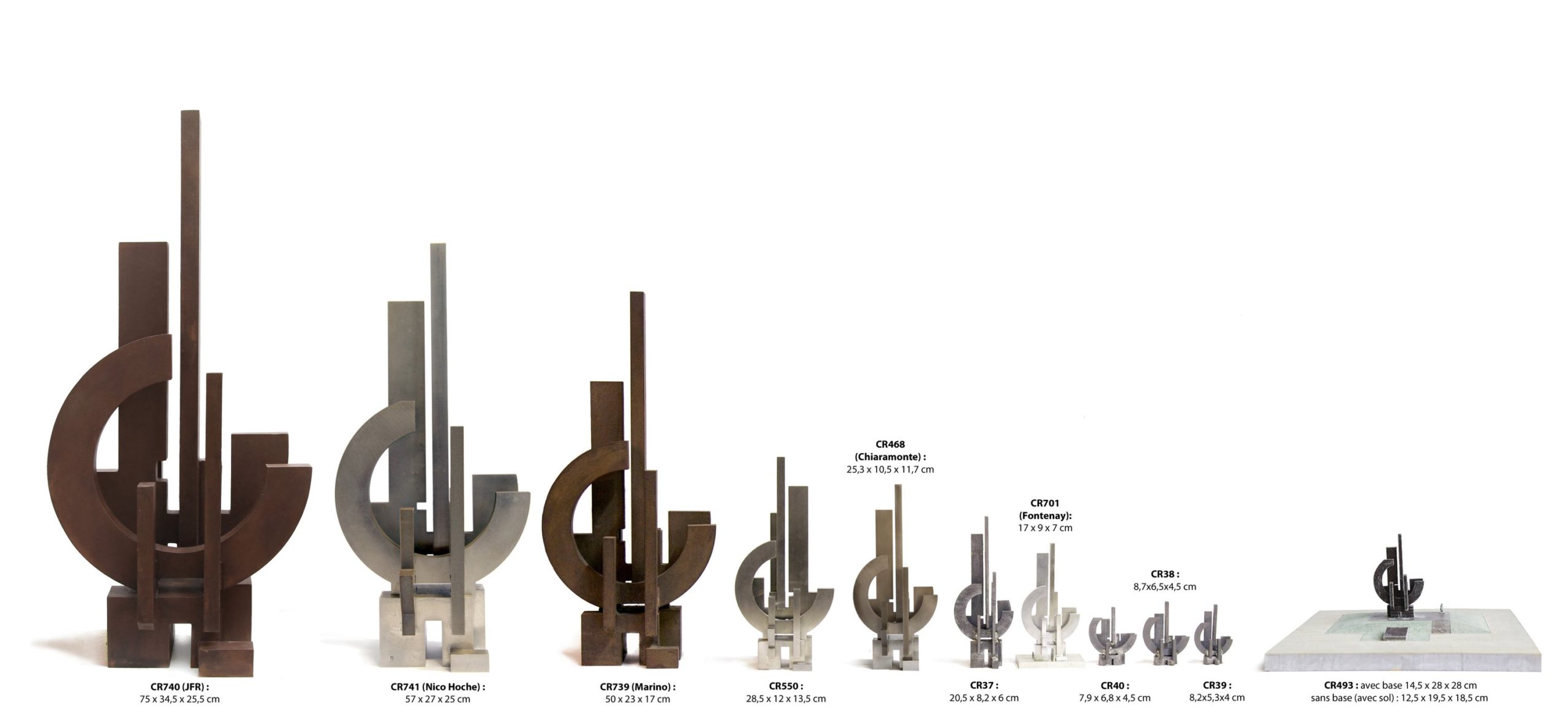
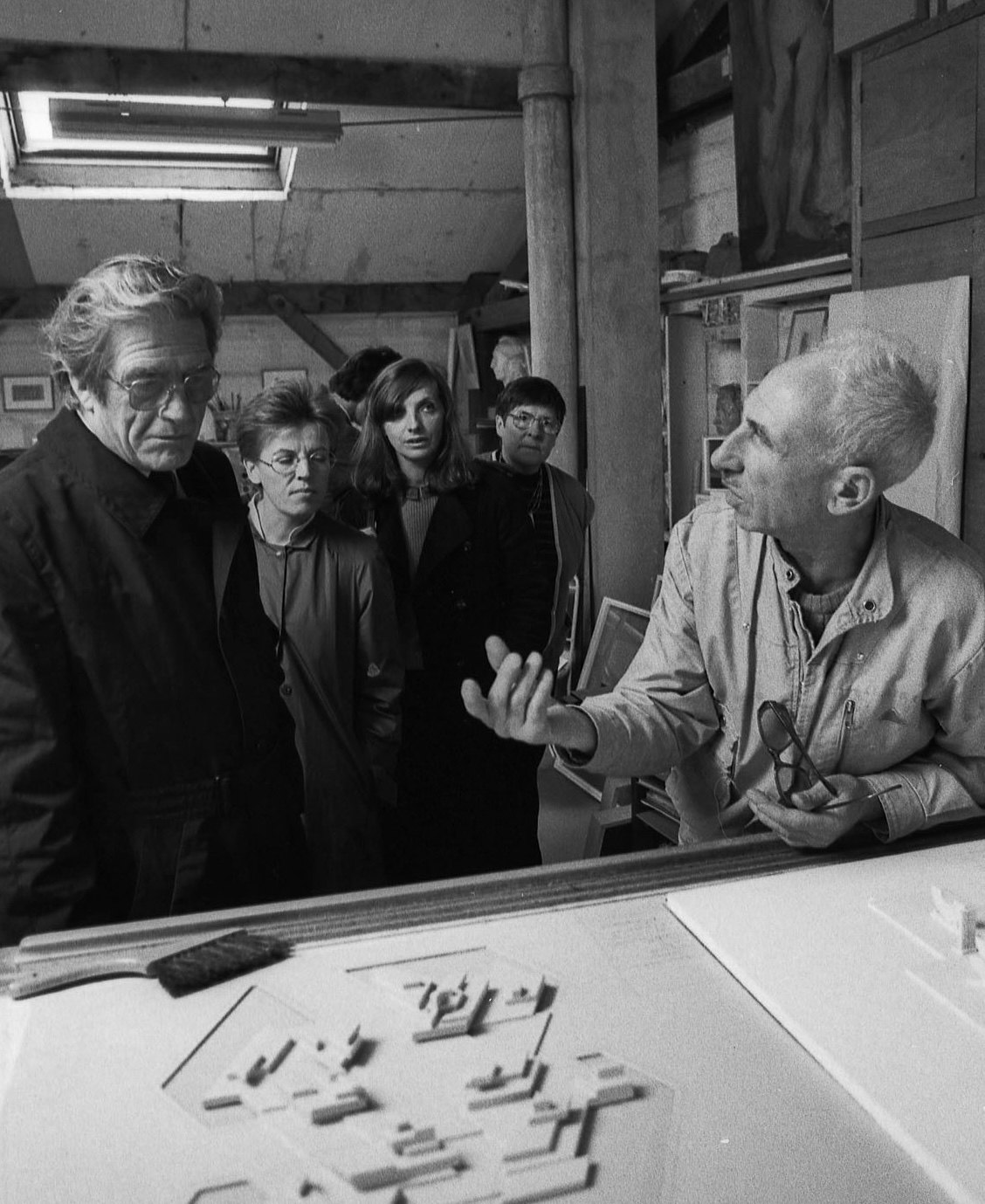
The work involved in creating such a piece is staggering. The starting point is the model, in different sizes. With this small sculpture, Marino sees at once whether the proportions are balanced and whether the structure is monumental. As he says in Arno Gaillard’s film, he sees it “in the palm of his hand”.
Second step
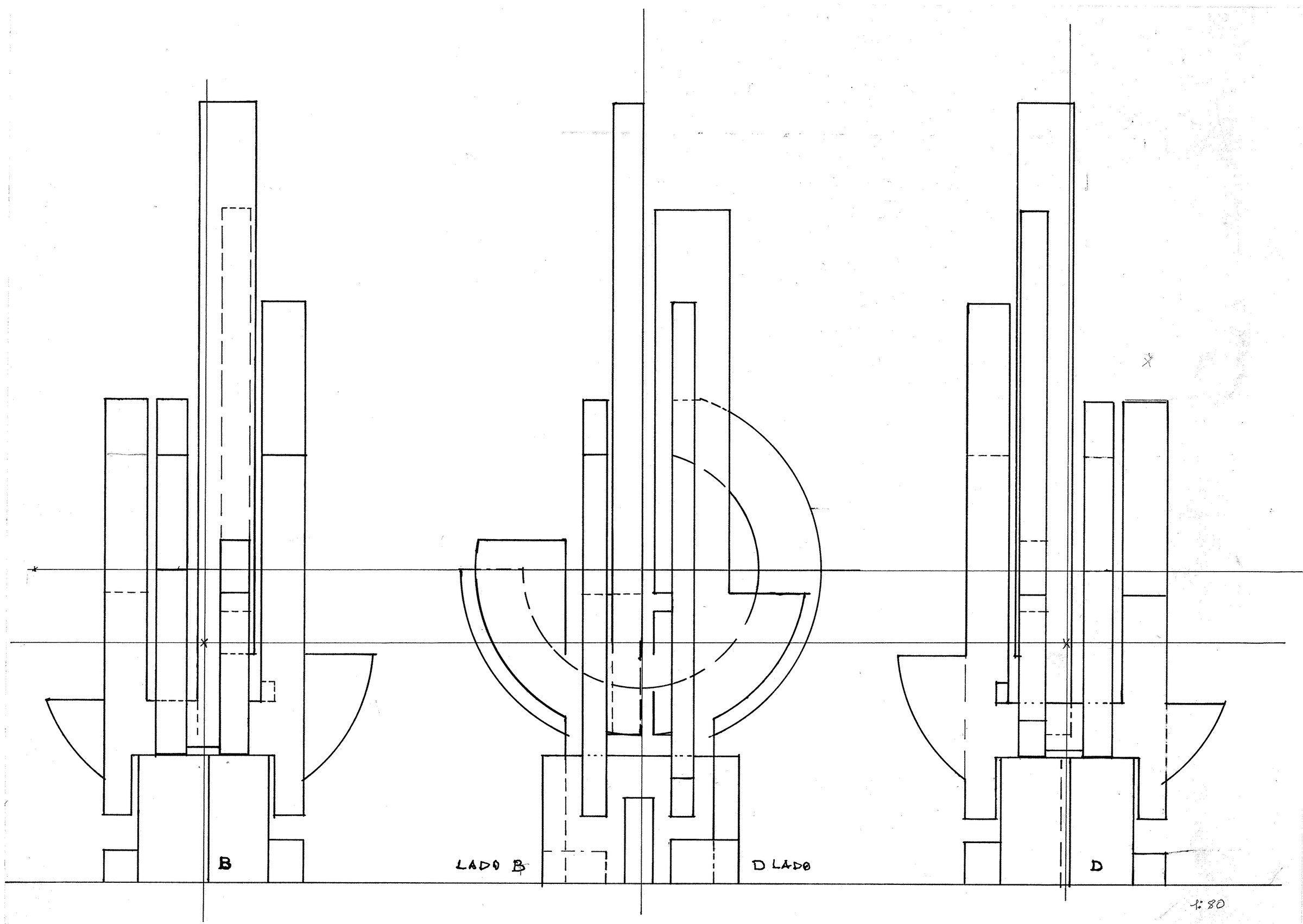
A plan drawn by hand, to the millimetre
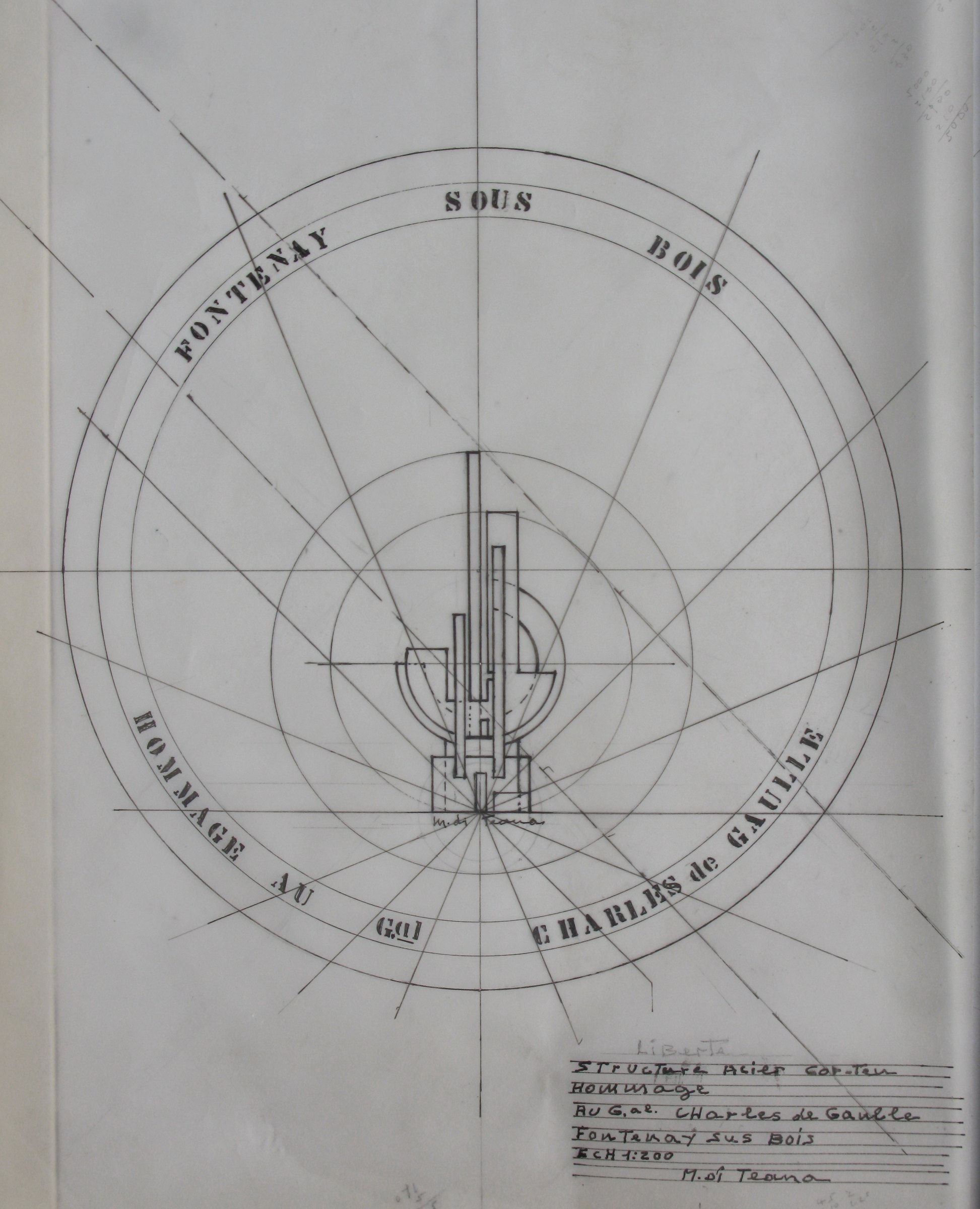
Then he draws the plan of the piece: a 20-metre steel sculpture, plus a 4.36-metre base, drawn by hand and to the millimetre, alone and without a computer. Everything is there: every element, its dimensions, the thickness of the plates, the foundations. The Corten steel plates at the bottom are 20 millimetres thick, those at the top 10 millimetres: the sculpture grows lighter as it rises, as the logic of the structure requires.
On the site plan, the work first bore another name: Homage to General Charles de Gaulle, after the square. The word “Liberté” was added later, in pencil, in the artist’s own hand.
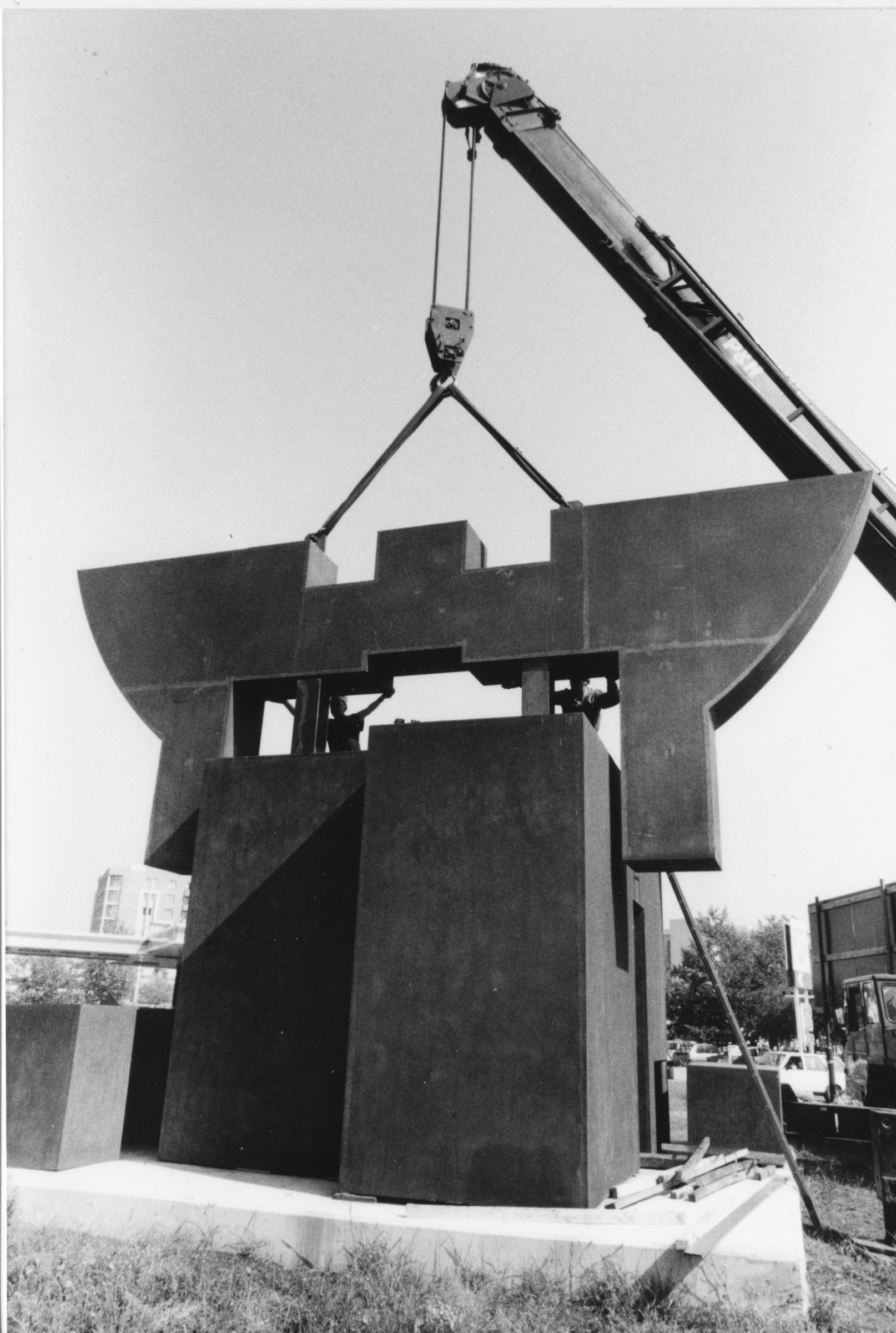
The sculpture is assembled like the Eiffel Tower. Each piece is made in the factory, then everything is assembled and welded on site, and all the pieces fit together to the millimetre. A firm of engineers checked everything: “They didn’t change a single screw,” he would say, very proudly.
1987 – 1990
The meeting
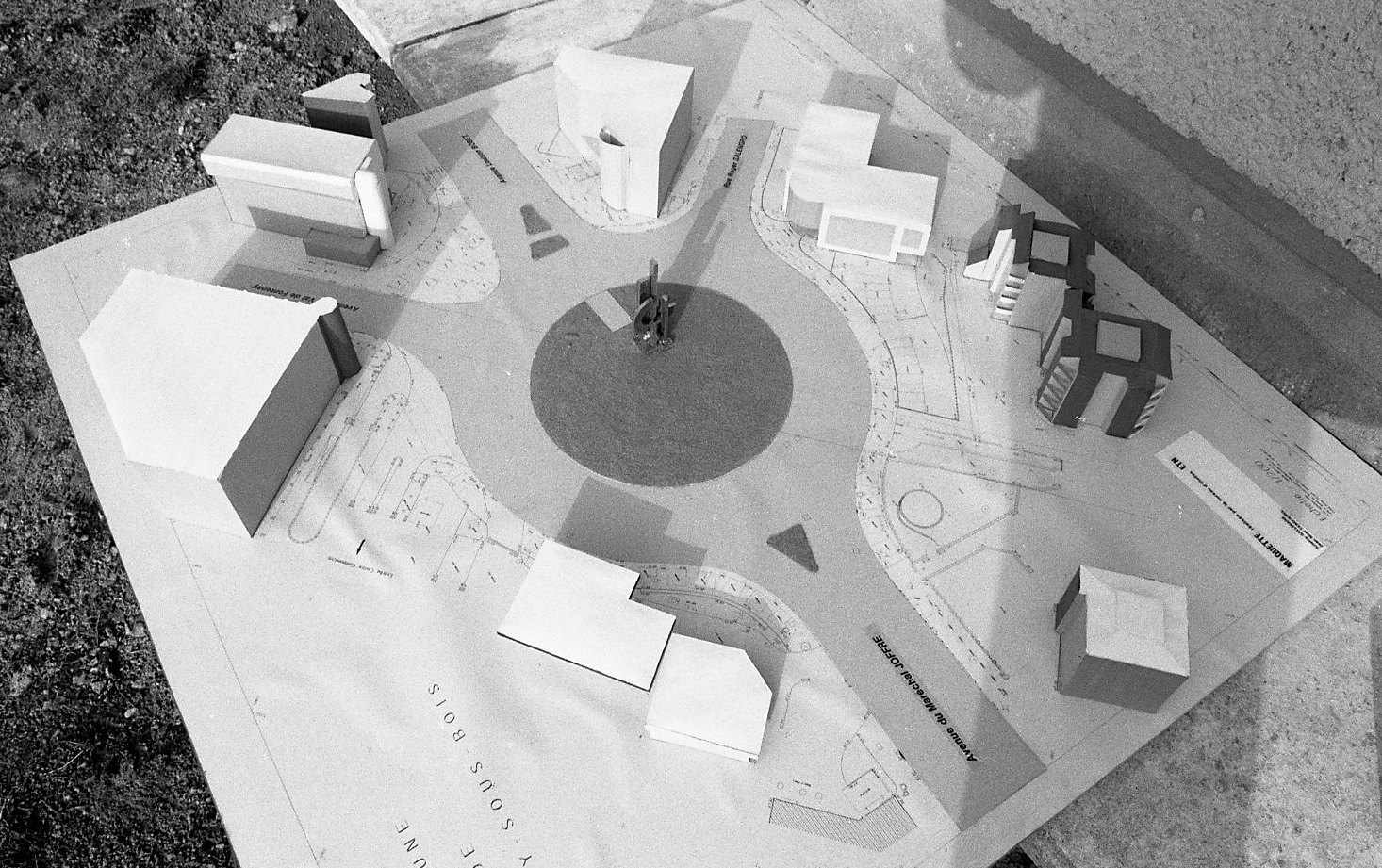
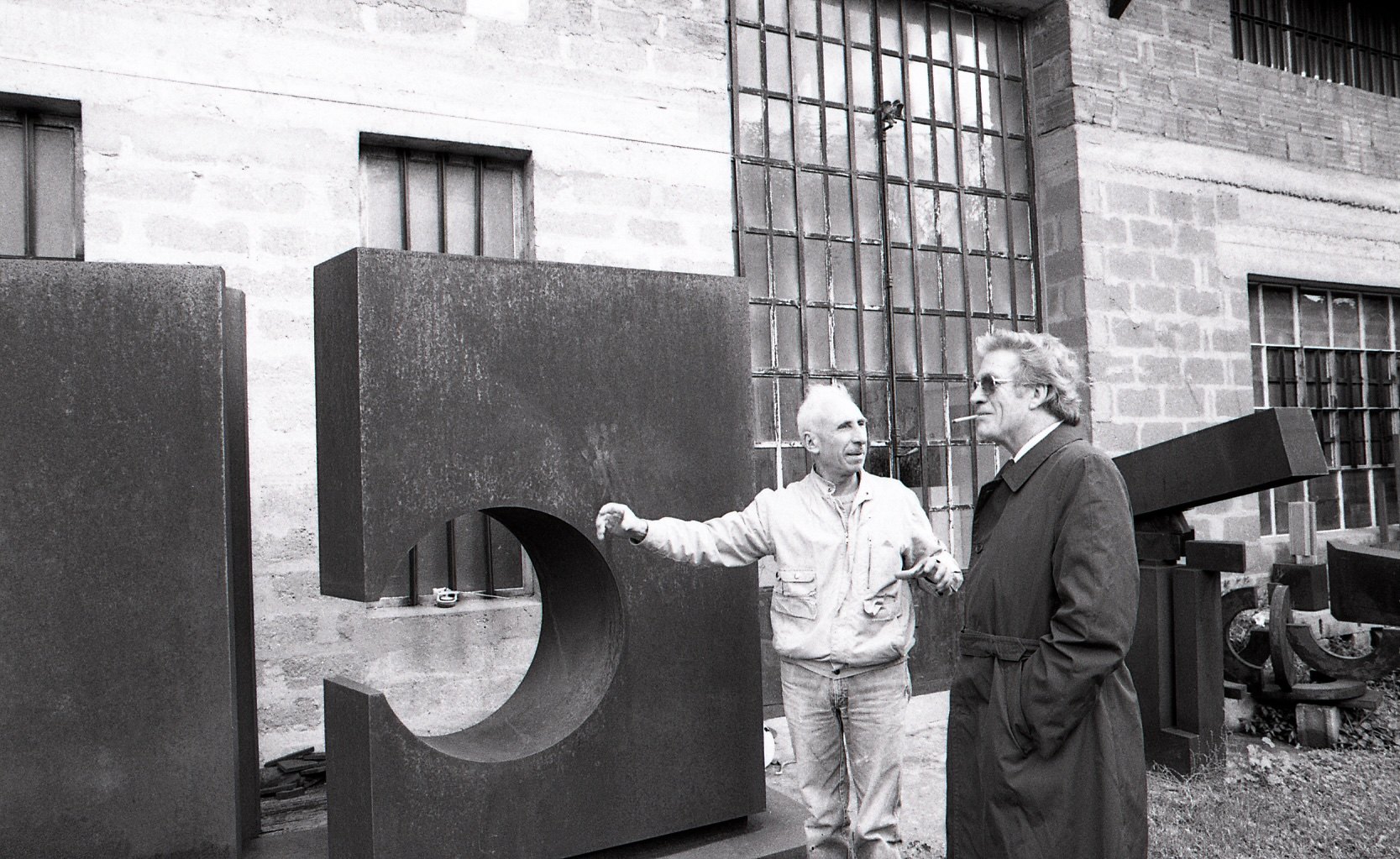
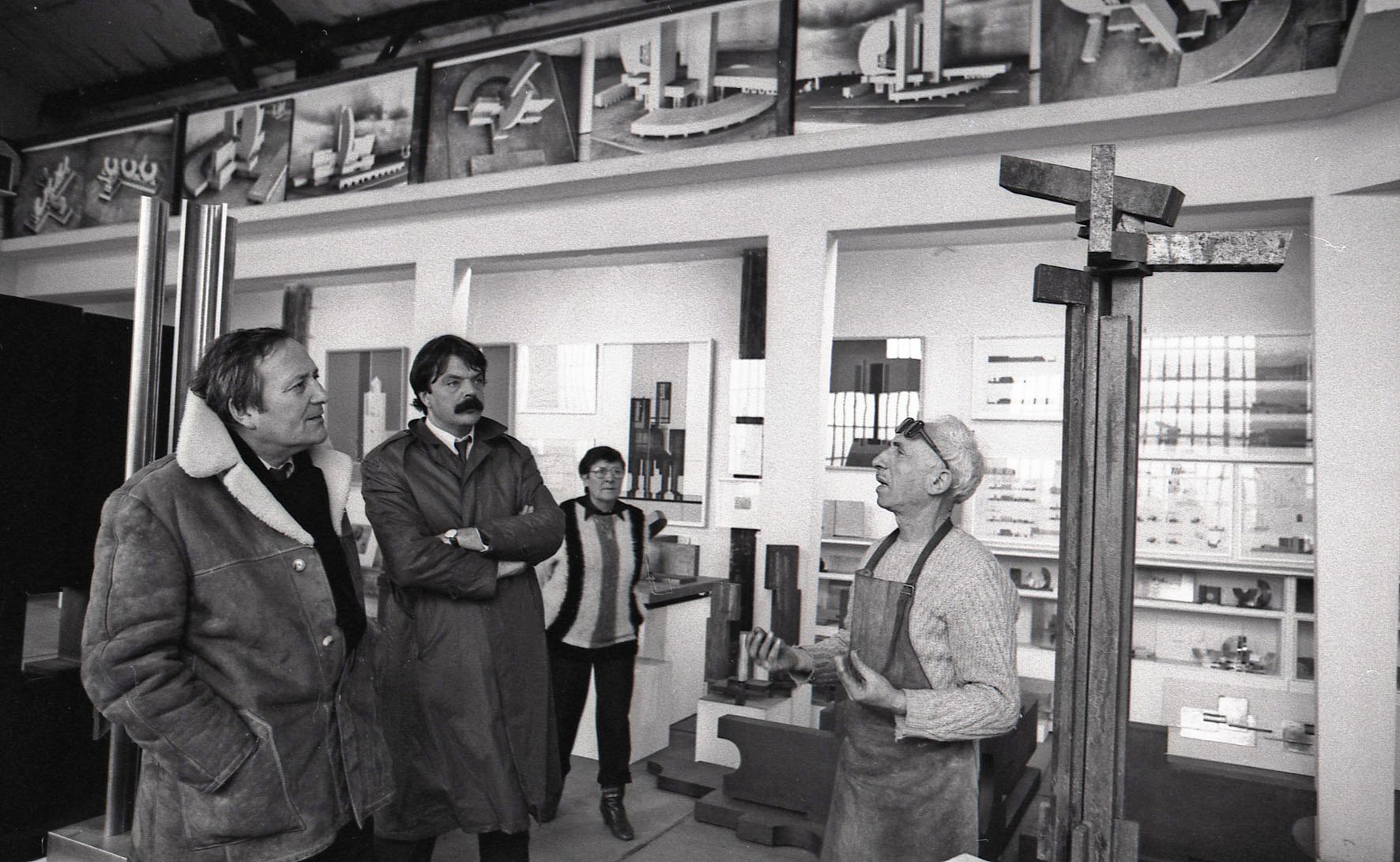
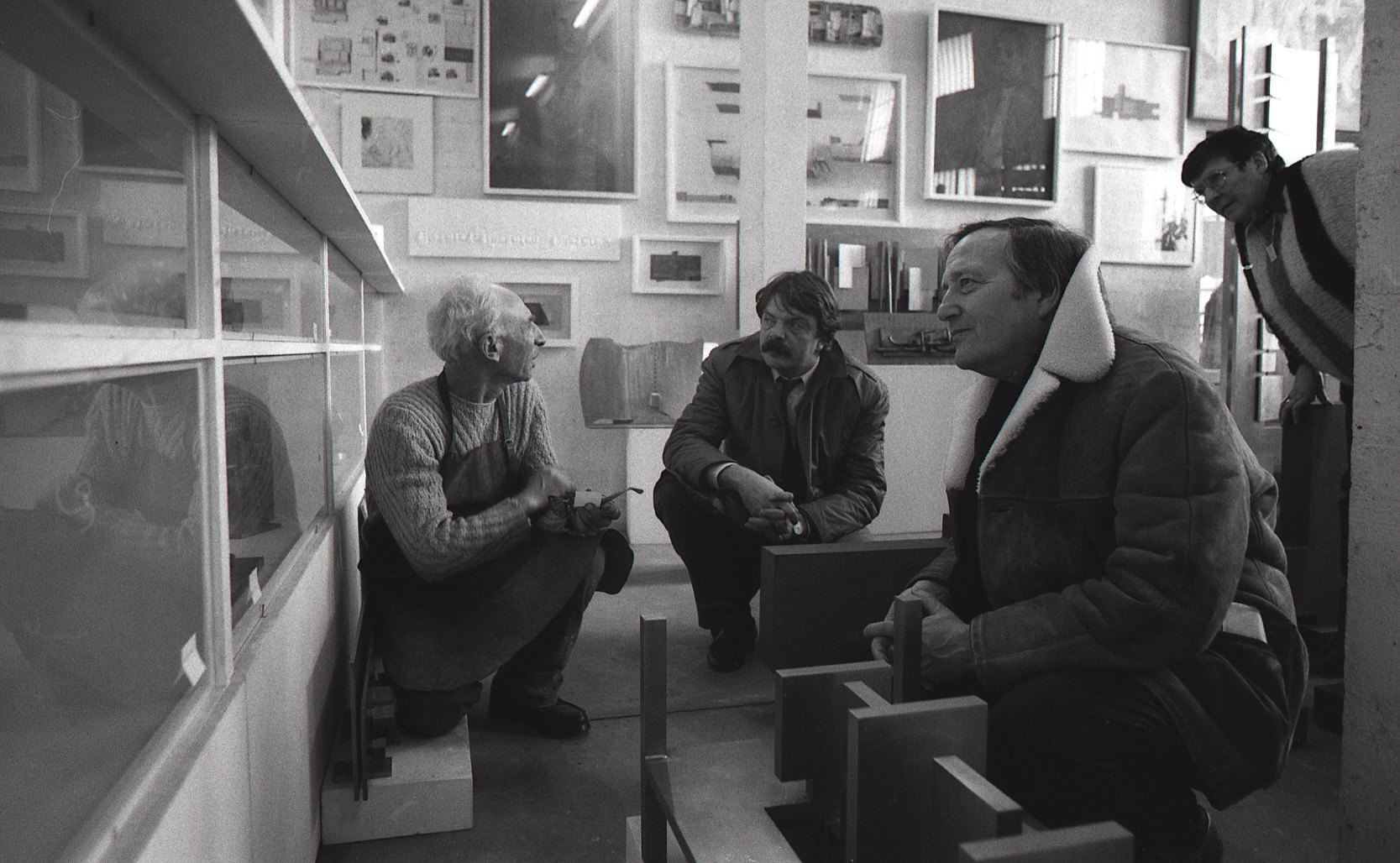
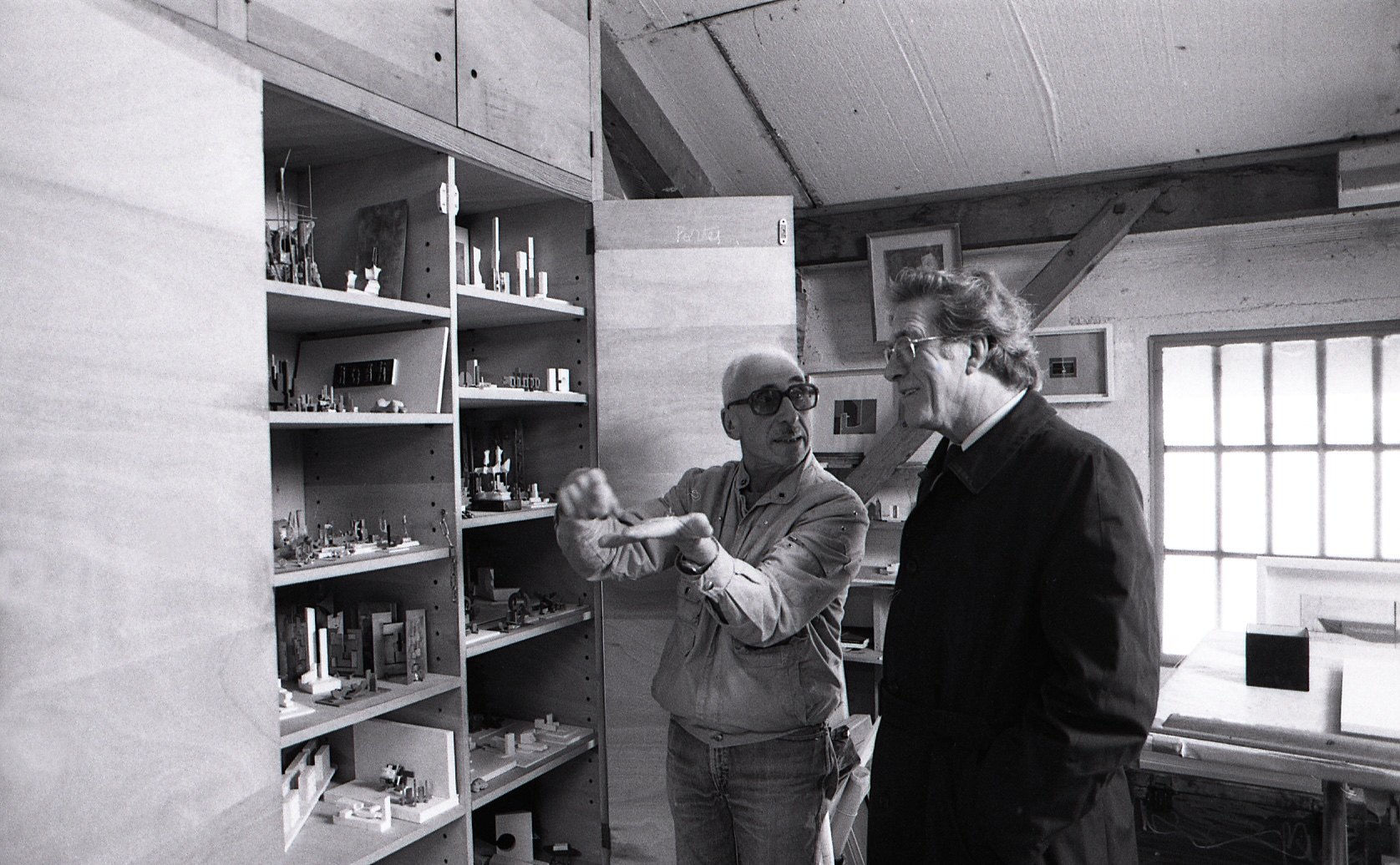
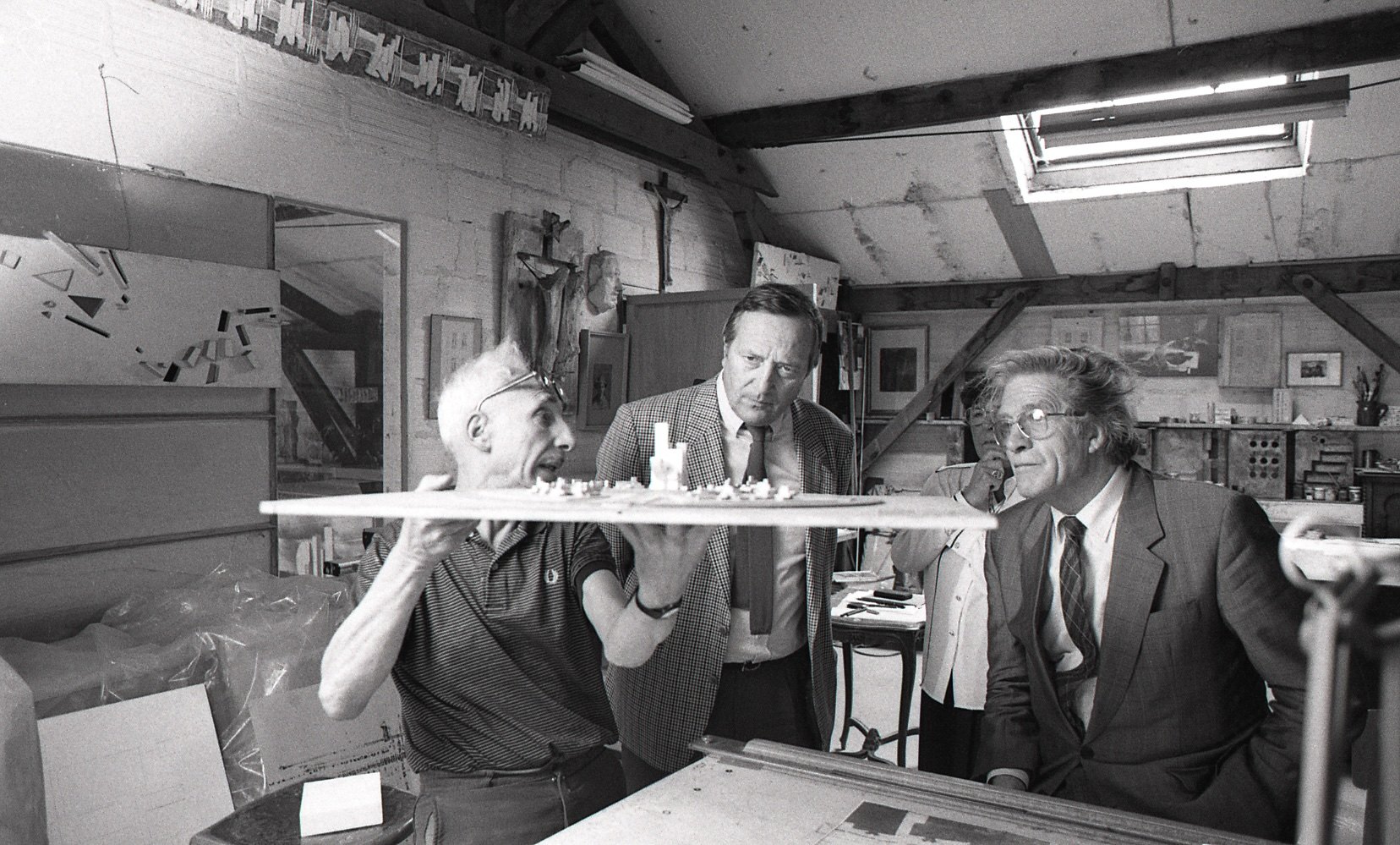
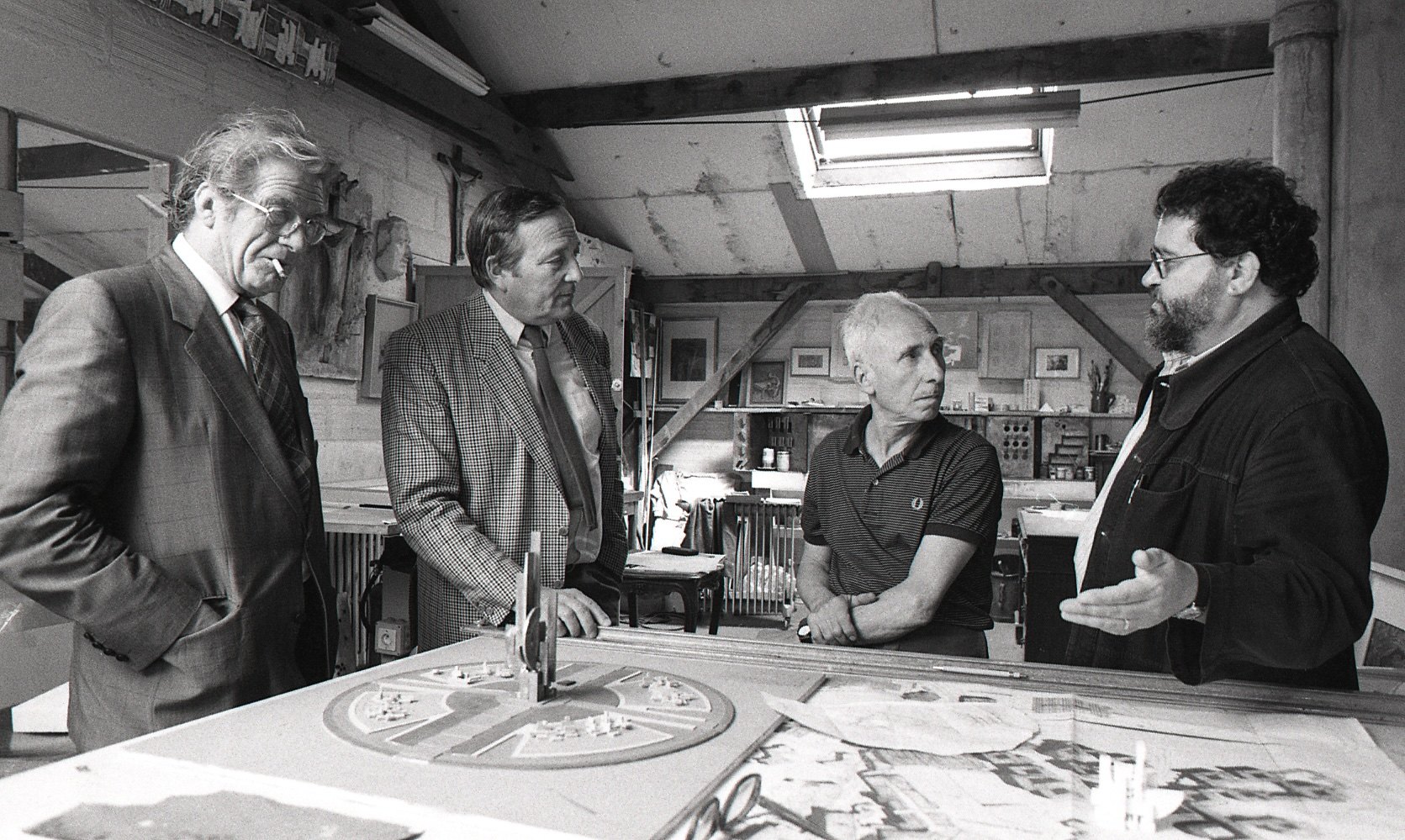
In 1987, it was the photographer Claude Gaspari who brought the artist together with Michel Germa, President of the Val-de-Marne General Council, and Raoul Jean-Moulin, a major figure in contemporary art from the 1960s to the 2000s. Both were behind the creation of the MAC VAL, the Val-de-Marne museum of contemporary art in Vitry-sur-Seine. They were won over on their very first visit to the studio in Périgny-sur-Yerres. With Louis Bayeurte, Mayor of Fontenay-sous-Bois, the working meetings then began.
1990 · on site
Di Teana, site manager
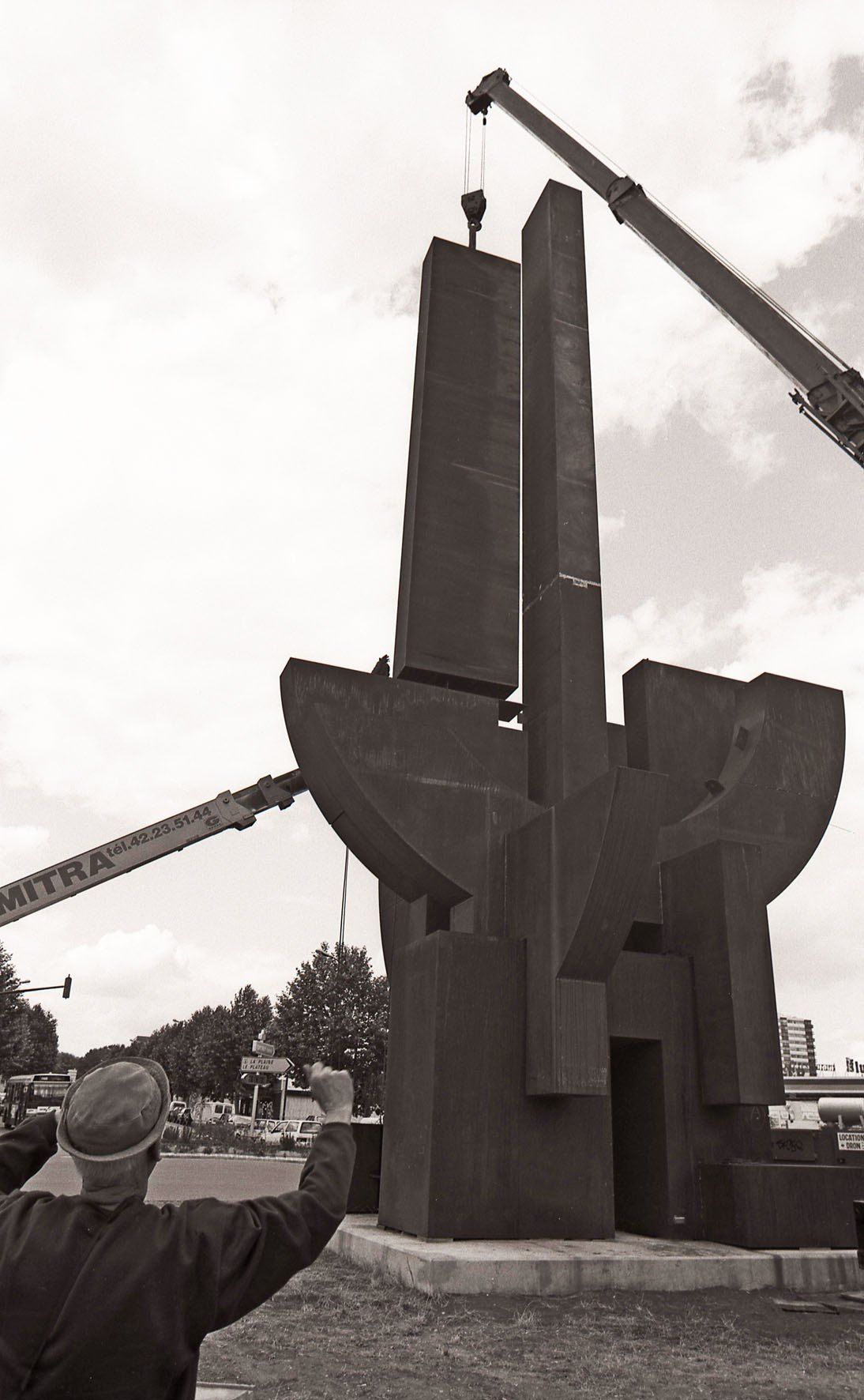
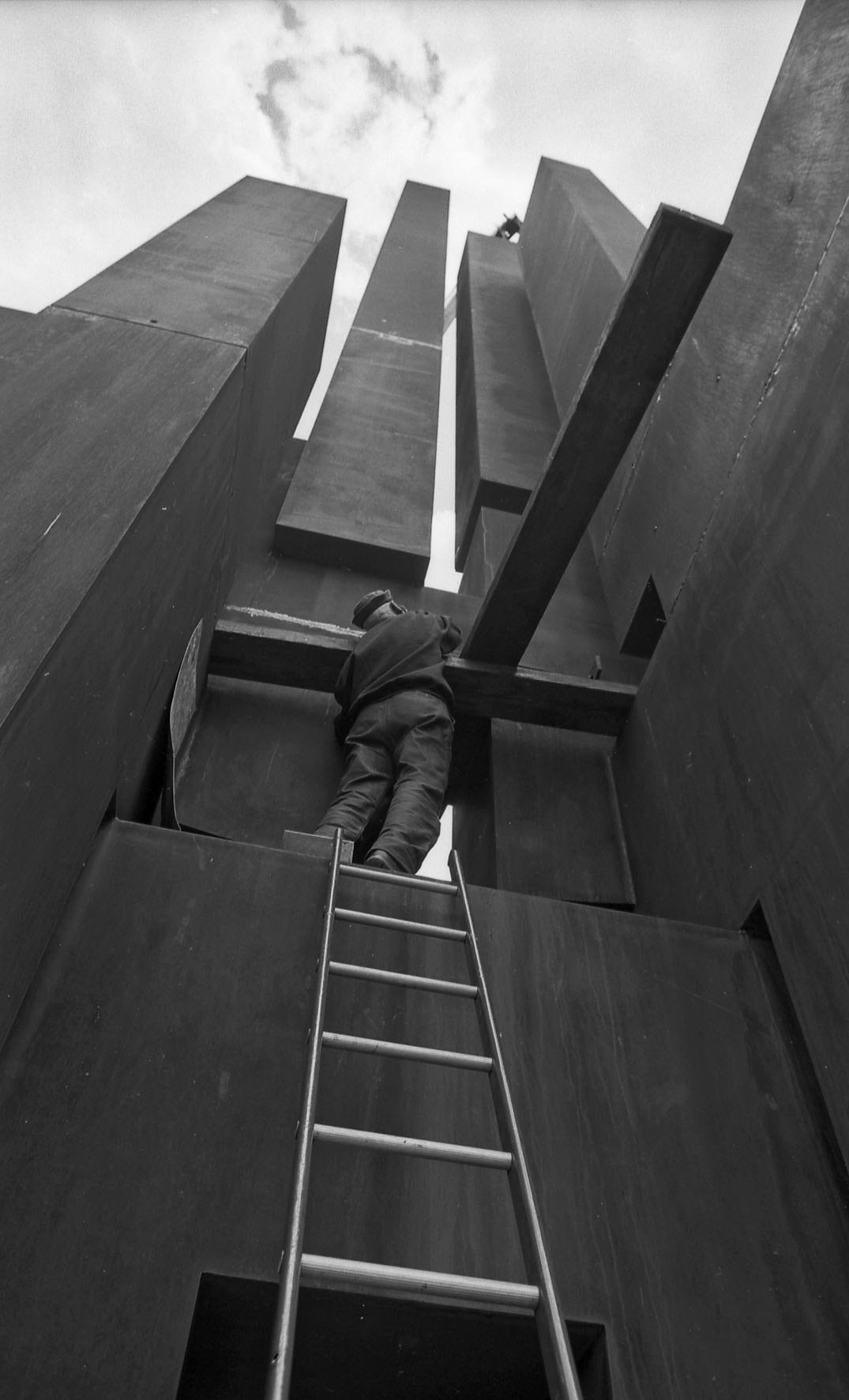
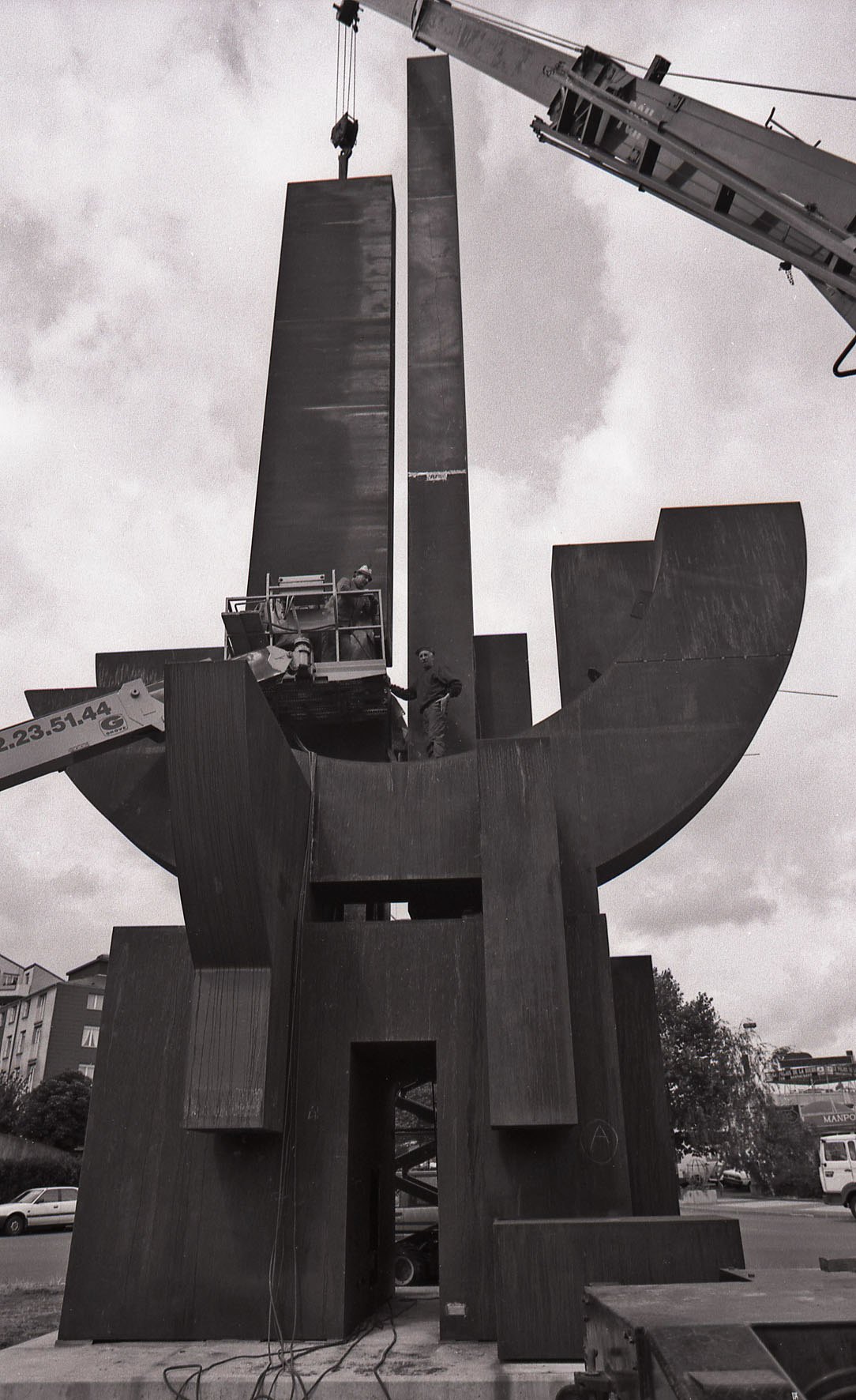
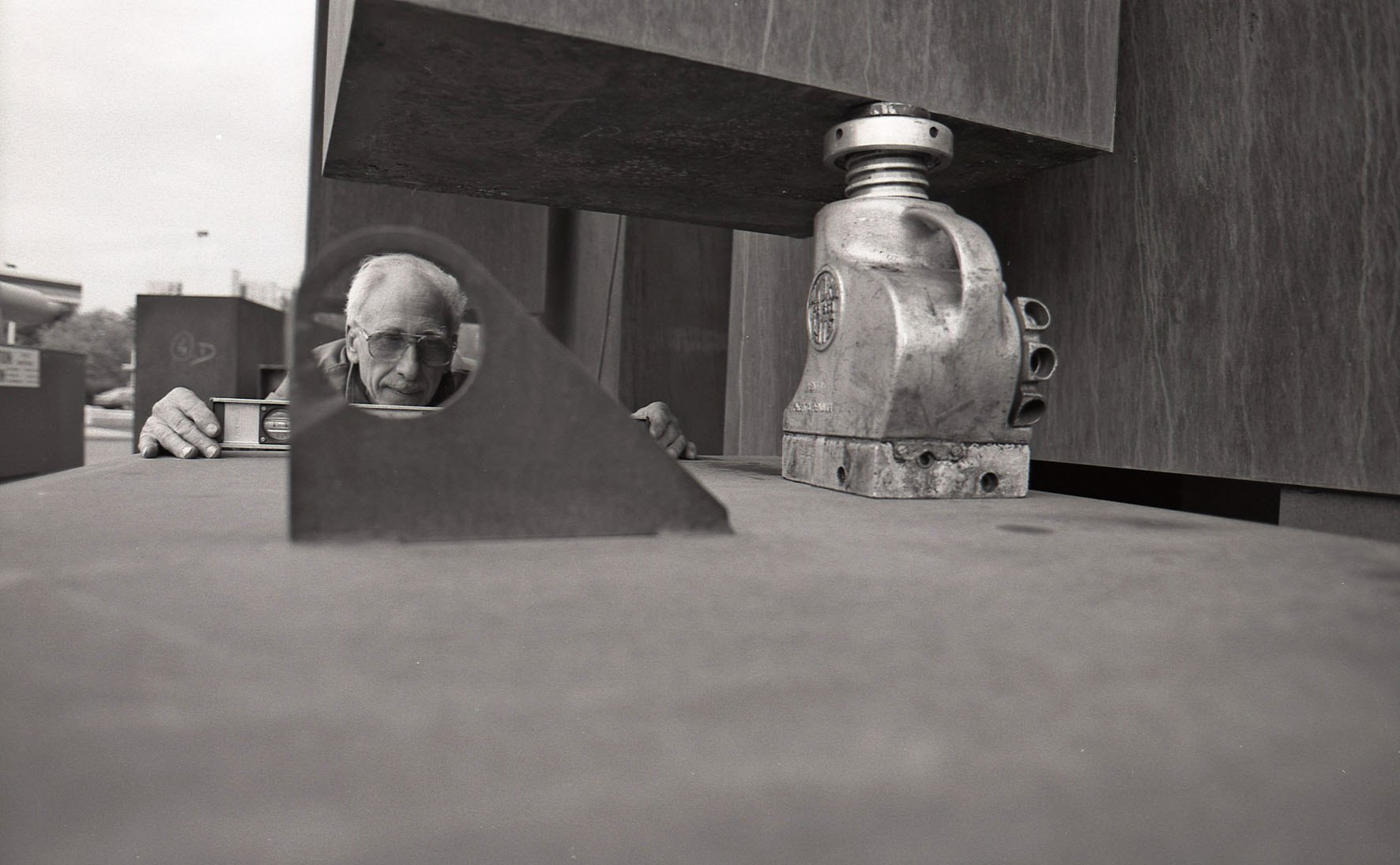
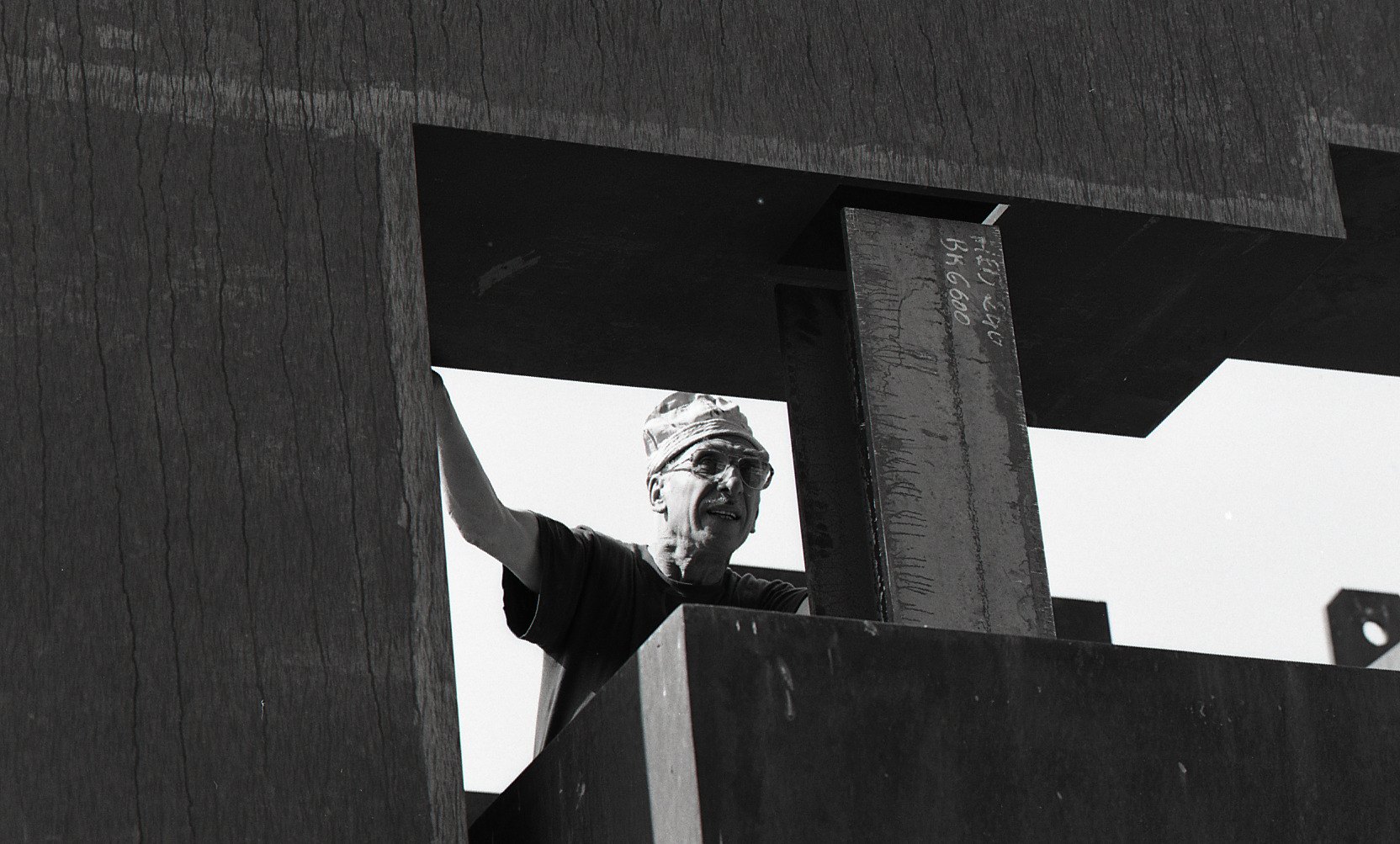
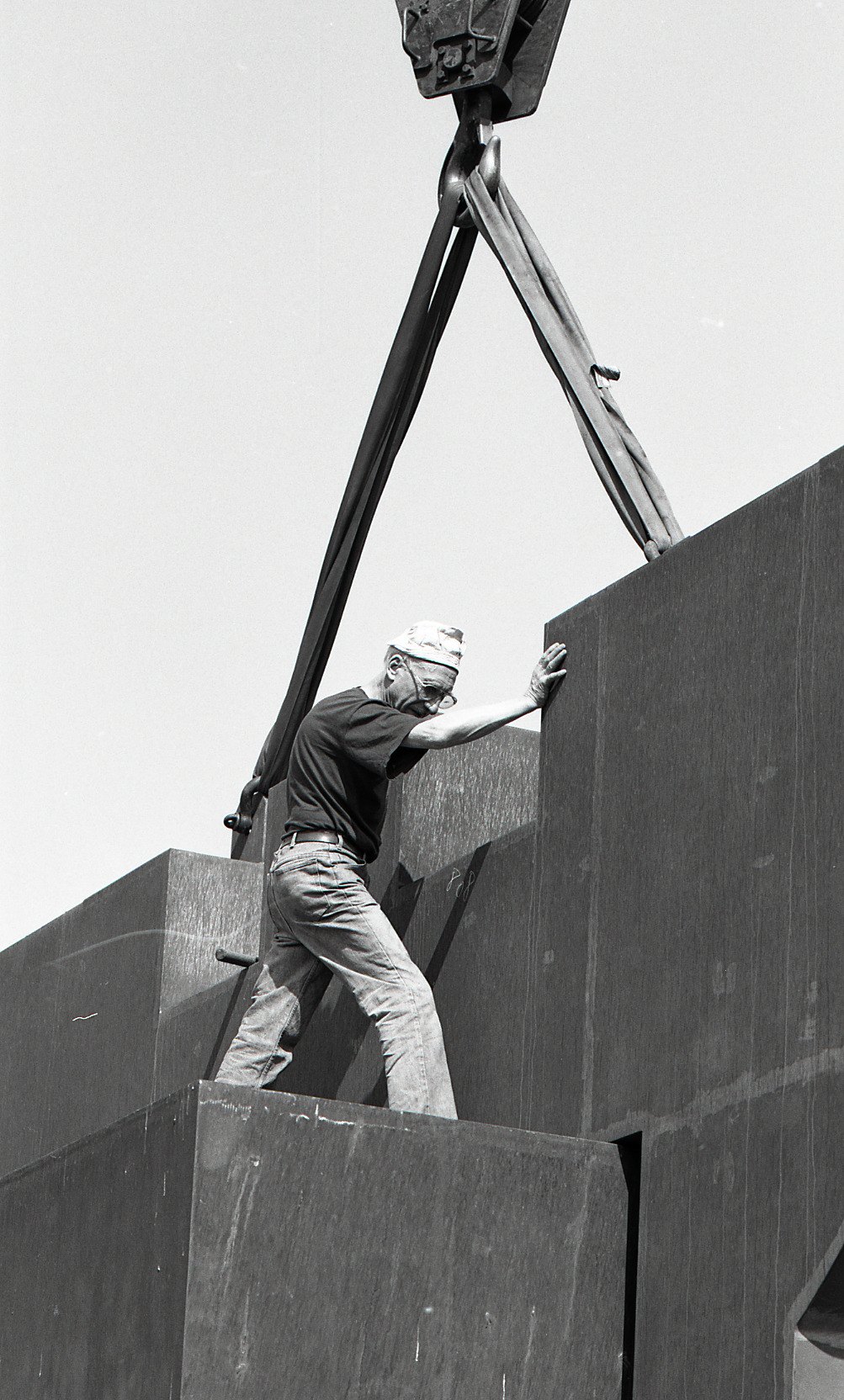
On the square, Di Teana himself directs the assembly crew. He does not hesitate to climb the sculpture to check, weld, wedge and give instructions. Apart from the crew assembling the sculpture under his direction, a single man for the whole project: a real achievement.
Archives · Claude Gaspari
The assembly, sheet by sheet
The photographs by Claude Gaspari follow the assembly step by step, from the factory to the fitting of the great circle. Click on an image to enlarge it, then scroll with the arrow keys, the mouse or your finger. The “Sheet” button shows all the photos at once.
The film
Liberté, by Arno Gaillard
Filmmaker Arno Gaillard followed the adventure, from the design of the sculpture to its inauguration. In the film, Marino di Teana explains how he moves from the model to the monumental sculpture (in French).
Place du Général-de-Gaulle
Liberté today
Details
Critical views
“100 tonnes of steel”
“Let us now stop in Fontenay-sous-Bois, near Paris. There, in 1990, the artist erected perhaps the most impressive of his forty-five or fifty monumental sculptures: Liberté. The figures speak for themselves: nearly three years of labour, four or five different projects, a soaring height of twenty metres, a hundred and ten tonnes of Corten steel to handle. On a rather ordinary square, at the crossing of several almost interchangeable streets, the effect is breathtaking. Vigour, balance, majesty, an inner light emanating from an admirable structure: the master’s signature is clearly there, made all the more recognisable by his devotion to orthogonal momentum and by the subtly considered alternation of curved planes and straight lines. One senses, through something very subtle yet very insistent, gliding with the muffled shiver of a wingbeat, how much the author of such a composition remains haunted by a nostalgia for cathedrals.”Jean-Luc Epivent, journalist and art critic (Vie des Arts, Profil, L’Empreinte), excerpt from the monograph Marino di Teana by Malika Vinot, Éditions Loft
“Space is not emptiness”
Marino di Teana’s work is the product of a revelation, the translation into images of a fundamental principle: the existence of space as a concrete reality, “alive, endowed with positive qualities just as matter is”. Space is not emptiness. It is “a dense, invisible, unknown energy, like an ocean in which all existing bodies arise and transform, manifestations of one and the same energy”. As continuous energy, space takes part in a tri-unitary reality. We can only perceive bodies and objects through the space that separates them from us. In music, harmony results from the relationship between the number of sounds and the intervals between them. In speech, an intermediate space links the words. Tri-unitary logic is universal; it is a law of nature.
Presentation text by the Val-de-Marne FDAC.
The artist seen by Ionel Jianou
In a book entitled L’Homme et l’Univers mobile – Logique triunitaire, Marino di Teana set out his theory of space as continuous energy. But how did he apply it in his sculptures? He explained it himself:
“My sculptures, or rather my structures, are conceived strictly on the basis of the concept of tri-unitary logic. To create a harmonious dialogue in space, a certain number of free forms are needed, just as two people in conversation need a certain distance for the conversation to be meaningful. If the universe is beautiful, it is thanks to the relationship between volume and space at every level.”
Marino di Teana’s sculptures are always made up of several units, several elements, between which space creates a dialogue. Each unit has a rigorous geometric simplicity, but often the form, in its imposing mass, is interrupted by the cut of a circle or a curve, creating tension within the volume. An impression of quiet strength emanates from the large structures Marino di Teana has created within architectural ensembles. This strength expresses both the vitality of his art and the serene balance of his sculptural vision, in which space plays a role just as important as the elements that make up the whole. Marino di Teana gave metal sculpture a clear, simple and monumental language, in which light and space, proportions and balances of mass, the dialogue between elements and the harmony of volumes of space express the serenity of the Mediterranean spirit.
Ionel Jianou, art critic specialising in sculpture, author of studies on Brancusi, Henry Moore, Émile Gilioli, Jean Arp, Bourdelle and Antoine Poncet, and of La Sculpture moderne en France depuis 1950 (Arted, Paris, 1982).
28 November 1990
The inauguration
“Liberté is the name Marino di Teana chose for the monumental work we are inaugurating this evening. Thank you for this name. Thank you for your creation. Liberté: the name already resonates on this Place du Général-de-Gaulle, in this year of the 50e anniversary of the Resistance. Liberté again, if we consider the individual as a whole, and art as inseparable from human needs. Liberté always: freedom of creation and expression.”Michel Germa, President of the Val-de-Marne General Council, inauguration speech
Read the full speech
Mr Mayor, Ladies and Gentlemen, Dear Friends,
“Liberté” is the name Marino di Teana chose for the monumental work we are inaugurating this evening. Thank you for this name. Thank you for your creation. “Liberté”: the name already resonates on this Place du Général de Gaulle, in this year of the 50e anniversary of the Resistance. “Liberté” again, if we consider the individual as a whole, and art as inseparable from human needs. “Liberté” always: freedom of creation and expression. That sums up our departmental cultural policy well.
Thank you for accepting our invitation and for coming in such numbers to inaugurate this beautiful work, financed by the General Council and the City of Fontenay-sous-Bois. Our artistic adviser, Raoul Jean-Moulin, found the right words to present “Liberté” and its creator. This creation illustrates our determination to bring heritage to life in the present. We want the monumental works acquired by the Departmental Contemporary Art Fund to stand, as tonight, at a crossroads, close to the public.
I know that Marino di Teana is particularly interested in everything to do with urban planning. It is an issue that concerns us too. We want to put an end to segregated urban planning and achieve a quality living environment. In this perspective, contemporary art has its full place. The cultural initiatives we carry out in this department are inseparable from all our other actions. At our level, we are trying to take art out of the elitist ghetto where it is too often confined, by integrating it into our policies for housing, green spaces, human rights, social affairs, schools and the city. We are constantly concerned with encouraging and stimulating creation in every field. This approach is part of our overall vision.
I am convinced that the future of art, the future of mankind and the future of society require the development of democracy everywhere. Of course, we know that our action alone is not enough and cannot replace national responsibilities towards creation and arts education. But how could we not be proud to take on this public responsibility at our level? We are working for one and the same policy, focused on human needs, in which art has its own specific place. We therefore support creation in every field and in every form, without lowering our standards to those of audience ratings.
“Liberté” thus enriches the representation of the major trends of contemporary art in the Val-de-Marne. Without the effort and support of the Municipality and its Mayor, my friend Louis Bayeurte, this achievement would not have the same meaning. I thank them for choosing creation together with us, and for working to weave new links between art and the people of Fontenay-sous-Bois. I am sure that this monumental work will be visited and admired from the other towns of our department, and beyond.
Thank you for your attention.
Document from the Departmental Cultural Service (public relations: Michèle Crucis).

It is thanks above all to Claude Gaspari that we have these archive photographs of the working meetings and the construction of the work. I thank him, as well as filmmaker Arno Gaillard, who filmed the adventure from the first design of the sculpture to its inauguration on 28 November 1990.
Nicolas Marino di Teana
Curator of the Studio-Museum
Photographs: Claude Gaspari (archives of the meetings and assembly, 1987-1990), Giovanni Percoco, Marino di Teana Studio-Museum. Film: Arno Gaillard.