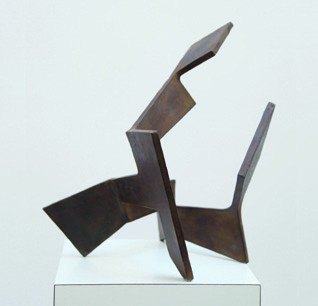
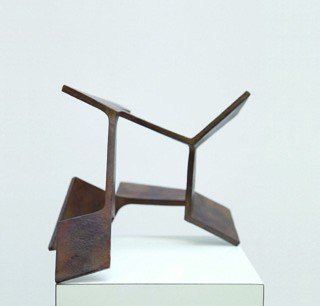
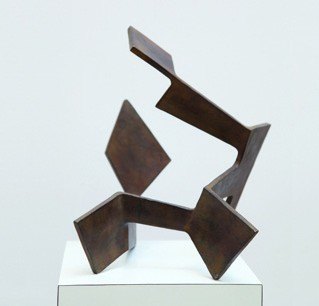
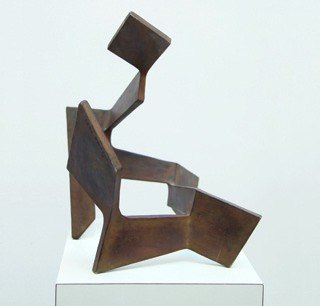
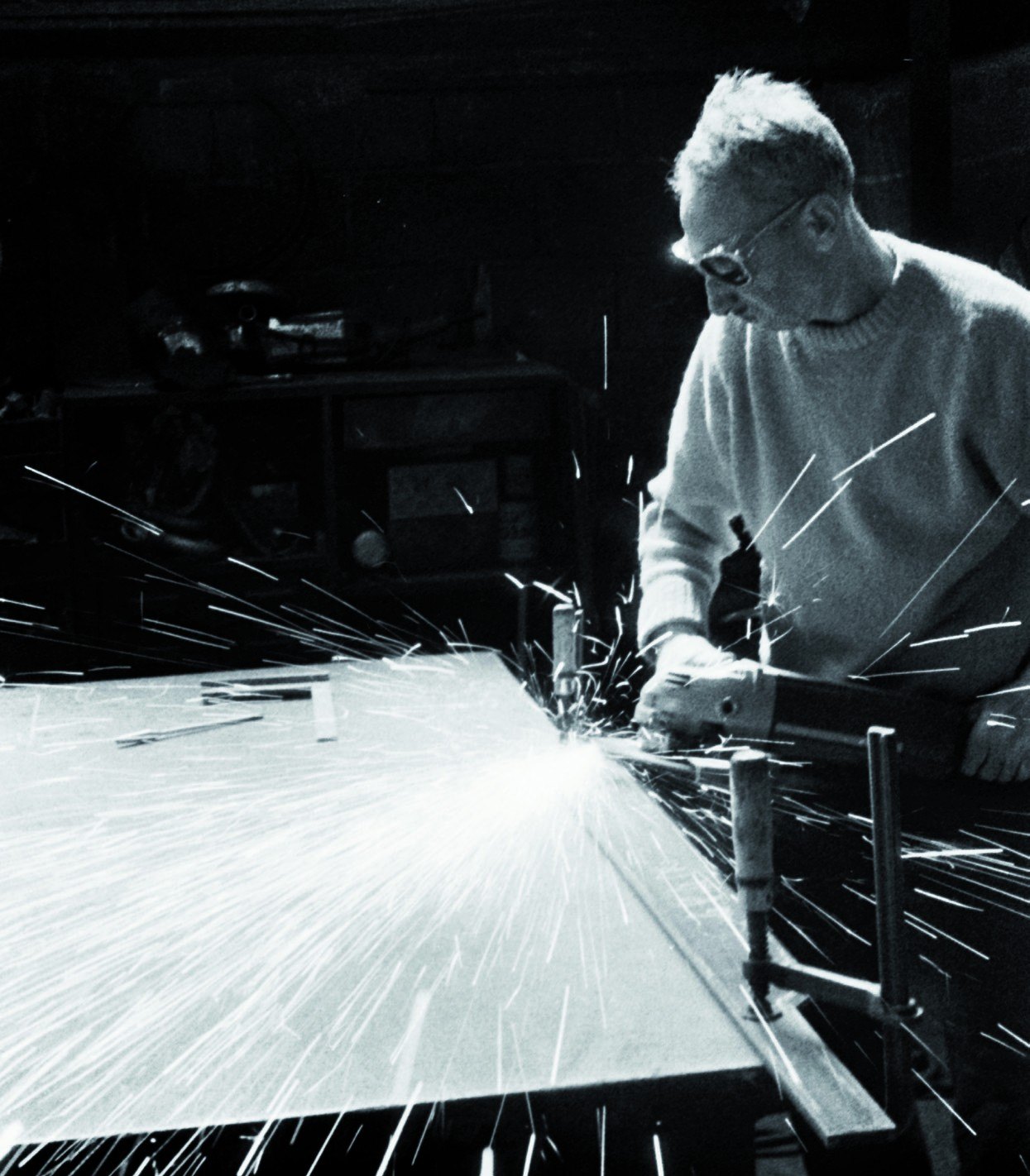
Francesco Marino di Teana

Sculptor, architect, painter, poet and philosopher of space

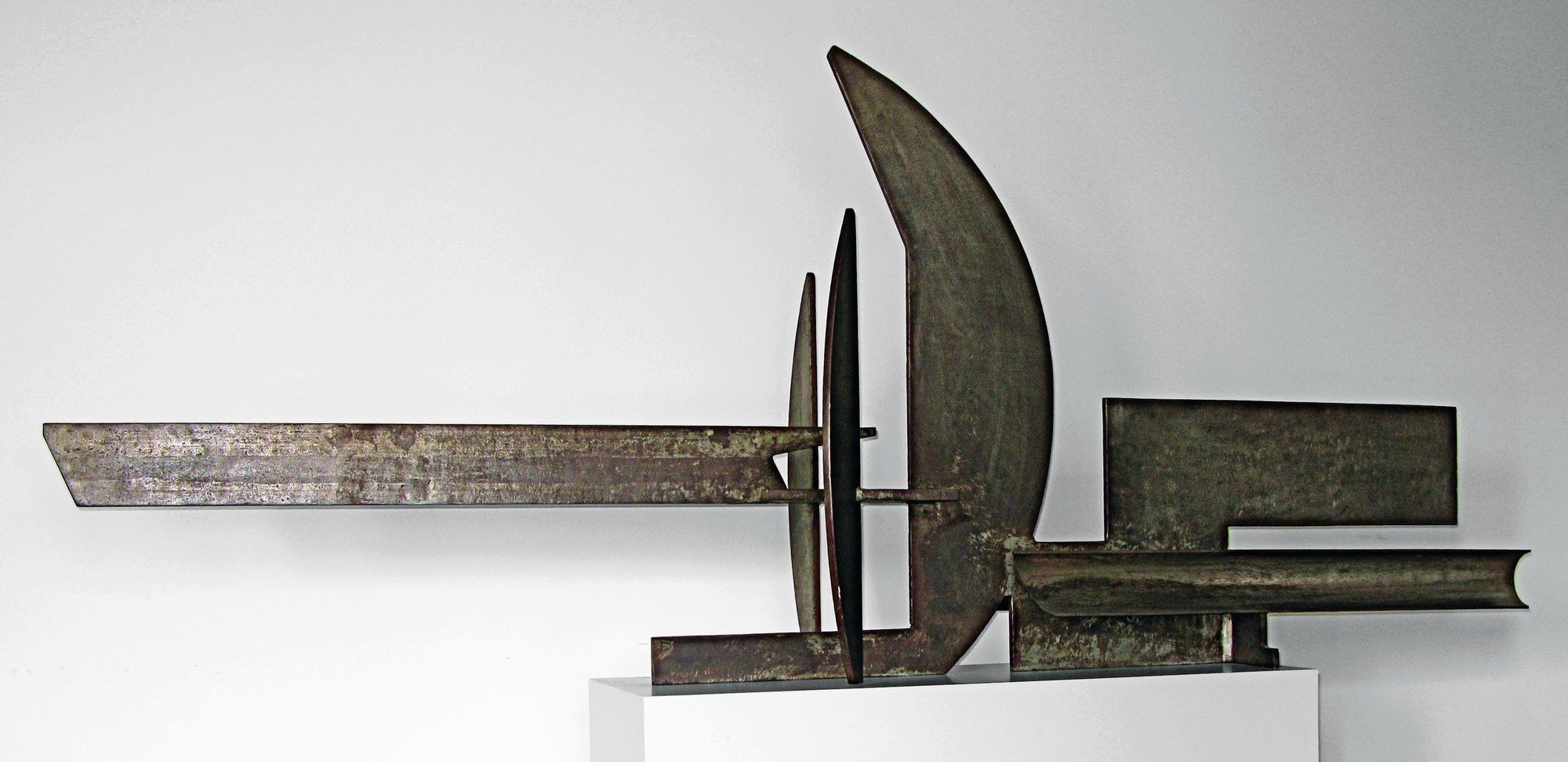
Marino di Teana, Omaggio alla mia nonna · photo Gaspari
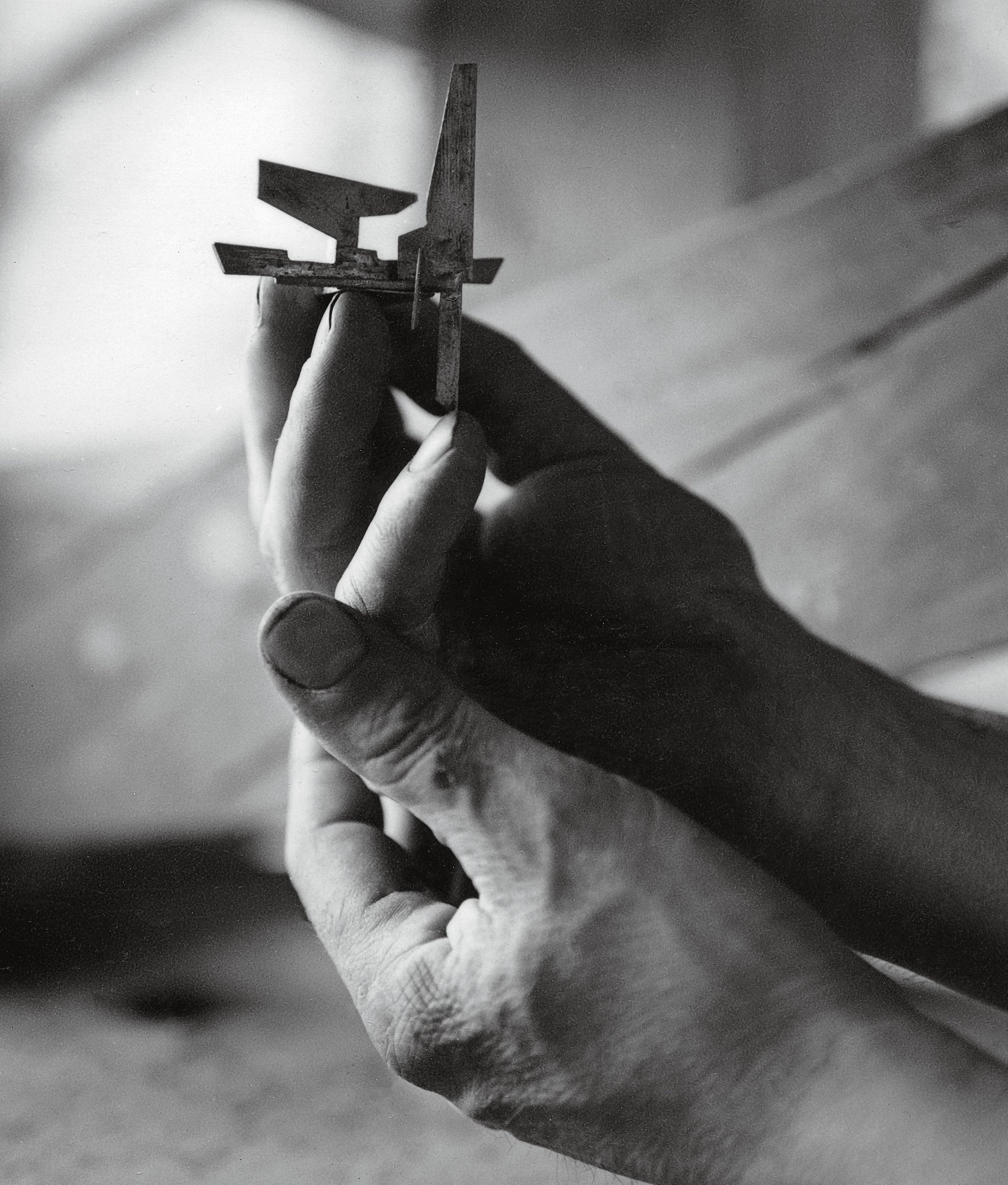
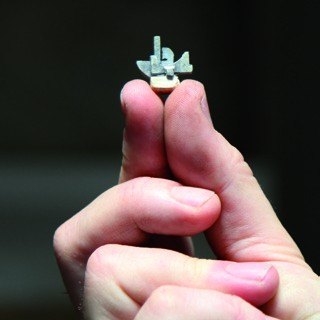
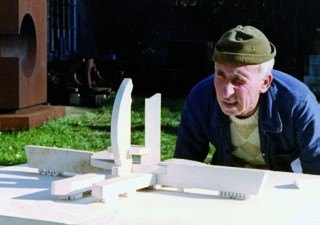
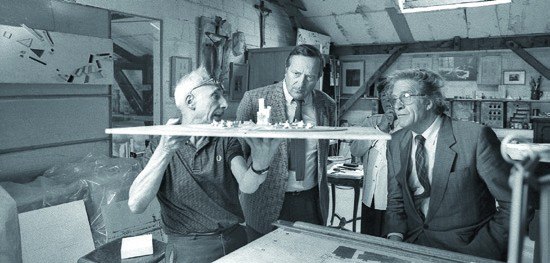
Marino di Teana tient dans sa main la maquette de la sculpture monumentale de Leverkusen, 1962
Marino di Teana holding in his hand the model of the sculpture to be erected in Leverkusen, Germany, in 1964. Photo Pierre Joly & Véra Cardot

Francesco Marino di Teana

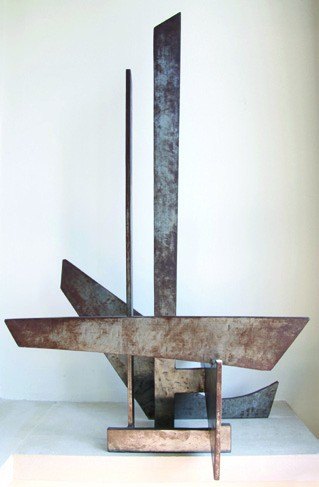
In turn a shepherd and an apprentice mason in Italy (Teana), then a site manager, architect and professor at the Fine Arts school of Buenos Aires (Argentina), FRANCESCO MARINO DI TEANA (1920-2012) settled in Paris in 1953. Painter, sculptor, architect, poet and philosopher all at once, he built his work around the concepts of tri-unitary logic and architectural sculpture. Represented for more than fifteen years by the legendary Galerie Denise René and winner of prestigious art prizes, he was praised by the greatest artists, art critics and architects of his time.
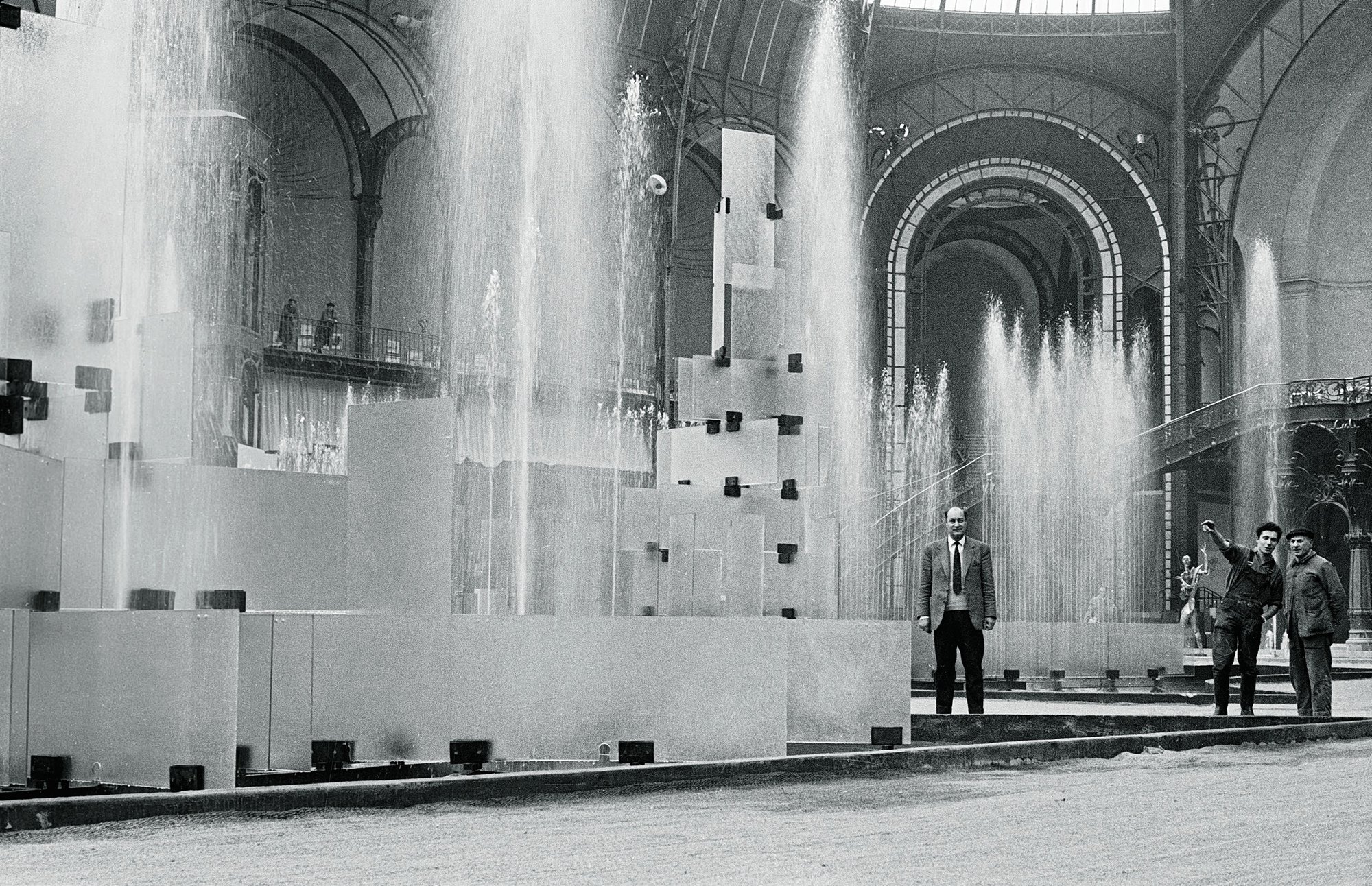
A forerunner of the Grand Palais Monumenta with his 9-metre glass and steel Fountains made with Saint-Gobain, he created nearly fifty monumental sculptures across France and Europe, including Liberté in Fontenay-sous-Bois (20 metres high).
He was also the subject of a major retrospective at the Musée d’Art Moderne de Paris in 1975 and represented Argentina at the 1982 Venice Biennale. In 2009 he was awarded the Paul-Louis Weiller Prize of the Académie des Beaux-Arts in Paris.
Malika Vinot, art historian – 2017

A life's journey

Francesco Marino di Teana is an artist (painter, sculptor, architect, poet and philosopher) who left his mark on the sculpture of the 1950s and 1960s with his theories of tri-unitary logic, which make the “void” an active element of pictorial and architectural composition, and on the European urban landscape with his monumental sculptures.

A life’s journey  by Malika Vinot.

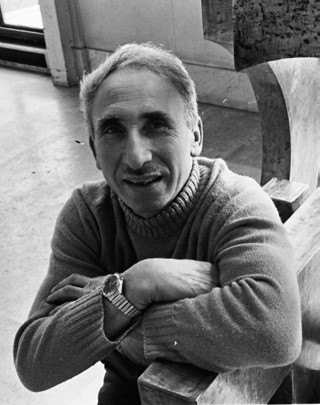
Portrait de Francesco Marino di Teana au musée d’Art moderne de Paris en 1976
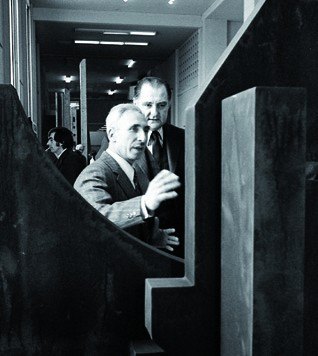
Francesco Marino di Teana, Musée d'Art moderne de la Ville de Paris, 1976 (photo Jérôme Ducrot)
1920 – 1952
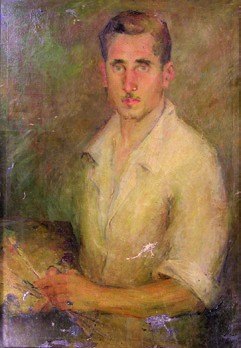
Autoportrait de Francesco Marino, huile sur toile, 1942
Francesco Marino, “Self-portrait with brushes”, oil on canvas, 1942

The LIFE JOURNEY begins here: 1920 – 1952 – Teana / Buenos Aires

Born in 1920 into a poor peasant family in the village of Teana (Italy), Francesco Marino was only five when he began working in the fields and tending sheep. A few years later, his parents sent him to a “master” to learn the building trades (cabinetmaker, blacksmith, mason, house painter…). He showed a particular talent for manual work and was chosen to become the apprentice of a Neapolitan decorator, who taught him to paint trompe-l’œil for church ceilings.

Francesco Marino à l’école des Beaux-Arts de Buenos Aires en 1948
Francesco Marino, Ernesto de la Cárcova School of Fine Arts, Buenos Aires, 1948

My first works, I was seven. I made fountains, kinds of animals, little trees. I copied the saints in the chapel. In my part of the world there is clay everywhere. I would bring them home: “Throw that outside, you’ll get everything dirty.” And yet the house was full of pigs… My grandparents were very poor peasants. They worked the land all day long… The walls of the stable, the ground floor, were covered with my drawings. I made them with a nail or a pencil. But they didn’t want me to bring my sculptures home. I left them to crumble in the fields. What mattered was making them…

— Francesco Marino di Teana

In the year he turned sixteen, war broke out and Italy allied itself with Germany. To avoid the army, Francesco was sent to Argentina to join his father, who had abandoned his family to settle in Buenos Aires. His father received him coldly and accepted him only on condition that he worked and brought home a wage. He worked as a mason and became a site manager, while taking evening classes in mechanics and polytechnics at the Salguero National School (where he obtained a diploma in architecture).

Then he secretly sat the entrance exam for the Fine Arts school and was admitted, but his father, unable to bear the idea that he would stop working, threw him out. On the street, he attended classes by day and worked at night to live. He graduated with the “Premio Mitre”, the equivalent of the Prix de Rome, and received the title of senior professor and a university chair. Not wanting a career mapped out for him, he nevertheless decided to return to Europe in 1952 to follow his own path.

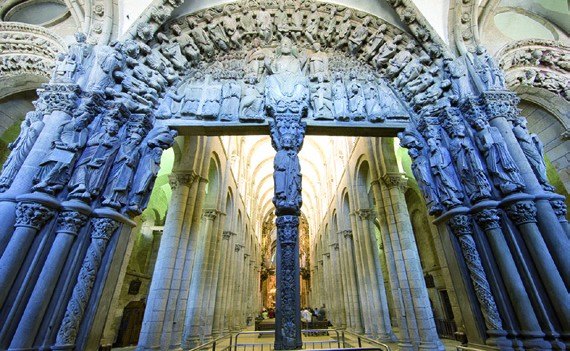
Le portique de la Gloire de la cathédrale de Saint-Jacques-de-Compostelle
Portico of Glory, Cathedral of Santiago de Compostela (Spain)

1952 – 1953 – Santiago de Compostela / Paris

He first went to Santiago de Compostela, where he met up with his friend Jorge Oteiza, whom he had given work in Buenos Aires. In Santiago de Compostela he experienced what he would often later describe as his “first illumination”. Facing the cathedral, his eye was caught by Master Mateo’s Portico of Glory. The bare form of this monument of Cistercian art, a pared-down branch of Romanesque art, was a true revelation for the young man, both for its composition and for its mastery of space.

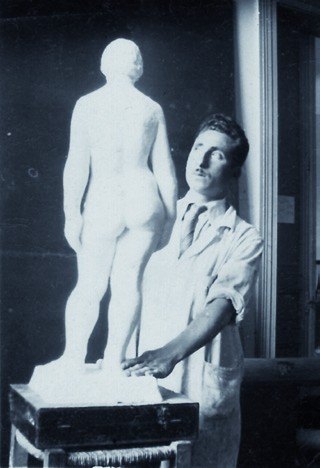
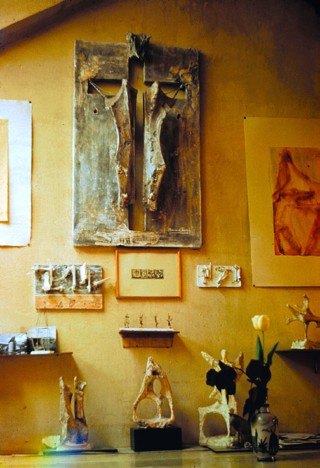
Sculptures en plâtre dans l’atelier de la rue de Passy en 1953
Studio in rue de Passy, Paris, plaster sculptures, 1953

For me, Europe was also the chance to finally see the art of the past in its setting. A capital is only truly beautiful in its relationship with the church, the village, the country… I began with Spain. I wanted to study Gothic and Romanesque art. In Santiago de Compostela, I got a kind of shock: a medieval town without cars, dozens of churches and bell towers. The whole town is of its time. The overall character is admirable. And the porch of the cathedral! Christ in Majesty! It was nothing like a photograph.

— Francesco Marino di Teana

After visiting Spain, he settled in Paris in 1953. Penniless, he slept in public gardens, including the Invalides gardens next to the Musée Rodin, and went to warm up at the École des Beaux-Arts in rue Bonaparte. He lived on odd jobs, renovating apartments, painting ceilings and making furniture, but without a work permit he was often badly paid. Thanks to a decorator for whom he made shop-window mannequins, he found a small attic studio in rue de Passy.

One day a decorator, Georges Guillot, for whom I was making stands for women’s underwear, took pity on me and rented me a disused studio in rue de Passy for 2.500 old francs. I ran to the flea market to buy rags, sculptor’s stands and clay. Within a fortnight I had a wonderful studio. I made forms that always looked like someone else’s: Marino Marini, the Etruscans, Romanesque art… I still wanted a breath of my own.

— Francesco Marino di Teana
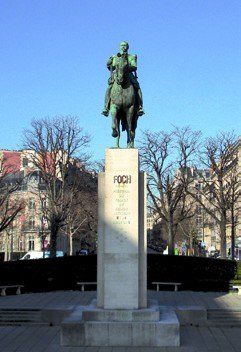
Statue équestre du maréchal Foch place du Trocadéro
Equestrian statue of Marshal Foch, Robert Wlérick, 1936

1953 – 1954 – Foch's horse

Frustrated at how hard it was to develop a style of his own, Francesco liked to take long walks through the streets of Paris in search of inspiration. One day he found himself on the Trocadéro esplanade, where he experienced his “second illumination”, the one that would shape his entire work and profoundly change the concept of composition in 20e century sculpture through the concept of “tri-unitary logic”.

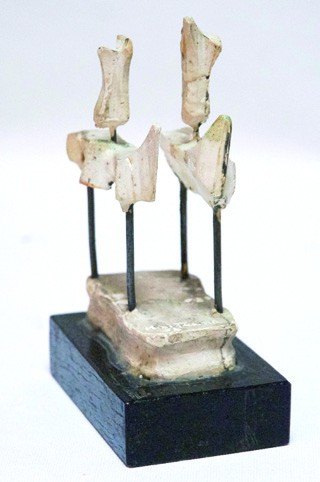
Maquette du Cheval de Foch, cheval coupé en deux
Model Foch's Horse, plaster and iron, H. 14 cm, 1953-1954

I decided to go for a walk. I went and sat on the Trocadéro esplanade. I love that immense perspective, that channelling of space that starts at the École Militaire, passes under the Eiffel Tower and rushes between the two wings of the Palais de Chaillot to crash into the statue of Foch, fifty metres away. Suddenly I said to myself: it would be much more beautiful if the statue were cut in two… Then you could pass through and go further. I thought for a moment… I rushed back to my studio. I had lots of little horses. I grabbed one and, crack, I split it open.

I had created a third horse, a space-horse, between the other two. That evening I became myself, discovering this capital importance, the priority of space in sculpture. The most important field, I understood then, was the third mass: the hollow mass.

— Marino di Teana, Connaissance des arts, June 1963

Tomás Alva Negri, Dialogue with Marino di Teana in his studio in Périgny-sur-Yerres, 1987

T. A. N.
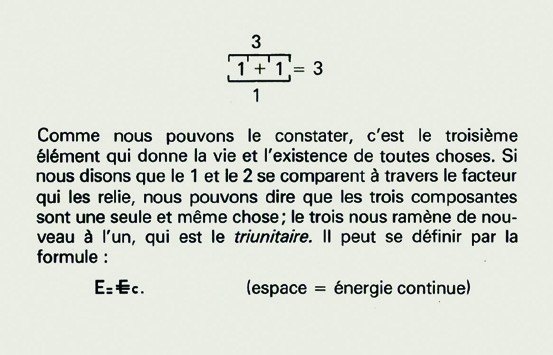
It was with this discovery that your tri-unitary theory took shape: 1 + 1 = 3, because the dynamic space in the middle counts as much as the two halves you obtained by dividing the mass.
M. di T.
Of course. And from that moment on, I conceived my sculptures – or structures – according to this principle.
T. A. N.
You even said you had discovered the third “mass”, “the mass in the void”…
M. di T.
Since then I have understood the importance of space in sculpture, as other sculptors understood it before me, but I believe I have found a new key: the space I discovered is not static like the masses it penetrates; being able to penetrate them, it is a dynamic, liberated space, acting by itself, without the surrounding masses limiting it. I would almost say that in my sculptures, it is space that determines the form of the masses it penetrates. I believe that is what sets me apart from Gabo and Pevsner.
Maquette Cube désintégré
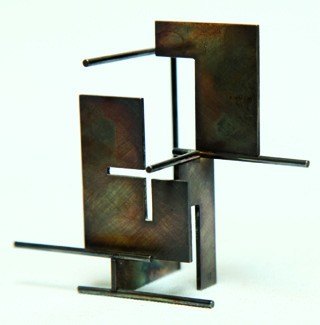
Model Disintegrated Cube, silver, H. 7 cm, 1956

1955 – 1956 – Tri-unitary logic and the “disintegration” of forms

From the moment he formulated this new theory, Francesco Marino di Teana never stopped applying it in fields as diverse as sculpture, architecture and painting. His works, still tinged with figuration, became abstract, as if to focus better on forms, but also on space, which became a major element of the composition.

Texte de la théorie de la logique tri-unitaire 1+1=3
Francesco Marino di Teana, theory of tri-unitary logic 1 + 1 = 3

The Disintegrated Cube and the Disintegration of the Cylinder are the first sculptures to which I applied my tri-unitary logic. You can see how space circulates freely as it disintegrates the mass; there, I insist, space is dynamic and able, in turn, to energise the whole sculpture. You noticed the third horse between the two halves of my model and you perceived the space-horse that animates the other two; well, here are the cube and the cylinder undone in space and restructured by the participation of that space; I could say the same of some of my sculptures…

— Marino di Teana, dialogue with Tomás Alva Negri, 1987
Maquette Cylindre désintégré
Model Disintegrated Cylinder, iron and zinc on plaster, H. 24 cm, 1955-1956
Vernissage de l’exposition Structures à la galerie Denise René en 1961
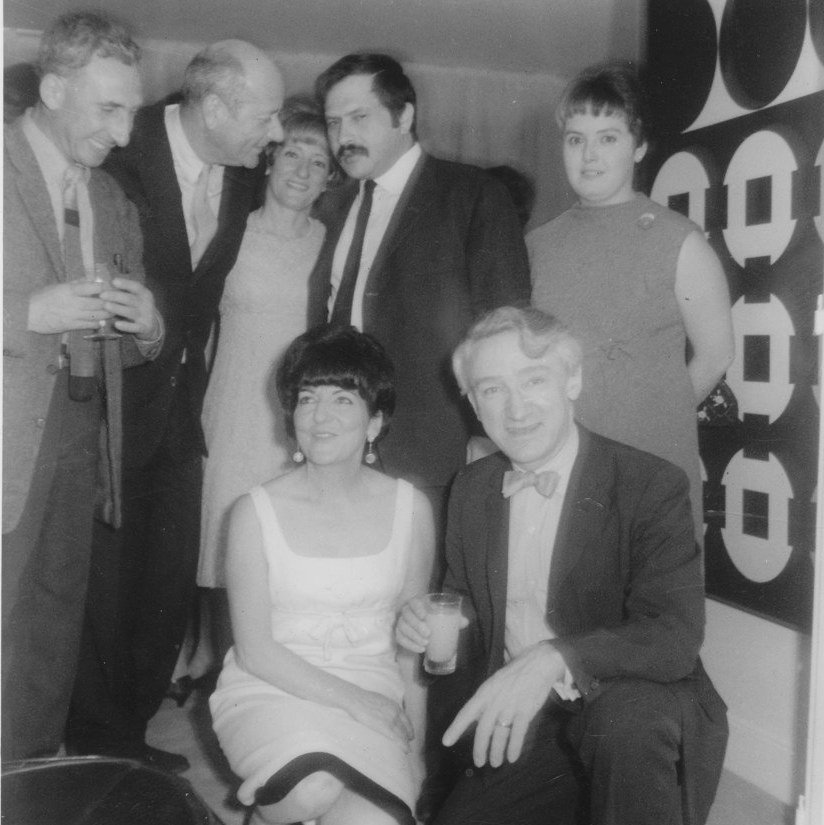
Opening of the exhibition “Structures”, Galerie Denise René, December 1961 (Marino di Teana, Berto Lardera, Yaacov Agam, Denise René and Luis Tomasello)

1957 – 1961 – The Denise René years

At that time he attended Le Corbusier’s classes at Sèvres-Babylone and met the artists and intellectuals of Saint-Germain-des-Prés, but the abstract sculptures he began to produce from late 1954 interested no one at the Beaux-Arts. Only Huguette Séjournet (painter, decorator and granddaughter of Paul Héroult), whom he had just married, supported his work unconditionally. It was with her that he chose to call himself “Marino di Teana”, a true artist’s name that freed him for good from the influence of Marino Marini. It was also she who urged him to go to Denise René’s prestigious gallery to show his models.

Sculpture Les dynamiques N°5, 1955
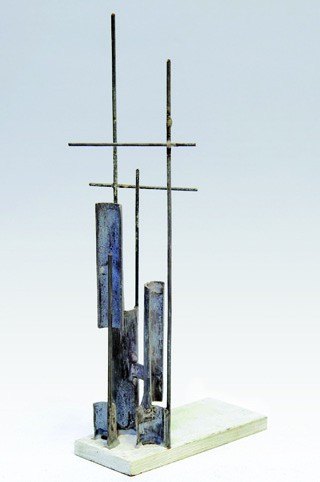
The Dynamics No. 5, 1955, H. 120 cm

I had never set foot in a gallery. I didn’t have the courage to go in. My wife pushed me (it was in 1957). I found myself in front of Denise René, who was writing at her desk. I was bright red. “I would like to show you my sculptures…” I had put my models in a shoebox. They were pieces three or four centimetres high. While I explained that in my mind they were meant to be fifteen metres high, she went on writing. She didn’t even look at me. “This one can stand in three positions. The centre of gravity is the same for all of them.” – “I beg your pardon?” She stopped writing. “Where are the others?” – “I’ve just shown them to you…” I had to start all over again. She picked up the phone: “Vasarely? I’m delighted. I think I’ve just discovered a sculptor.”

She gathered the oracles, Vasarely and Mortensen. I explained my little pieces. “Can you bring me a fifty-centimetre sculpture within a week?” I said: “Of course.” But how to make it? It was my first full-size work. I searched the whole suburbs. Finally, in a joinery workshop in Aubervilliers, I sawed by hand pieces of iron six centimetres thick. With no arc welder, no blowtorch. Then I carried them on my back in the metro to a forge in the Batignolles. I finished my sculpture with a file. Denise René exhibited it. Sonia Delaunay bought it. My first sale.

— Francesco Marino di Teana
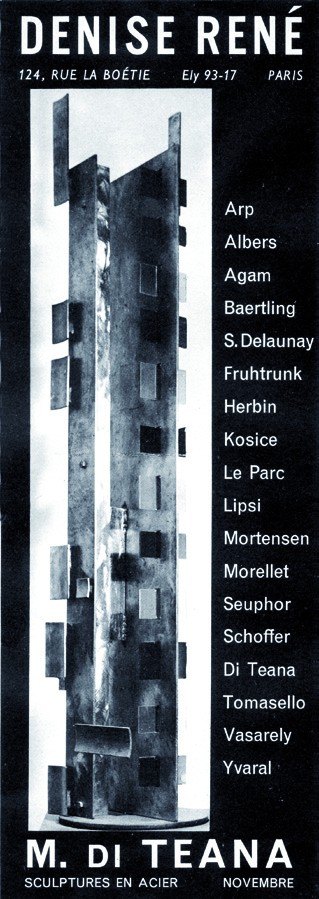
Affiche de l’exposition Di Teana, sculptures en acier, galerie Denise René 1960
Poster for the exhibition “Di Teana – Steel Sculptures”, Galerie Denise René, 1960

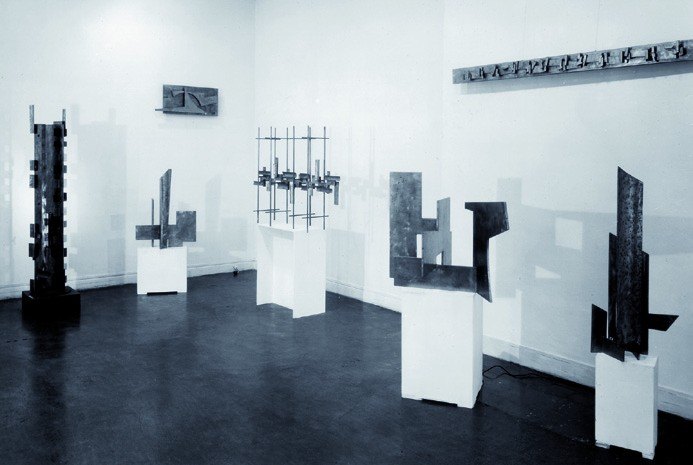
The gallerist was immediately won over by Marino’s work. She organised several solo exhibitions for him and showed him alongside her most prestigious artists, such as Vasarely, Jesús-Rafael Soto, Julio Le Parc, Sonia Delaunay, François Morellet, Carlos Cruz-Diez and Richard Mortensen. Marino di Teana then mixed with many sculptors, such as Yaacov Agam, Jean Arp, Jean Tinguely, Jean Dubuffet, César and Luis Tomasello, but his ambitions lay beyond the gallery world, towards something larger and ever more monumental.

Exposition Di Teana, sculptures en acier, galerie Denise René, novembre 1960
Exhibition “Di Teana – Steel Sculptures”, Galerie Denise René, November 1960

What I love about Di Teana is his astonishing sensitivity to metal. He has given humanity to the coldest of materials: steel. His overriding concern is to link sculpture to architecture. Deeply Catholic, even mystical, he dreams of uniting his monumental style with the fervour of a church.

— Denise René, interview with Jean Clay, 1961
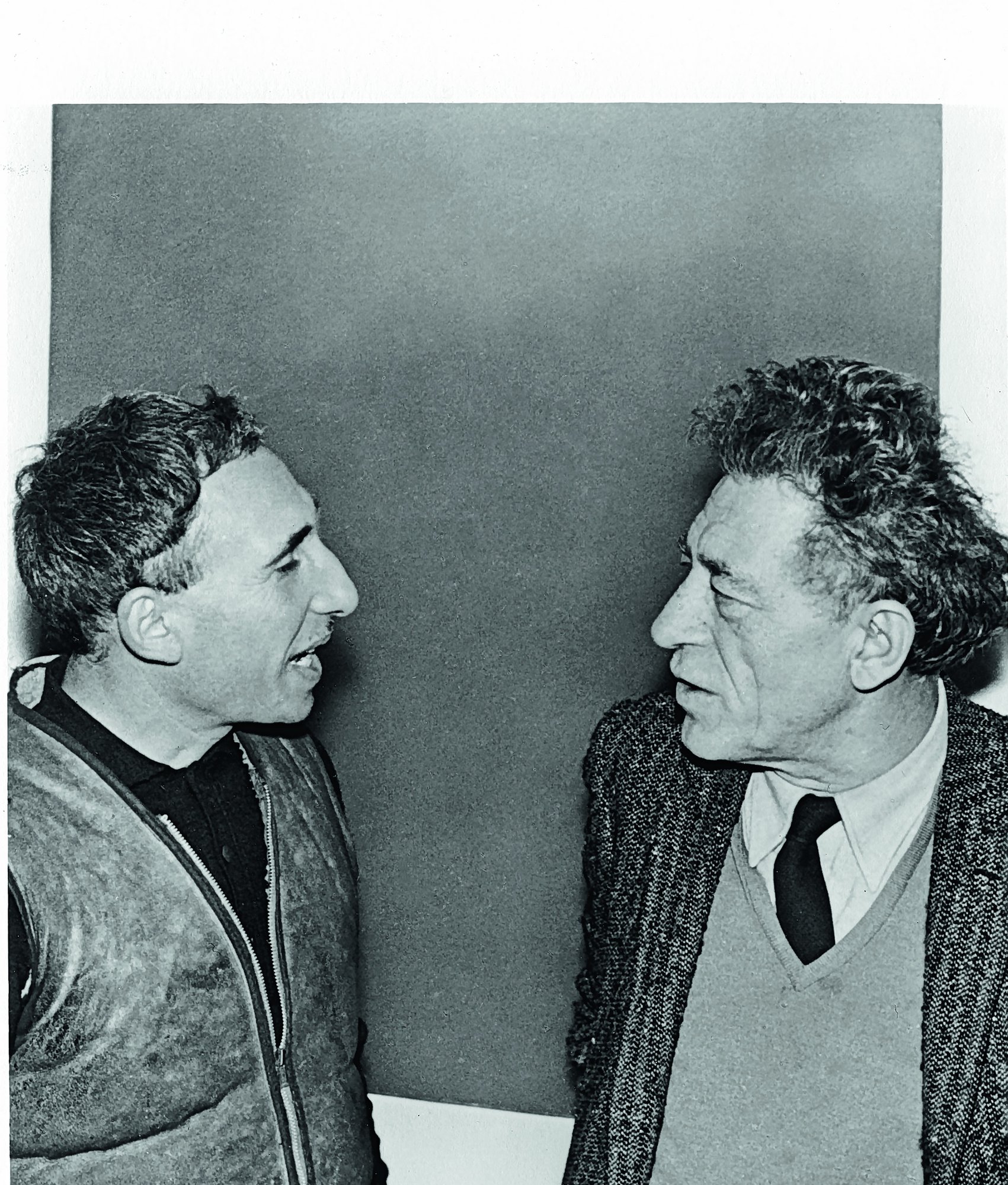
Francesco Marino di Teana et Alberto Giacometti en 1962. Ils parlent en italien quand ils sont ensemble.
Francesco Marino di Teana and Alberto Giacometti at the Saint-Gobain competition award ceremony, 1962

1961 – 1963 – The Saint-Gobain competition and the first public commissions
His deep interest in architecture and its relationship with sculpture led him to enter the major international competition “Sculpture for a Factory”, launched in 1961 by Saint-Gobain. With a project submitted the day before the deadline, and up against a hundred competitors, Francesco Marino di Teana won first prize in February 1962. His sculpture Conquest of Space, 3 metres long and conceived as the “model” for a 13-metre sculpture, won over the prestigious jury: the writer Michel Butor, the architect Robert Camelot, the art critic André Chastel, the sculptor Alberto Giacometti, the architect Grégoire, the painter Poliakoff, the professor of aesthetics Étienne Souriau, the painter and art critic Michel Seuphor and the sculptor Zadkine.

After this event, the young sculptor’s reputation soared. His work was praised in the press and supported by major artists and critics of the time. The doors of corporate patronage opened to him the following year, when he created at the Grand Palais in Paris a group of eight monumental fountains in Saint-Gobain Clarit glass for the exhibition “Art contemporain”, and a wall frieze 2 metres high and 8 metres long for the Saint-Gobain factory at Chantereine.

He then left central Paris to set up a large studio in an old farm building in Périgny-sur-Yerres. It was in this studio, which he built with his own hands, that he lived and worked until the end of his life.

Conquête de l’espace, version de 3 mètres
Conquest of Space, steel, 1961, L. 3 m
Frise de l’usine Saint-Gobain de Chantereine
Frieze, H. 2 m × L. 8 m, Saint-Gobain factory, Chantereine, 1963
Fontaines hydrauliques monumentales au Grand Palais en 1963
Monumental hydraulic fountains, steel and Saint-Gobain Clarit glass, Grand Palais, Paris, 1963
Micro-maquette de la sculpture de la Garde républicaine tenue entre deux doigts
Model of the “Garde Républicaine”, H. 1.8 cm, artist's studio

The Périgny studio – From model to architecture

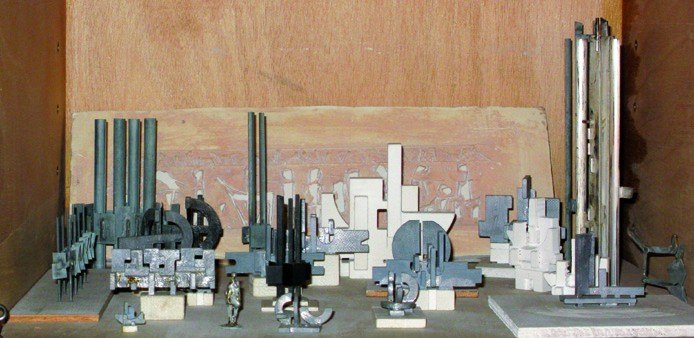
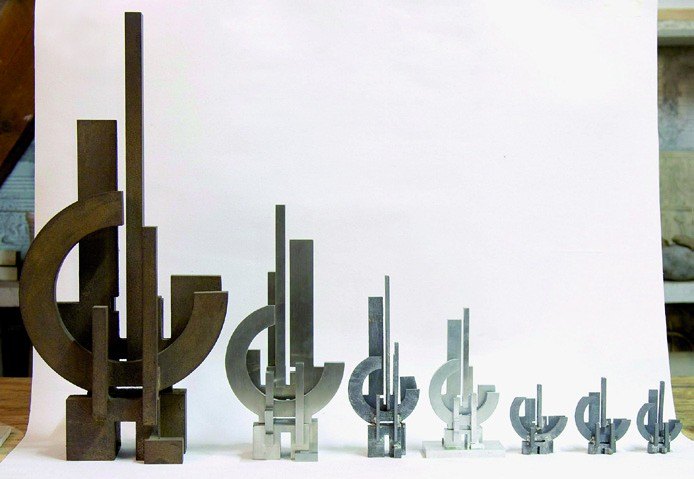
In this studio he set up various spaces that allowed him to develop his works in stages. His precise, meticulous work began in his architect’s office, with an idea scribbled on paper. Then he made a very small model, which he would vary or rework until he found the perfect point of composition he was seeking. He believed in particular that to succeed on a monumental scale, a work had to work in a very small format. The palm of the hand offered the perfect ground for seeing these miniatures in perspective, as if projected onto a vast terrain, flat yet alive.

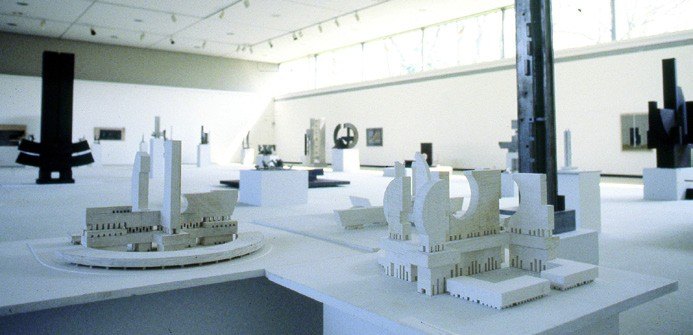
From these “micro-models” he then made steel sculptures in his “forge” to judge their potential at a larger size, and then monumental sculptures several metres high, in concrete or Corten steel. These were arranged as a living ensemble within a vast exhibition space. Some of these pieces were also “adapted” into architecture through genuine architectural models that reveal their deeper nature: to become “universities” or “cities of the future”, places to live that are at once aesthetic and functional, unique and modern.

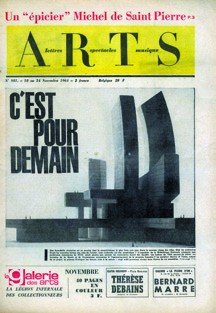
Couverture de la revue Arts de 1964 consacrée à Marino di Teana
Cover of the magazine Arts, 1964

I dream of a union between sculptors and architects. The former would bring the latter the extra plastic imagination that today’s buildings seem to lack. It would no longer be a matter of adding sculptures to finished buildings, but of thinking about the very form of architecture at the design stage.

— Francesco Marino di Teana, 1963
Marino di Teana penché sur la maquette des Villes du futur
Francesco Marino di Teana with the model Cities of the Future, plaster, Périgny, 2003
Maquettes de sculptures dans l’atelier de l’artiste
Sculpture models, artist's studio, 2003
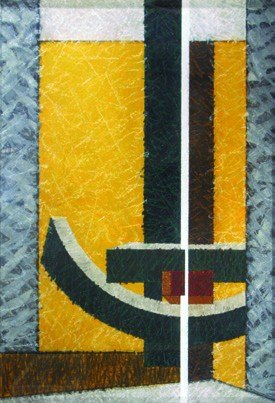
Peinture Quintyptique (II), pastel et huile sur carton
Quintyptych (II), pastel and oil on cardboard, 1988-1989, 123 × 83 cm

From the mid-1950s – Paintings, reliefs, friezes, doors

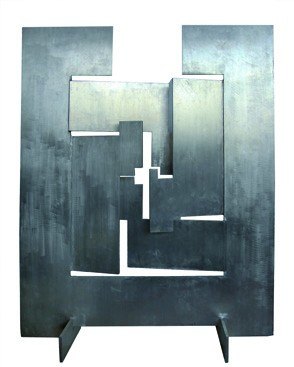
The links Francesco Marino di Teana sought to establish between architecture and sculpture led him to explore various media from the mid-1950s. In addition to the plans accompanying his monumental sculptures, he produced many pictorial works (drawings, paintings and prints) based on an “architectural” principle of composition. Rooted in tri-unitary logic, his paintings (abstract or semi-figurative) are marked by strong white lines that symbolise the “living space” created by the forms.

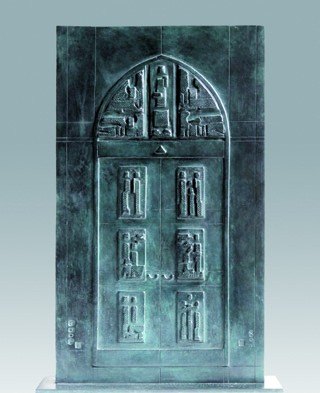
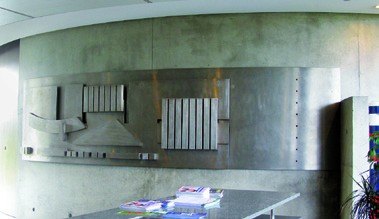
This “active” dimension of form and light is also found in a series of friezes contrasting “opaque” materials (wood, plaster, metal) with transparent ones (coloured glass, rhodoid). Like the reliefs and bas-reliefs he made in plaster or metal, they were generally conceived as integral parts of architectural spaces. They also echo the pieces that the artist, fascinated by Cistercian architecture, designed for churches. “Walls of light”, “vibrating doors”, stained glass or imposing bronze doors: all these elements, by making light a structural element, help renew the space they belong to.

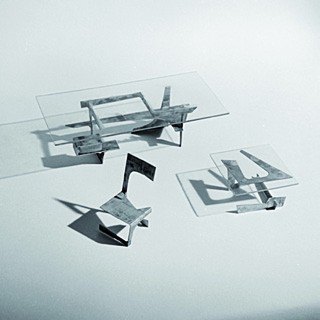
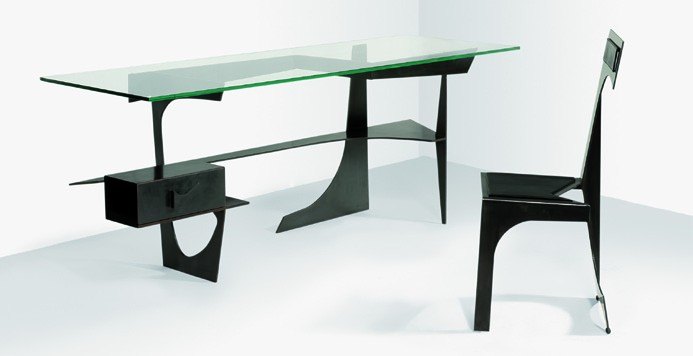
The furniture he designed from 1956 onwards (table, chair or desk) was built on the same principle. The sculptural and architectural composition is formed by the dynamic interplay of elements (Suspended City chandelier, 1962) and the “living” relationship between voids and solids (Architectural Chair, 1956).

Maquette en bronze de la porte de l’église de Saint-Flour
Model of the Saint-Flour door, bronze, 2004-2006, H. 34 cm
Relief à rabattement de lumière en acier
Light-folding Relief, steel, 1964, H. 125 cm
Maquette de mur-vitrail à rabattement de lumière
Model of Light-folding Stained-glass Wall, zinc, wood and coloured glass, 1963-1964, H. 20 cm
Maquette de la frise monumentale du laboratoire L’Oréal
Model of the monumental frieze for the L'Oréal laboratory, Aulnay-Villepinte, stainless steel, 1993, H. 7 cm
Maquettes en zinc de l’ensemble de mobilier de 1956
“Furniture Project”, set of zinc models, 1956

1956 – late 1970s – Furniture

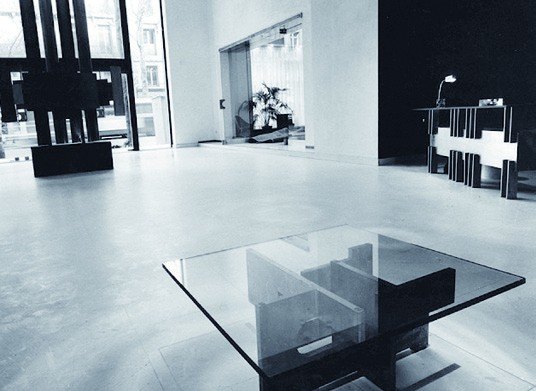
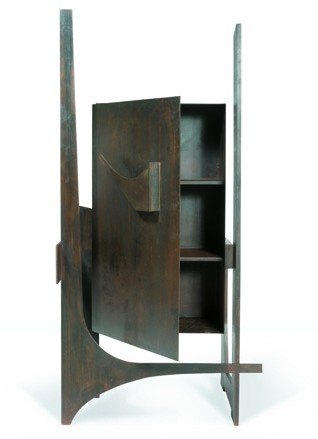
These explorations in furniture (mainly from the mid-1950s to the late 1970s) are particularly interesting. This more “confidential” side of Francesco Marino di Teana’s work produced impressive design pieces that remain unpublished to this day. The furniture ensemble he designed in 1956 (chairs, armchair, desk, wardrobe and tables) retains the “architectural” dimension so dear to him. With their unique design, these works, both “furniture-sculptures” and “sculpture-furniture”, completely upset our traditional idea of the “object” and enrich our view of mid-20e century design.

Mobilier de Marino di Teana dans le hall de la tour BFCE à La Défense
Lobby of the BFCE tower, La Défense, Paris, furniture by Francesco Marino di Teana, stainless steel, 1970
Buffet architectural en acier patiné
Architectural Sideboard, patinated steel, H. 180 cm, 1956 (photo Brice Vandermeeren)
Bureau et chaise architecturale en acier patiné
Desk and Architectural Chair, patinated steel, 1956 (photo Brice Vandermeeren)
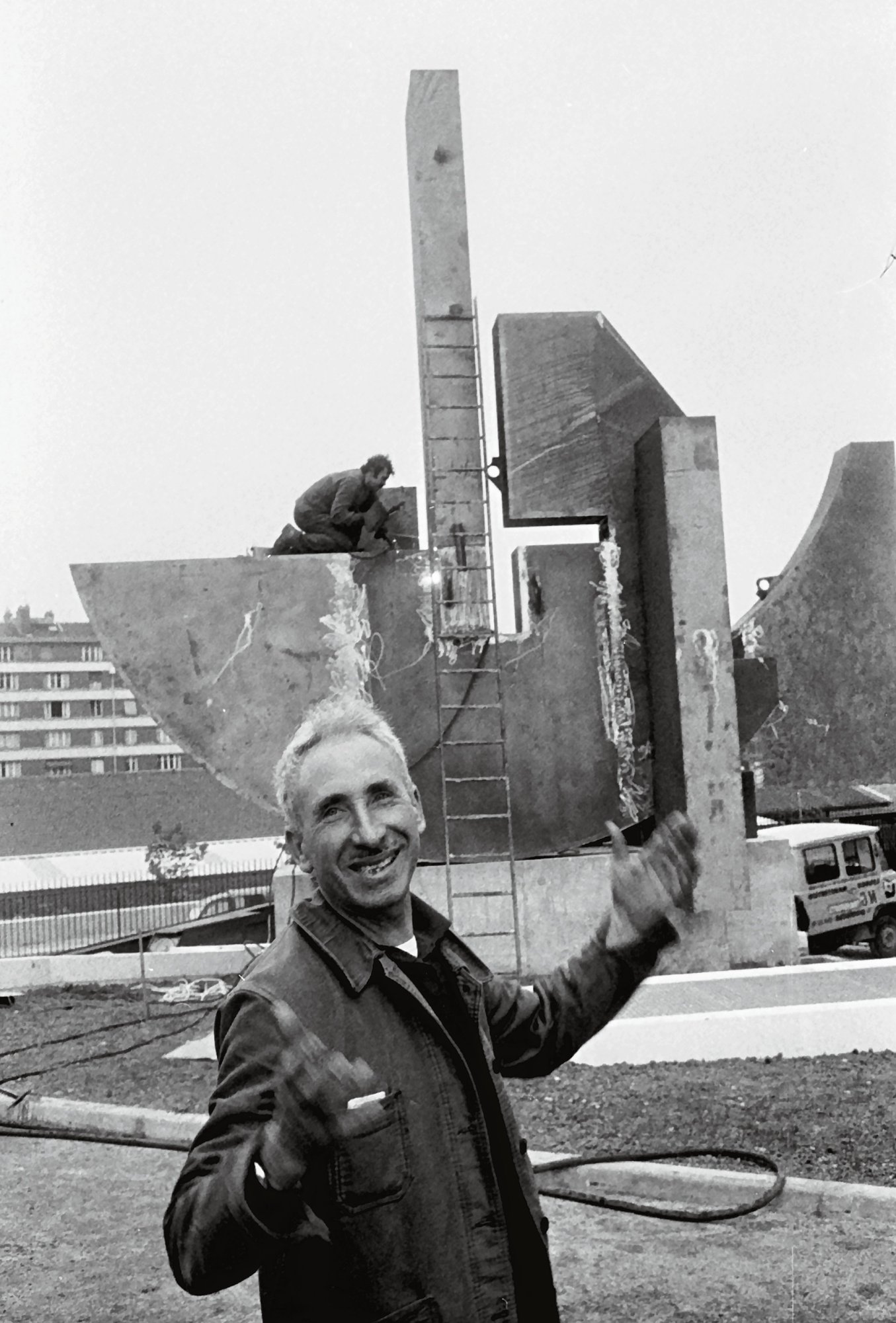
Marino di Teana pendant le montage du Navire spatial de la Garde républicaine
Francesco Marino di Teana assembling the Space Ship of the Garde Républicaine, Paris, 1974 (photo Jérôme Ducrot)

1959 – 2008 – Monumental sculptures

Beyond the monumental works made possible by the patronage of major private companies (Saint-Gobain, L’Oréal…), Francesco Marino di Teana also produced some fifty public monumental sculptures during his lifetime.

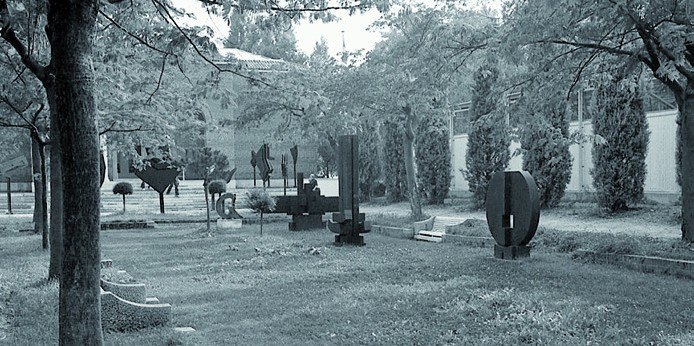
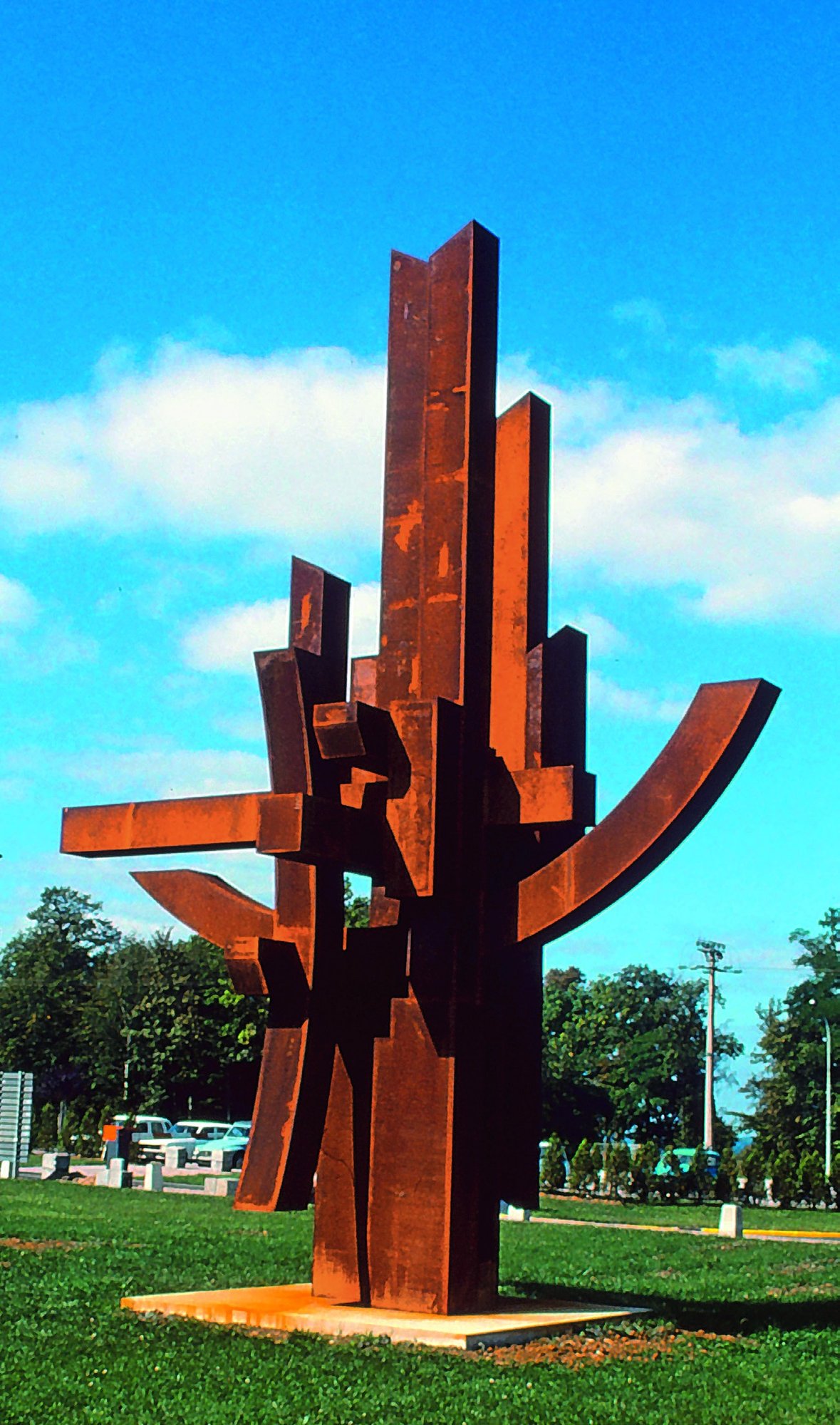
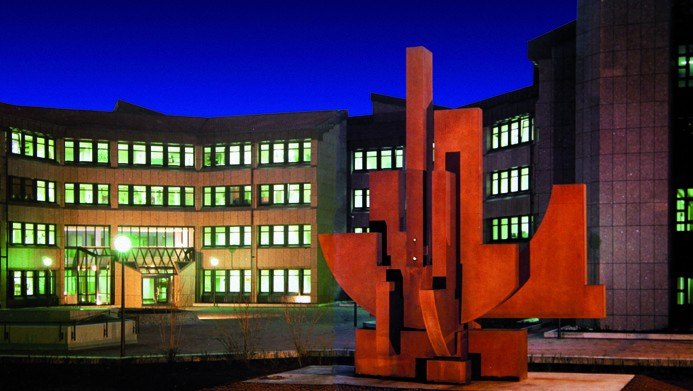
Generally made following competitions and public commissions under the “1% for art” scheme, these sculptures grace the European urban landscape, in France but also in Germany and Italy. More than forty of them were installed between the 1960s and 1970s in schools (theHomage to Science at the Nancy Faculty of Medicine, the Architectural Structure at the boys’ school in Leverkusen, Germany), military barracks (the Space Ship of the Garde Républicaine on Boulevard Kellermann in Paris) and urban hubs (the Ministry of Finance in Saarbrücken, Germany, the Charles-de-Gaulle roundabout in Fontenay).

Inspired by great architects (“Homages” to Imhotep, Le Corbusier, Pier Luigi Nervi…) or by the places for which they were intended (Homage to Science), they were always the subject of careful thought so as to fit into the chosen site as well as possible, through the systematic making of site models. Yet their monumental character was already intrinsically present in the micro-models and small architectural sculptures from which they were made. It only remained to reveal it through their fabrication, in that final phase when the sculptor put his architect’s hat back on to draw construction plans worthy of the greatest engineers, and coordinated, for several months, the machining and assembly of the pieces.

Sculpture monumentale Hommage aux sciences à Vandœuvre-lès-Nancy
Homage to Science, Faculty of Medicine, Vandœuvre-lès-Nancy, 1978, H. 9.5 m
Sculpture monumentale Hommage à l’espace devant le ministère des Finances de Sarrebruck
Homage to Space, Ministry of Finance, Saarbrücken, Germany, 1986, H. 6 m
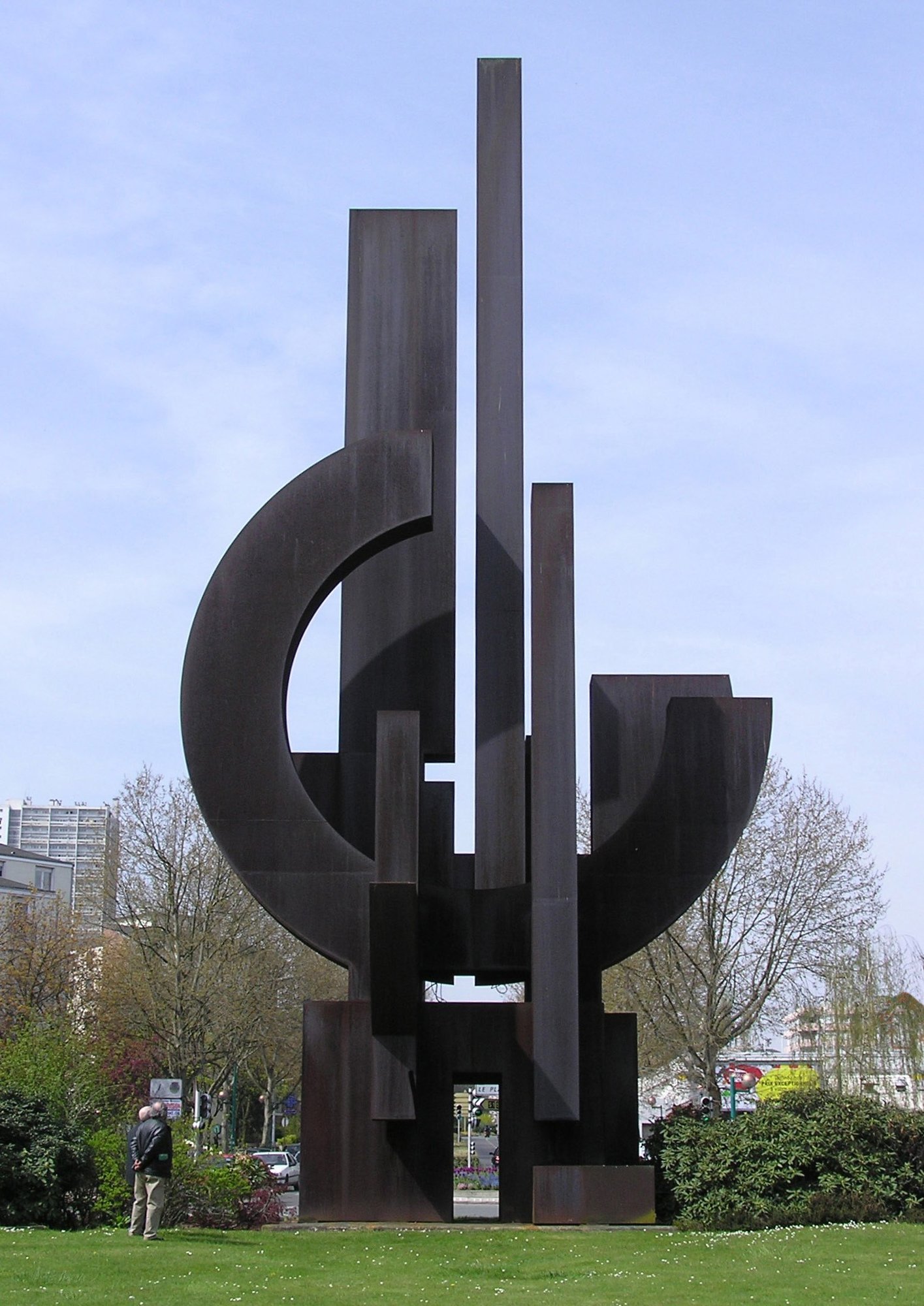
Sculpture Liberté de 20 mètres à Fontenay-sous-Bois
Liberté, Fontenay-sous-Bois, erected and inaugurated in 1990, Corten steel, H. 20 m

1990 · Fontenay-sous-Bois – Liberté

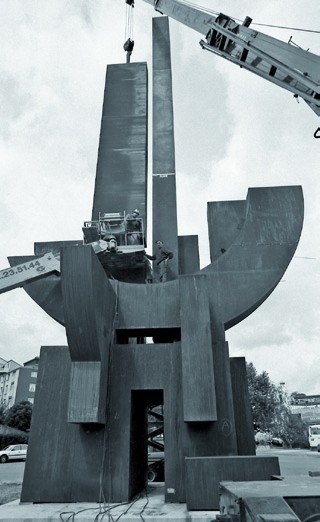
The most impressive of the sculptures he built (some of the monumental sculptures the artist designed have remained at the project stage to this day) is Liberté in Fontenay-sous-Bois (Val-de-Marne). This monumental sculpture, standing on the Général-Charles-de-Gaulle roundabout in Fontenay, is among the largest steel sculptures in Europe. Twenty metres high and made of about 110 tonnes of Corten steel, it is “self-supporting”, built to withstand winds of up to 250 km/h.

Maquettes de la Liberté alignées dans l’atelier
Models of Liberté, 1988-1990, artist's studio
Marino di Teana présente le projet Liberté au maire de Fontenay
Marino di Teana presents his project to Louis Bayeurte, Mayor of Fontenay, and Michel Germa, President of the Val-de-Marne General Council, Périgny, 1989 (photo Claude Gaspari)
Montage de la sculpture Liberté à Fontenay-sous-Bois
Francesco Marino di Teana assembling Liberté in Fontenay-sous-Bois (photo Claude Gaspari)
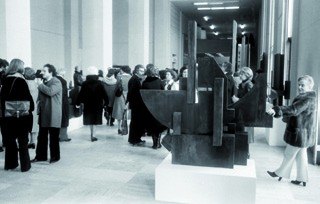
Marino di Teana et M. Trapenard au musée d’Art moderne de Paris en 1976
Francesco Marino di Teana and Mr Trapenard, director of cultural affairs, youth and sport, Musée d'Art moderne de la Ville de Paris, February 1976 (photo Claude Gaspari)

1974 – 1987 – International renown and major exhibitions

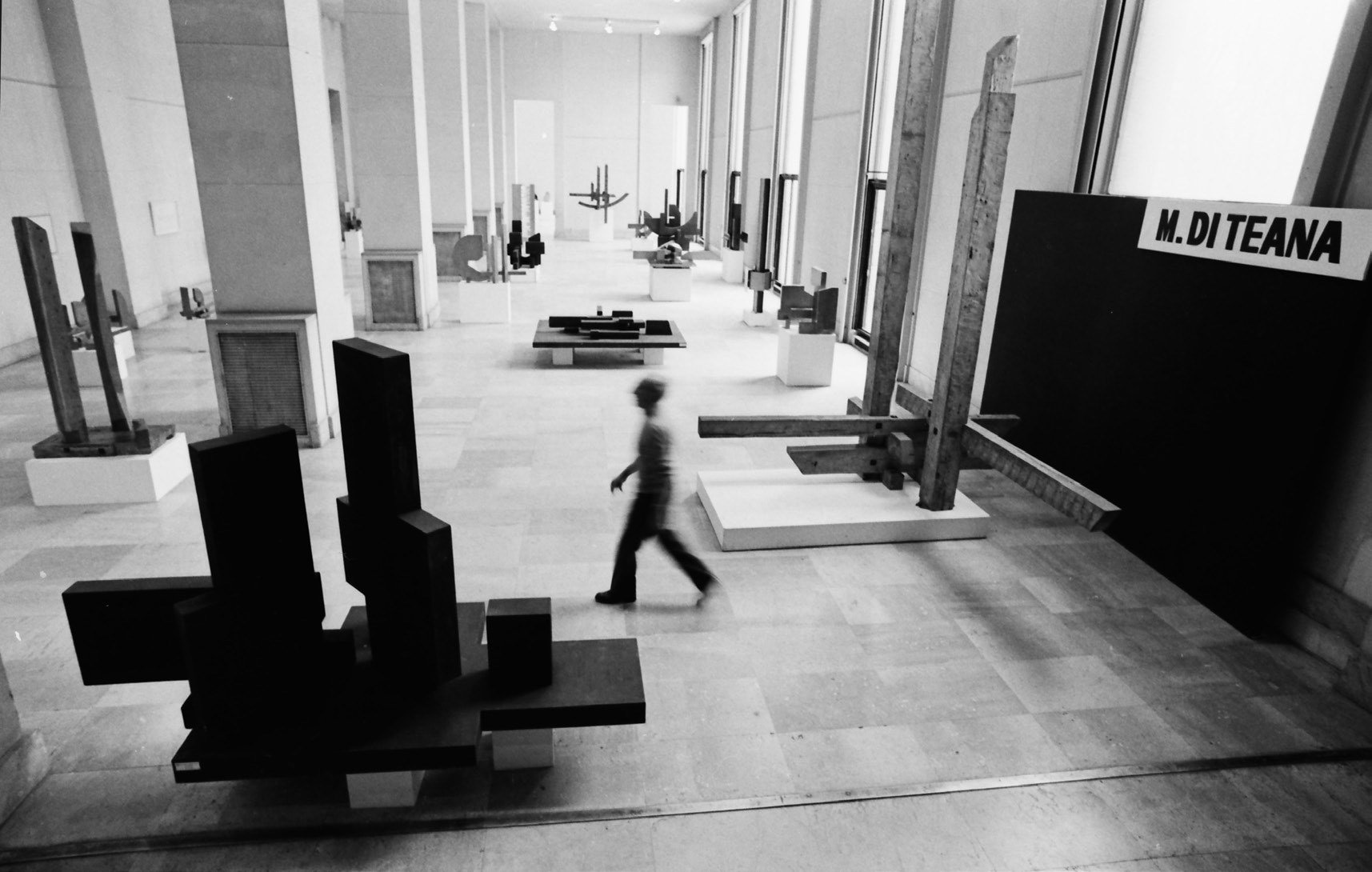
With the reputation he had steadily built since the 1960s, Marino di Teana was offered prestigious exhibitions from the mid-1970s. In 1974, a first exhibition took place at the Commanderie of Braux-Sainte-Cohière, in the Marne. The artist was then honoured in 1975-1976 with a touring exhibition shown in Saint-Étienne, Reims and Montbéliard. A major retrospective was also held at the Musée d’Art Moderne de Paris, which acquired for its collections the large wooden work Homage to the United States of the World (H. 2.20 m).

The artist’s fame also became international. His Italian roots were celebrated with the twinning of Périgny and Teana and the installation of a monumental sculpture in his home town. Argentina, his adopted country where he had trained as an artist, also called on him in 1982 to represent the country at the 40th Venice Biennale and awarded him an honorary diploma of visual artists. In 1987, the author Tomás Alva Negri devoted an important monograph to him, just as the sculptor travelled to the Saarland Museum in Saarbrücken, Germany, for a new major retrospective of his work.

César au vernissage de la rétrospective Marino di Teana en 1976
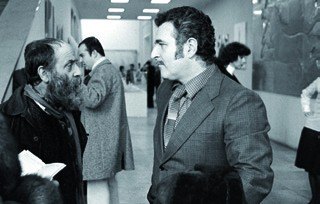
César at the opening of the Francesco Marino di Teana retrospective, Musée d'Art moderne de la Ville de Paris, February 1976 (photo Claude Gaspari)

The touring exhibition devoted to Marino di Teana – currently at the Musée d’Art moderne de la Ville de Paris – tells the story of an ambition fulfilled, without being exhausted, by a demanding and rigorous body of sculpture, in which the obsession with ever broader and more systematic orders persists: in his utopian projects for the Paris region, the City stands at the centre of immense Spirals. All its access routes are underground. Like giant sculptures, the “cities of the future” rise alone in a landscape miraculously cleared. The utopia is obvious and the mason’s dream goes on. But after all, did the silhouette of Chartres not answer the desire to raise a great and beautiful building in a bare landscape?

— Paule-Marie Grand, “Marino di Teana le constructeur”, Le Monde, 29 January 1976
Rétrospective Marino di Teana au musée d’Art moderne de Paris, 1976
Francesco Marino di Teana at the Musée d'Art moderne de la Ville de Paris, February 1976 (photo Jérôme Ducrot)
Vernissage de la rétrospective au musée d’Art moderne de Paris
Opening of the retrospective, Musée d'Art moderne de la Ville de Paris, February 1976 (photo Claude Gaspari)
Rétrospective au Saarland Museum de Sarrebruck en 1987
Retrospective exhibition, Moderne Galerie – Saarland Museum, Saarbrücken (Germany), 1987
Sculptures de Marino di Teana à la Biennale de Venise 1982
Sculptures by Francesco Marino di Teana exhibited at the Venice Biennale, 1982
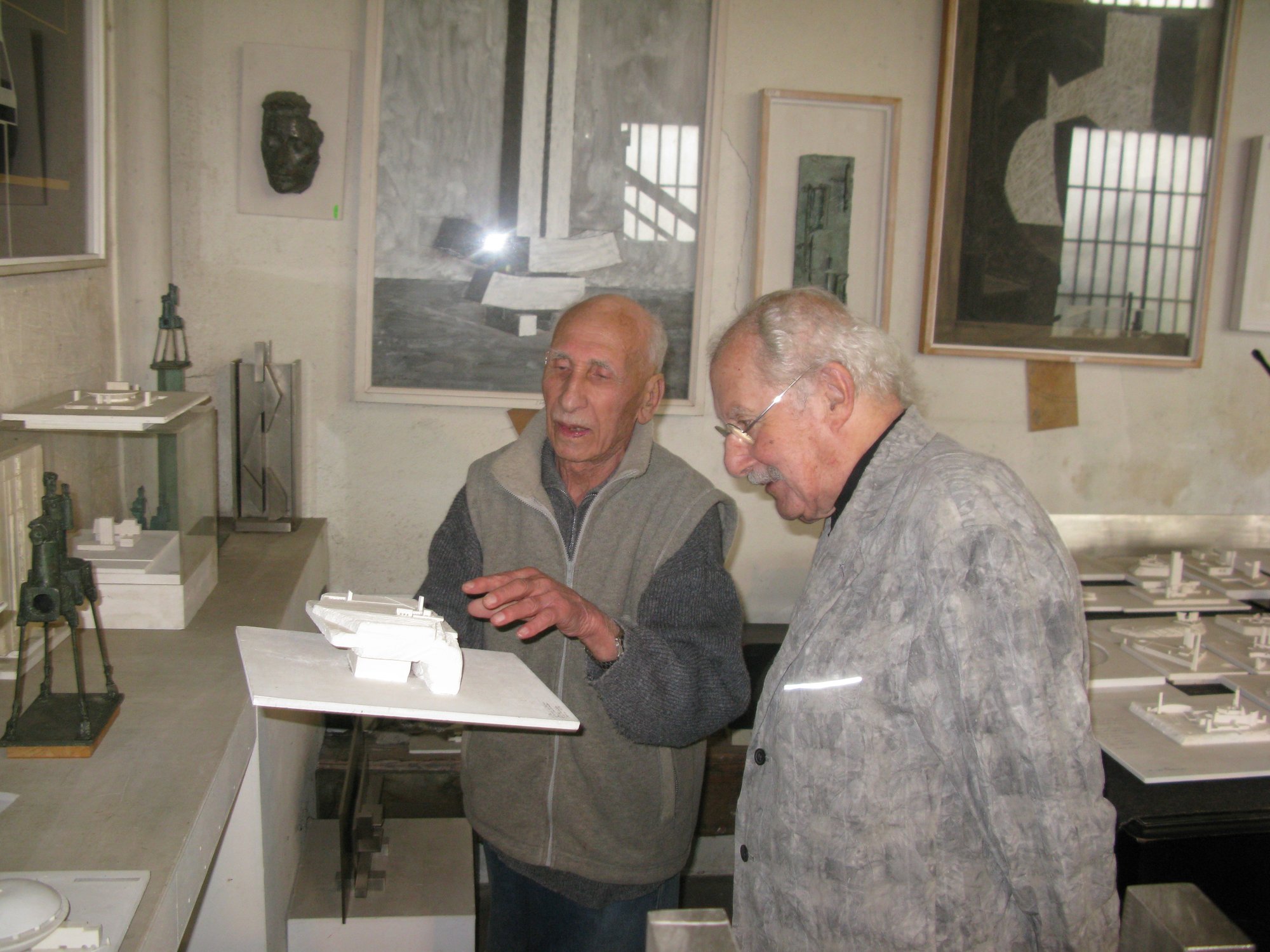
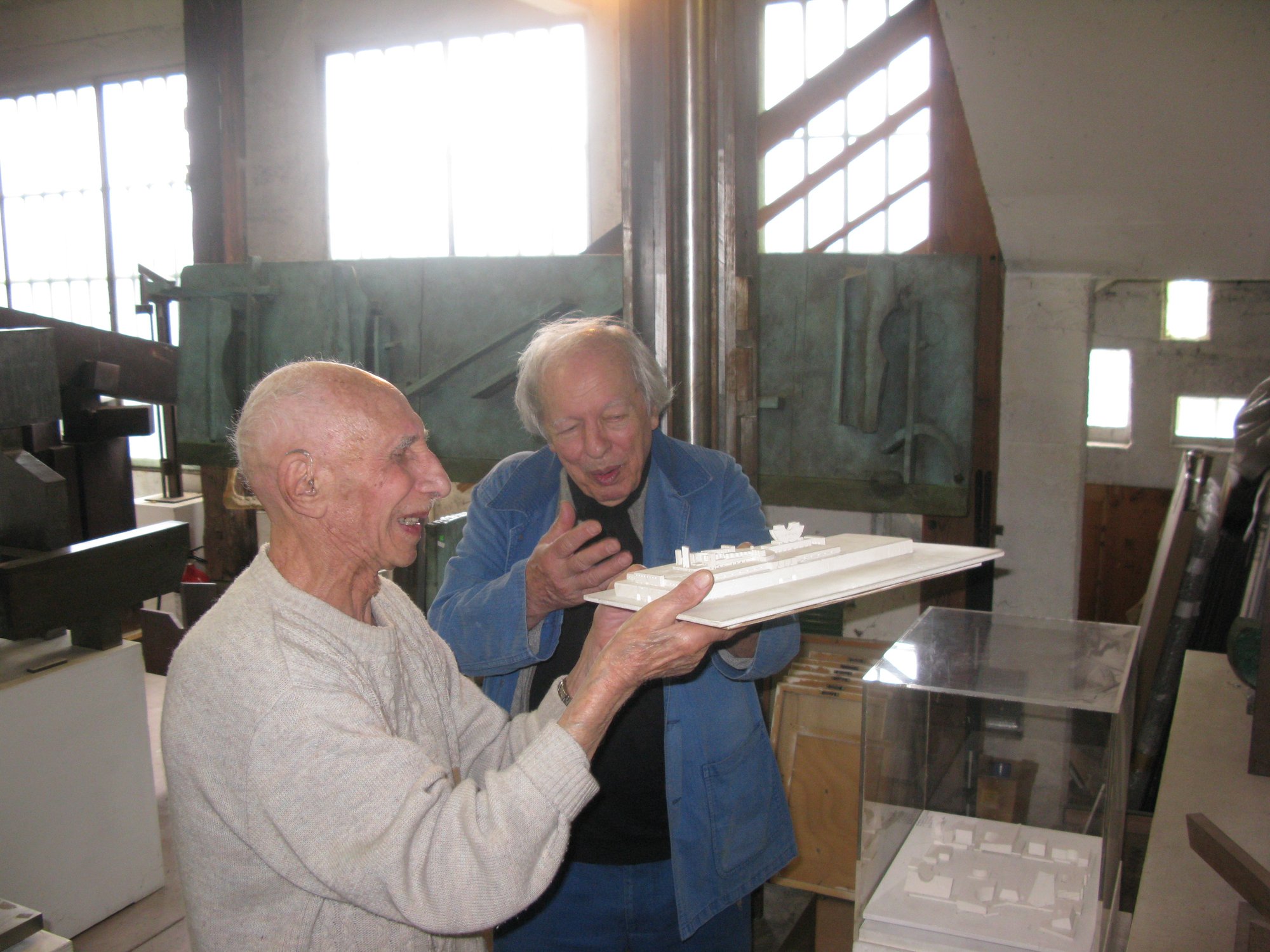
L’architecte Claude Parent rend visite à Marino di Teana dans son atelier en 2010
Architect Claude Parent visiting his friend Marino di Teana, Périgny-sur-Yerres studio, 2010

1988 – 2009 – Recognition and honours

In France he was represented by the Patrice Carlhian gallery, which organised several solo exhibitions, showed his work at various fairs and produced a short documentary film, Le Chant du Corten, devoted to his work in Fontenay-sous-Bois. From the late 1980s he also worked with Artcurial, which had become a major venue for contemporary art; it supported his work and helped spread it through exhibitions, books devoted to the artist and editions of bronze pieces. It was also the period when Marino di Teana took part in several television projects for Air France and Antenne 2.

Then, in 1997, he was invited to represent France at the International Symposium of Arts and Sciences in Seoul (Korea), before being exhibited in Prague in 1999. In 2009, he was guest of honour at the International Sculpture Triennial in Poznań (Poland) and received the Commandant Paul-Louis Weiller Prize of the Institut de France (Académie des Beaux-Arts).

Le sculpteur Antoine Poncet rend visite à Marino di Teana dans son atelier en 2010
Sculptor Antoine Poncet visiting his friend Marino di Teana, Périgny-sur-Yerres studio, 2010

In the 1960s, as soon as the name di Teana was mentioned, we saw our old decadent cities change; we imagined silhouettes cut out against the horizons of France, made of commanding verticals, taken up by horizontals heroically cantilevered over the void, all brought together by immense inhabited circles. […] I know that your age still allows you to work like a madman for hours on end; it is a miracle, but it is worth it, for in this way you will leave an indelible mark on the world of sculpture and architecture.

— Claude Parent, architect, President of the Académie d’Architecture and member of the Académie des Beaux-Arts, “Une trace indélébile”, letter to the artist
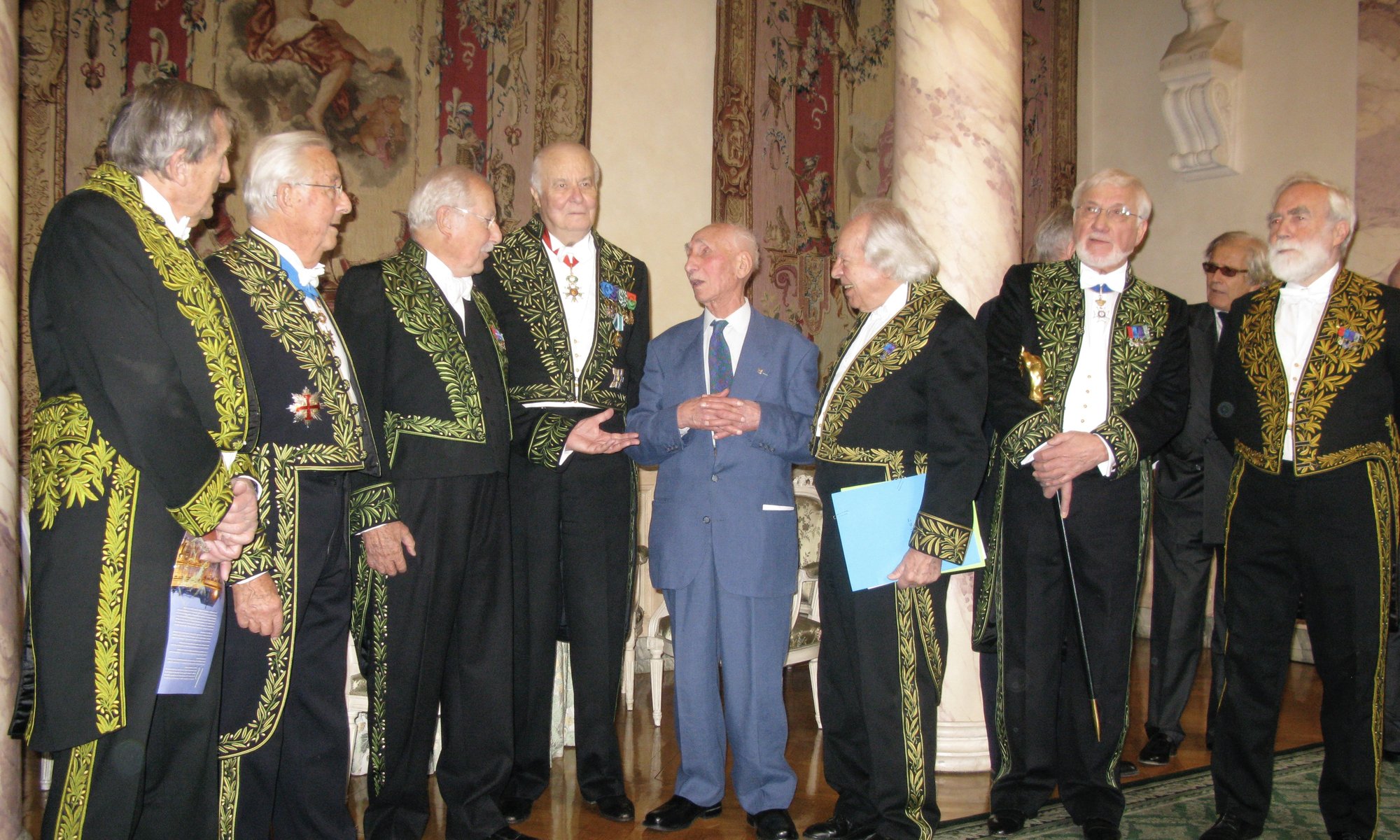
Francesco Marino di Teana entouré des membres de l’Académie des beaux-arts en habit vert, 2009
Francesco Marino di Teana surrounded by members of the Académie des Beaux-Arts, Institut de France, 18 November 2009

His fellow academicians then came to visit him at the Périgny-sur-Yerres studio.

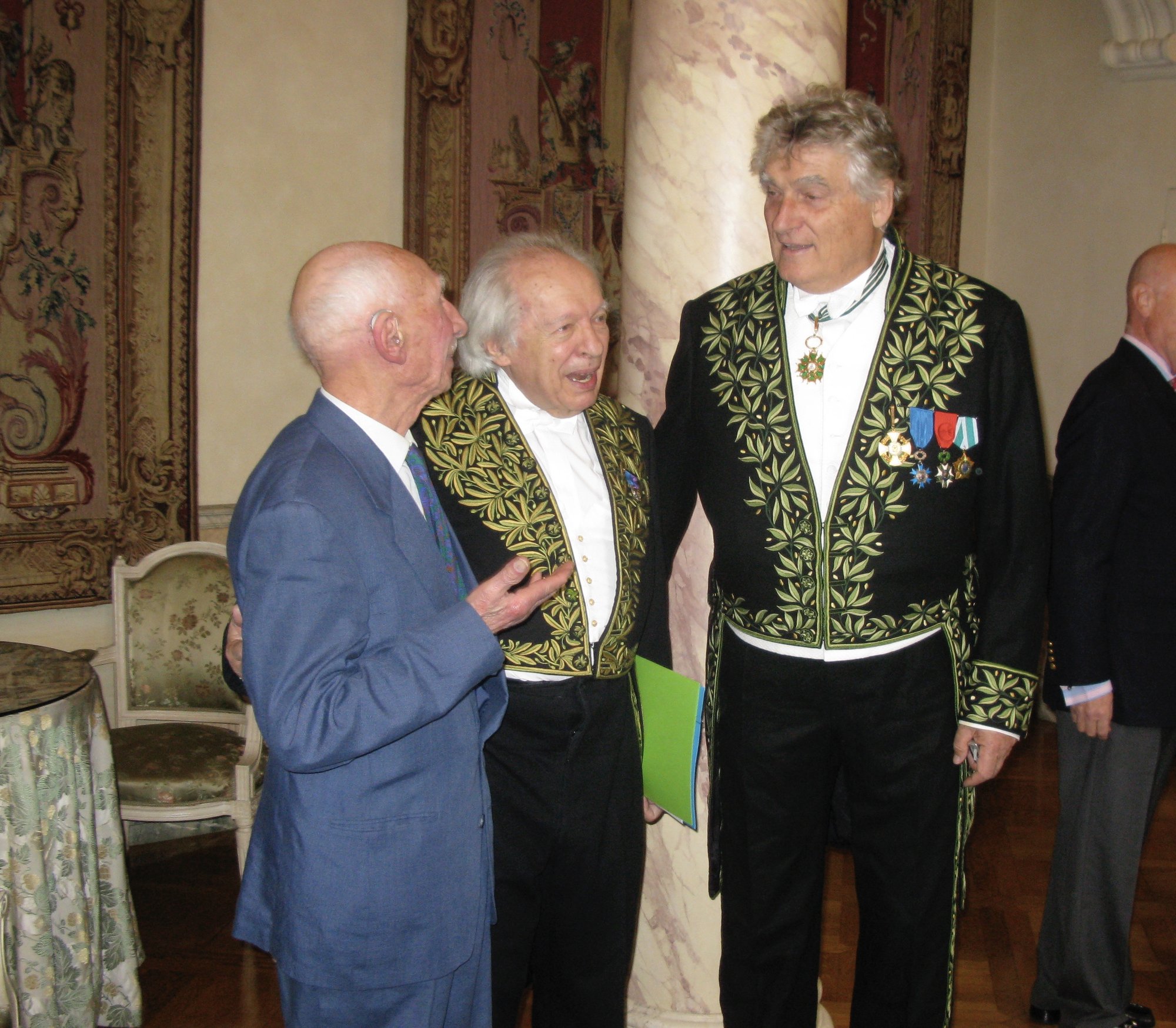
Francesco Marino di Teana avec Antoine Poncet et Léonard Gianadda à l’Académie des beaux-arts en 2009
With sculptor Antoine Poncet and Léonard Gianadda, founder of the Pierre Gianadda Foundation in Martigny (Switzerland), both members of the Académie des Beaux-Arts
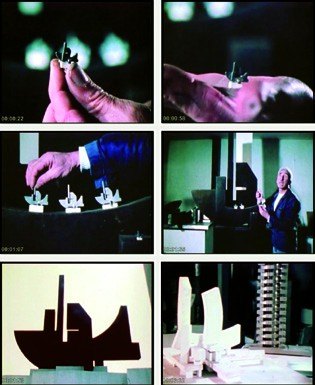
Images du documentaire d’Antenne 2 La sculpture rejoint l’architecture
Antenne 2 documentary, “Fenêtre sur: la sculpture rejoint l'architecture” (1980)
Sculpture Espace ouvert en bronze, vue 1
Open Space, bronze, Artcurial edition, 1955-1990, H. 37 cm
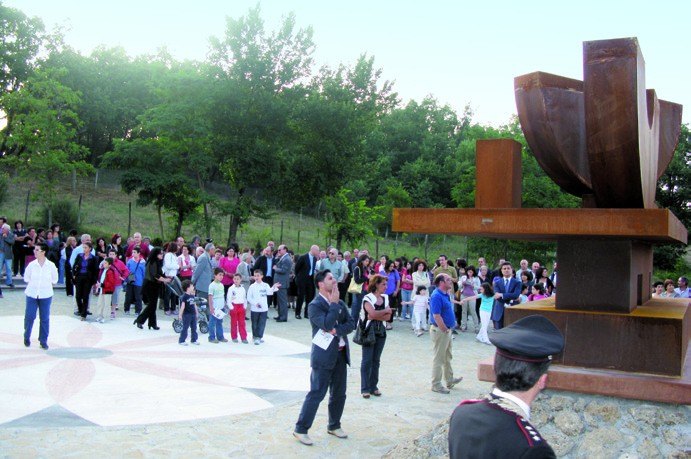
Inauguration de la sculpture Hommage à la Méditerranée à Teana en 2009
Inauguration of the monumental sculpture Homage to the Mediterranean, H. 4 m, Teana (Italy), July 2009

2009 – Return to Teana

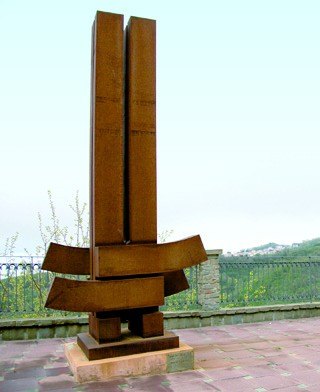
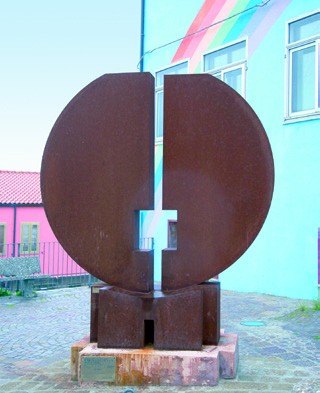
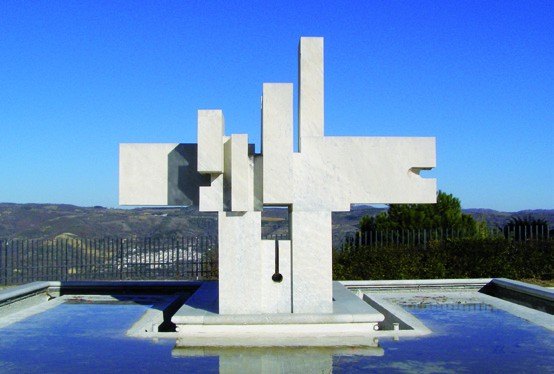
That year he was honoured once again in his home town of Teana, with the installation of four new monumental sculptures, inaugurated at a major event that brought together, around his son Nicolas Marino di Teana and his biographer Giovanni Percoco, political figures, members of associations devoted to his work and the whole local population.

Sculpture Hommage à Lao Tseu dans le village de Teana
Homage to Lao Tzu, Corten steel, village of Teana, Basilicata (Italy), H. 3 m
Sculpture Aube dans le village de Teana
Aube (Dawn), Corten steel, village of Teana, Basilicata (Italy), H. 2 m
Navire spatial en marbre à Teana
Space Ship, marble, village of Teana, Basilicata (Italy), H. 3.50 m

Throughout his life, Marino di Teana never stopped sharing his theories and his works. He exhibited all over the world and received international honours for his work as a whole. He represented Argentina, France and Italy at major fairs and conferences. He won many competitions (national and international) to install his monumental works in the most varied urban spaces. His works entered major public and private collections and have been featured in many books, audio and television interviews, films and articles for more than sixty years.

Although he is gone, his work lives on, and in the face of such a rich body of creation, it seemed essential to devote a reference book to it, retracing his entire journey.

Key facts

Monumental sculptures, collections and museums, solo and group exhibitions, prizes and honours: all the lists are gathered in the key facts.

All key facts →

Texts: Malika Vinot, Francesco Marino di Teana – 1952/2012, 60 ans de création, Éditions Loft, Paris, 2015. Preface: Jean-François Roudillon. Photo credits: David Bordes, Jérôme Ducrot, Claude Gaspari, Pierre Joly & Véra Cardot, Nicolas Marino di Teana, Brice Vandermeeren, Malika Vinot.

The texts on this page are by Malika Vinot, who spent several years researching and documenting the work of Francesco Marino di Teana at the Loft gallery. They are taken from Francesco Marino di Teana – 1952/2012, 60 ans de création (Éditions Loft, 2015), published at the initiative of Jean-François Roudillon, director of the Loft gallery, who championed the catalogue raisonné, the exhibitions, the fairs and the editions devoted to the artist.

Scroll to Top